
The Sun and Moon Pagodas, One of Guilin's Symbols
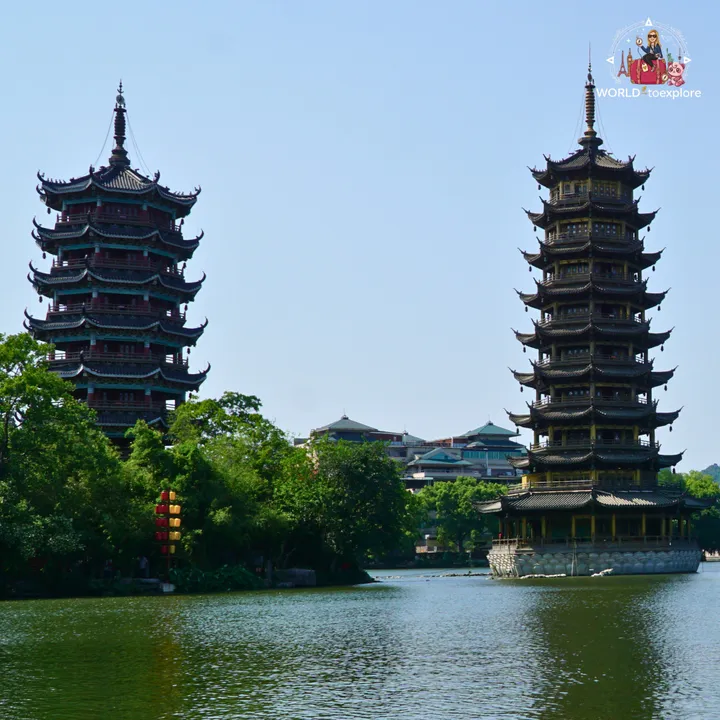
The Sun and Moon Pagodas are one of Guilin’s iconic images. These two pagodas stand side by side, right in the middle of Shanhu Lake, and immediately stand out against the surrounding landscape. The Sun Pagoda is golden, while the Moon Pagoda has a more silvery look, creating a really beautiful architectural pairing. During our trip around China, we ended up realising this was one of those places that truly deserved to be seen in person, especially in the late afternoon, when the pagodas reflect in the water.
More than just two pretty towers by the lake, the Sun and Moon Pagodas have quite a curious history, and the two are connected by an underground tunnel around 18 metres long. In this article, I’ll tell you a bit more about the pagodas’ history, a few fun facts, and what you can expect from a visit.
The history of the Sun and Moon Pagodas
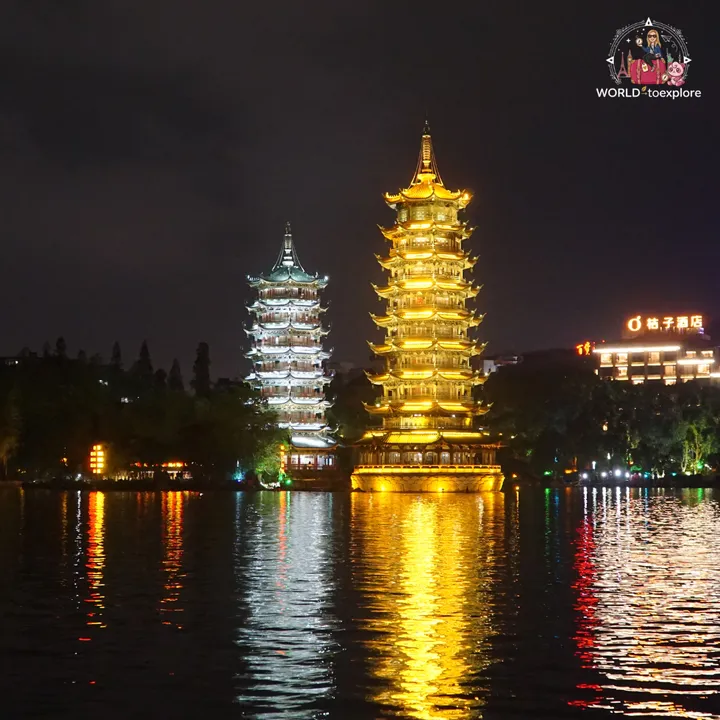
The Sun and Moon Pagodas are today one of the great symbols of the city of Guilin, in southern China, and form quite a distinctive pair in the middle of Shanhu Lake. Although they’re two separate structures, they were designed to be connected, not just by their location, but also through the meaning of their names and the way they complement each other. One is golden and stands out for its bronze structure, while the other has a lighter, silvery look, creating a contrast that becomes even more striking once the lights come on at dusk. During the day they undoubtedly catch visitors’ attention, but it’s especially at night that they take on another kind of charm, lighting up and reflecting in the lake’s water.
The history of this architectural pairing, however, goes back much further than the current structures might suggest. The first pagodas were built during the Tang dynasty and were linked to Buddhist tradition and to Guilin’s own religious history. Over the centuries they ended up being destroyed, though their foundations and some of the original structures remained. In 1999, during restoration and construction work on the Two Rivers and Four Lakes system, archaeological evidence relating to the old pagodas was found, which helped highlight just how important that spot had once been. It was based on these discoveries and existing historical records that the two pagodas were rebuilt in 2001, giving rise to the pairing we can visit today.
The name wasn’t chosen at random either. The Sun Pagoda represents yang, associated with light, warmth and energy, while the Moon Pagoda represents yin, linked to night-time and tranquillity. The two were designed precisely as a pair, following this concept of balance between opposing forces that complement each other. That’s also why, despite their differences, they make more sense when seen together, with one representing day and the other associated with night.
Sun Pagoda
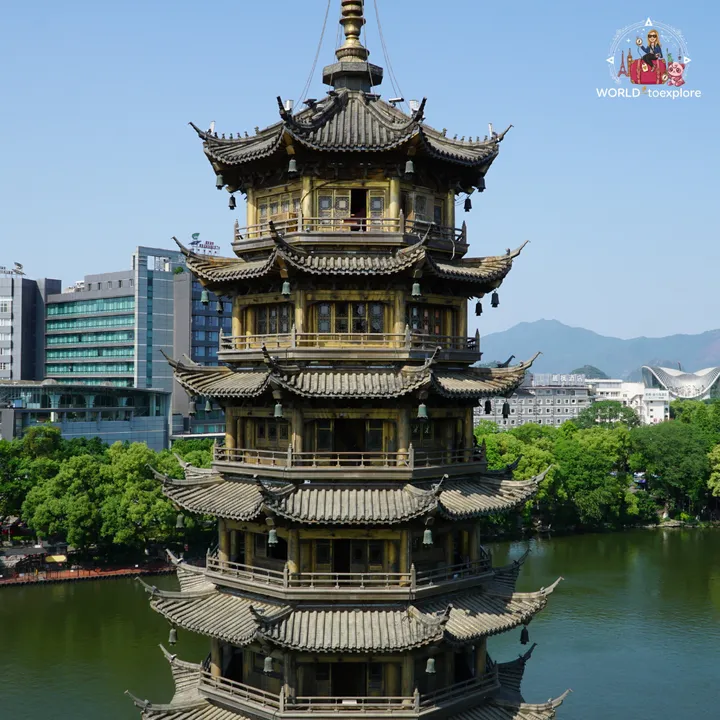
The Sun Pagoda is the larger of the two and immediately stands out for its golden colour. It’s around 41 metres tall with eleven storeys, and its scale is also surprising up close, which makes it stand out quite a bit in the middle of Shanhu Lake. Since it’s surrounded by water, you can spot it from various points as you walk along the lake. One of the things that stands out most about the Sun Pagoda is that it’s entirely clad in bronze. The name itself makes sense once you look at the tower, with its golden colour and the shine it gets when light hits the bronze.
Moon Pagoda
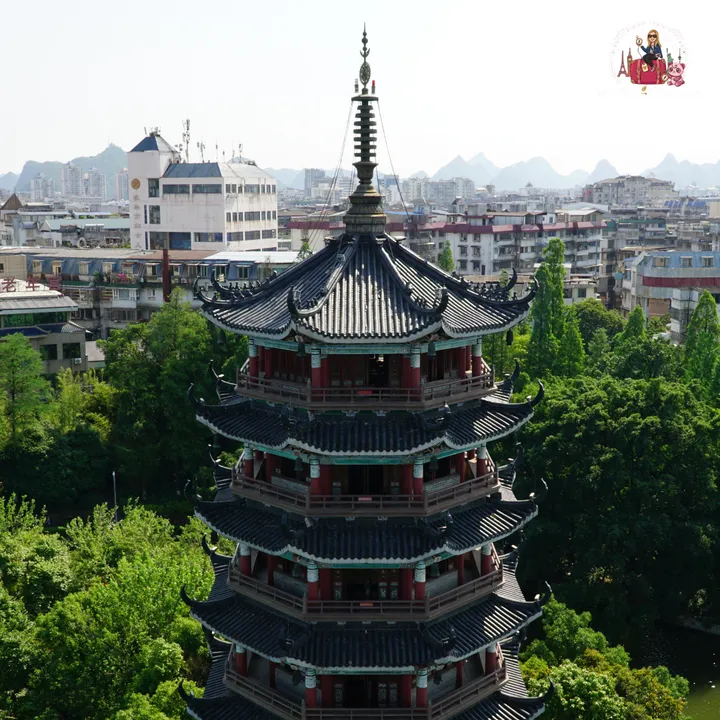
The Moon Pagoda is slightly shorter than its companion and stands out for its lighter, silvery look. It’s around 35 metres tall with seven storeys, and it’s also located in the middle of Shanhu Lake, right opposite the other pagoda. Unlike the golden tower, which is clad in bronze, this one has a concrete and glass structure, giving it a completely different look. It’s precisely this contrast between the two that makes them work so well together and makes them so easy to tell apart when looking across the lake.
Our visit
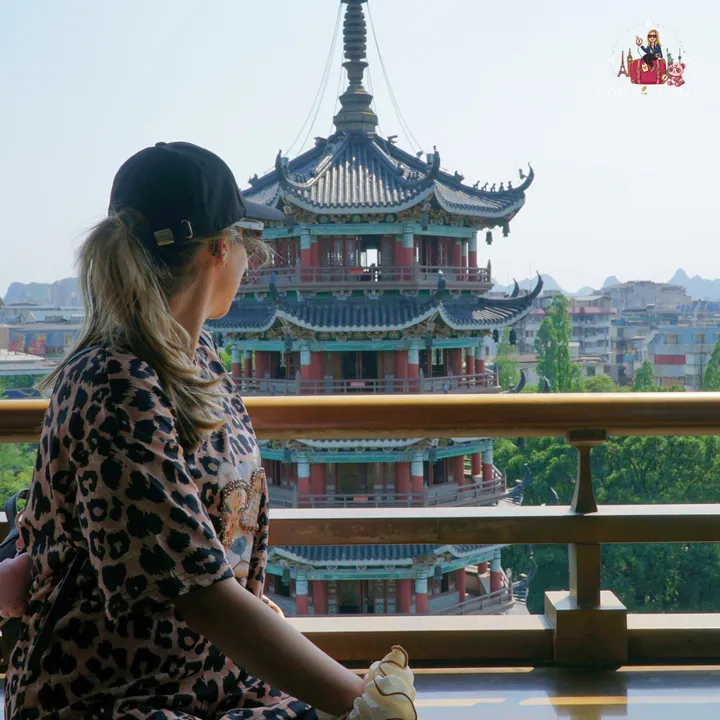
Since we stayed at the Holiday Inn Express Guilin City Center, right in the centre of Guilin, we did pretty much everything on foot during our time in the city, and the Sun and Moon Pagodas were no exception. We headed to the Shanhu Lake area during the day and, since we had time, we decided to go in and climb the pagodas. After all, it’s not every day we’re on the other side of the world, so we figured it made sense to make the most of it. Climbing both towers is also a way of seeing them from a different perspective, and we really enjoyed the view from up there.
Tickets can be bought on site, and there’s a combined ticket to visit both pagodas, which costs 35 RMB (around €4.40) per person. There’s a lift and stairs to get up, but we’re a bit of masochists, so of course we took the stairs. After all, with everything we’d been eating throughout the day, we also had to burn off some calories! We climbed both and reckon it’s well worth it, since the views over Shanhu Lake and the surrounding area are really lovely. Plus, from up top you can see the pagoda facing you in much more detail, something you can’t appreciate quite the same way from down below. Obviously, if you’re short on time, you can just climb one. In that case, it makes more sense to pick the Sun Pagoda, since it’s the taller of the two and offers a better view because of it.
The day before this visit, we’d already passed through this area at night, so we got to see the pagodas lit up. We also think it’s worth seeing them that way, since the whole scene changes completely and both towers end up reflected in the lake. One thing we noticed was just how many people are out in Guilin at night. There are already plenty of people during the day, but at night it feels like the whole city comes out! Maybe that’s how everyone escapes the heat that builds up during the day...
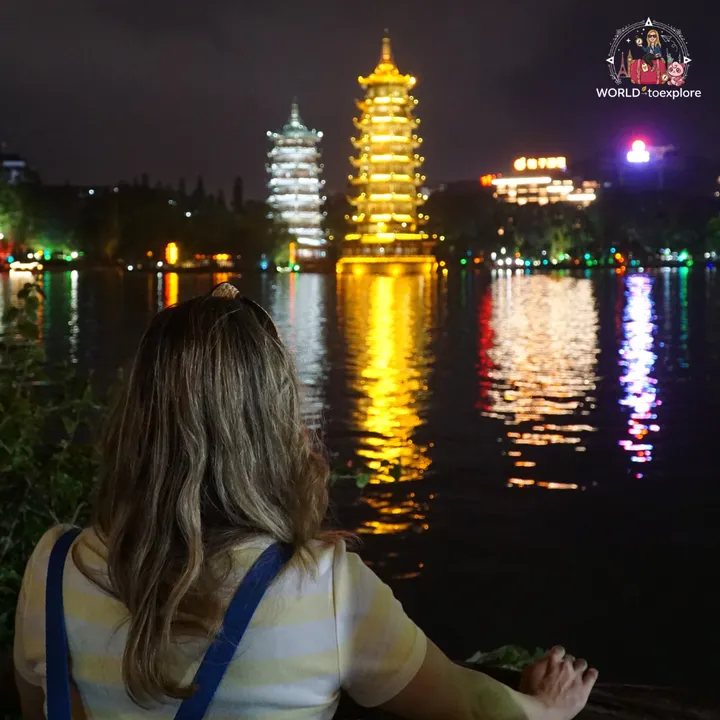

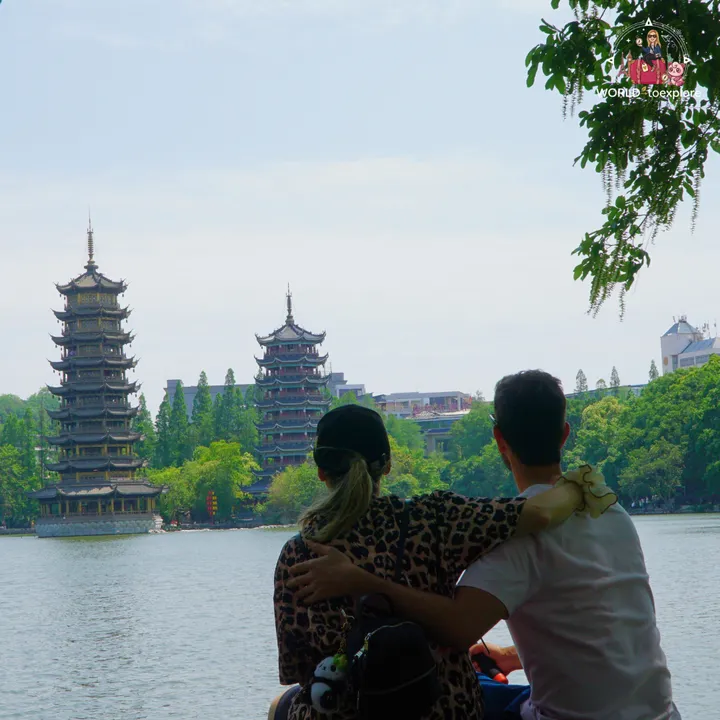
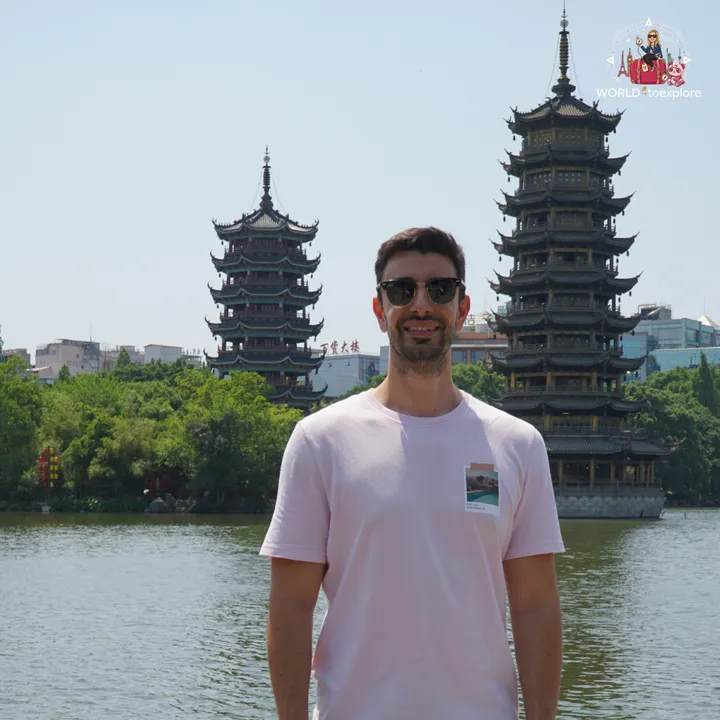
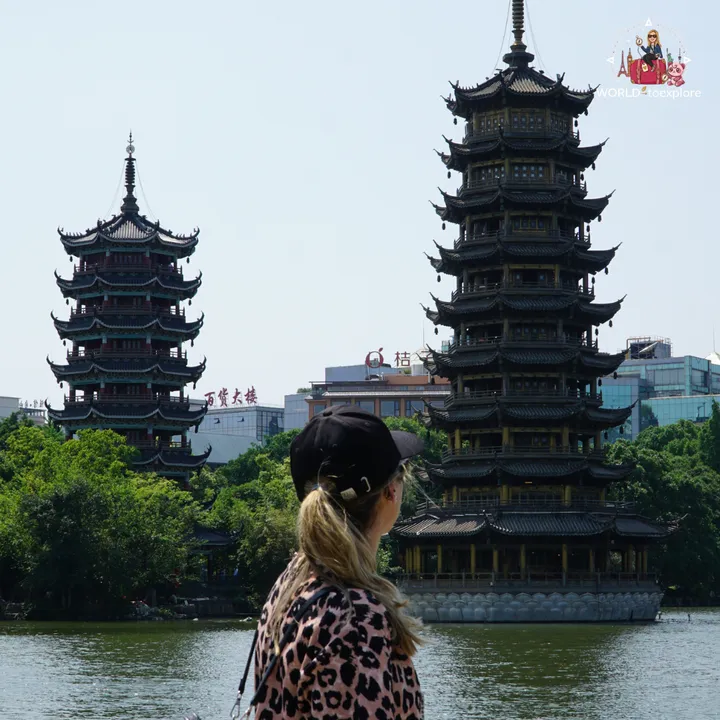

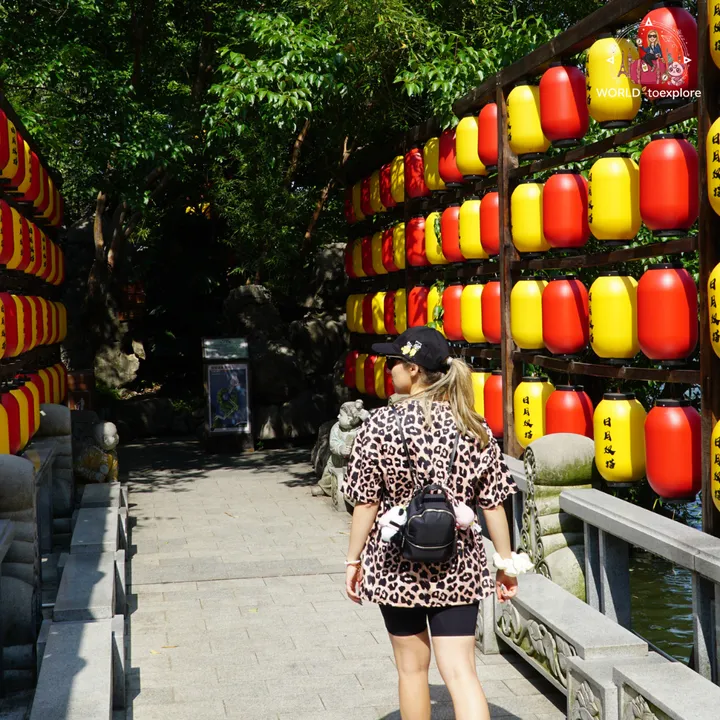
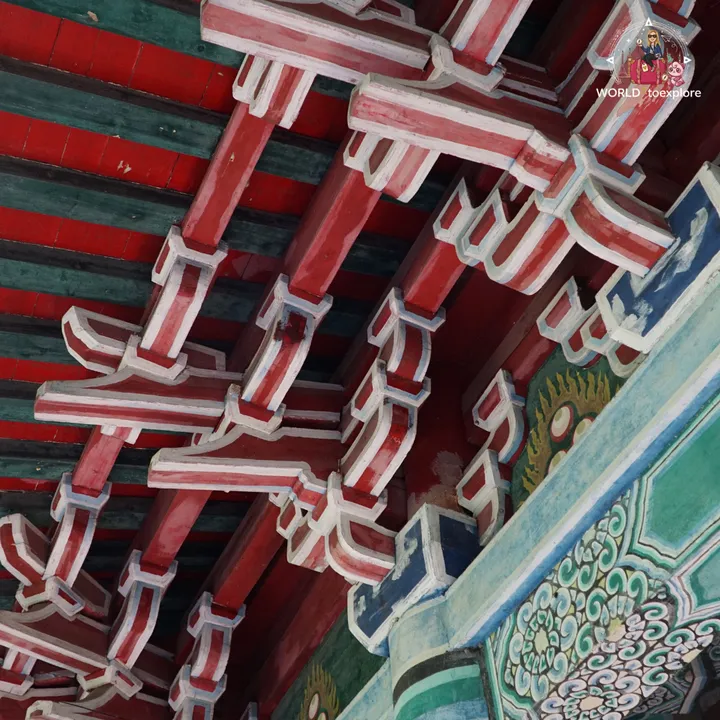
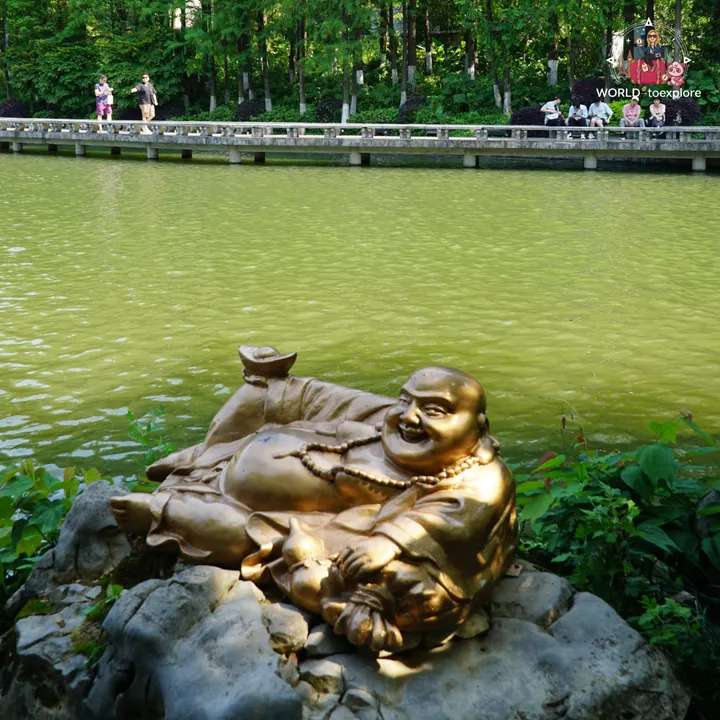
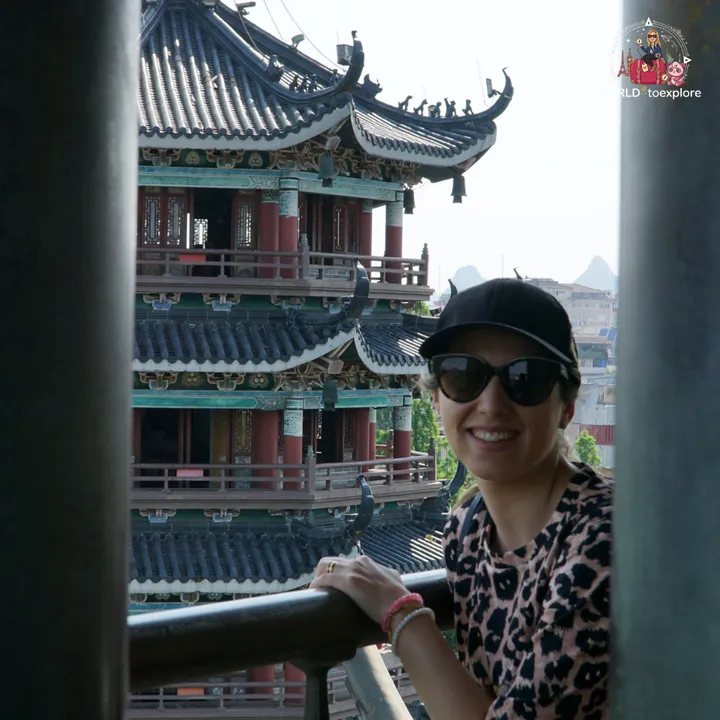
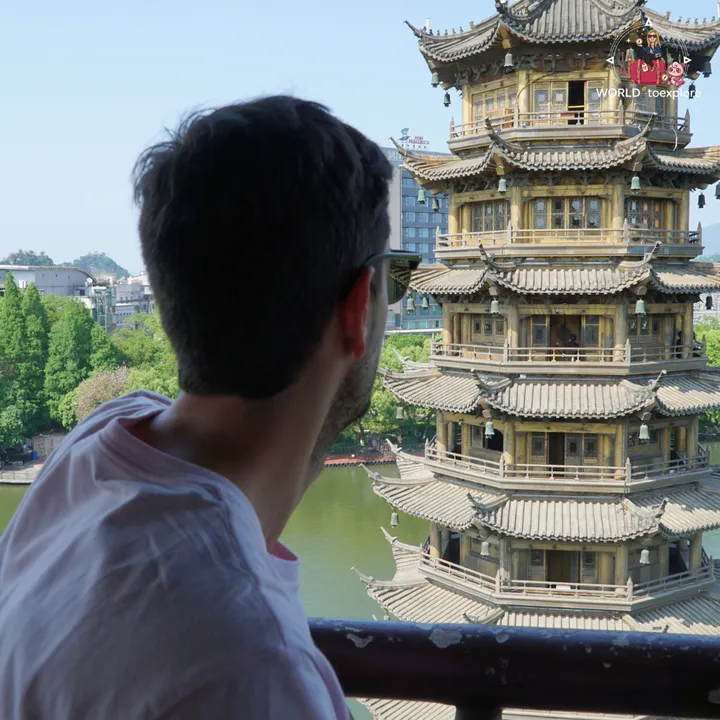
We really enjoyed getting to know the Sun and Moon Pagodas, and we think they’re worth seeing both by day and by night. It ends up feeling like two complementary visits. During the day, it’s easier to take in the pagodas’ details up close and to climb the towers. At night, the focus shifts to the lighting and the reflections on the water. Since they’re in a fairly central area, it’s easy to fit these two pagodas into a walk around Guilin and also take the chance to explore the Shanhu Lake area and part of the Two Rivers and Four Lakes route.
If you’re short on time, even if you can’t go in and climb the pagodas, don’t skip this spot. Just walking along the lake already gives you a great view of both! It was without a doubt one of the visits that stuck with us most from Guilin. 🩷
You Might Also Like
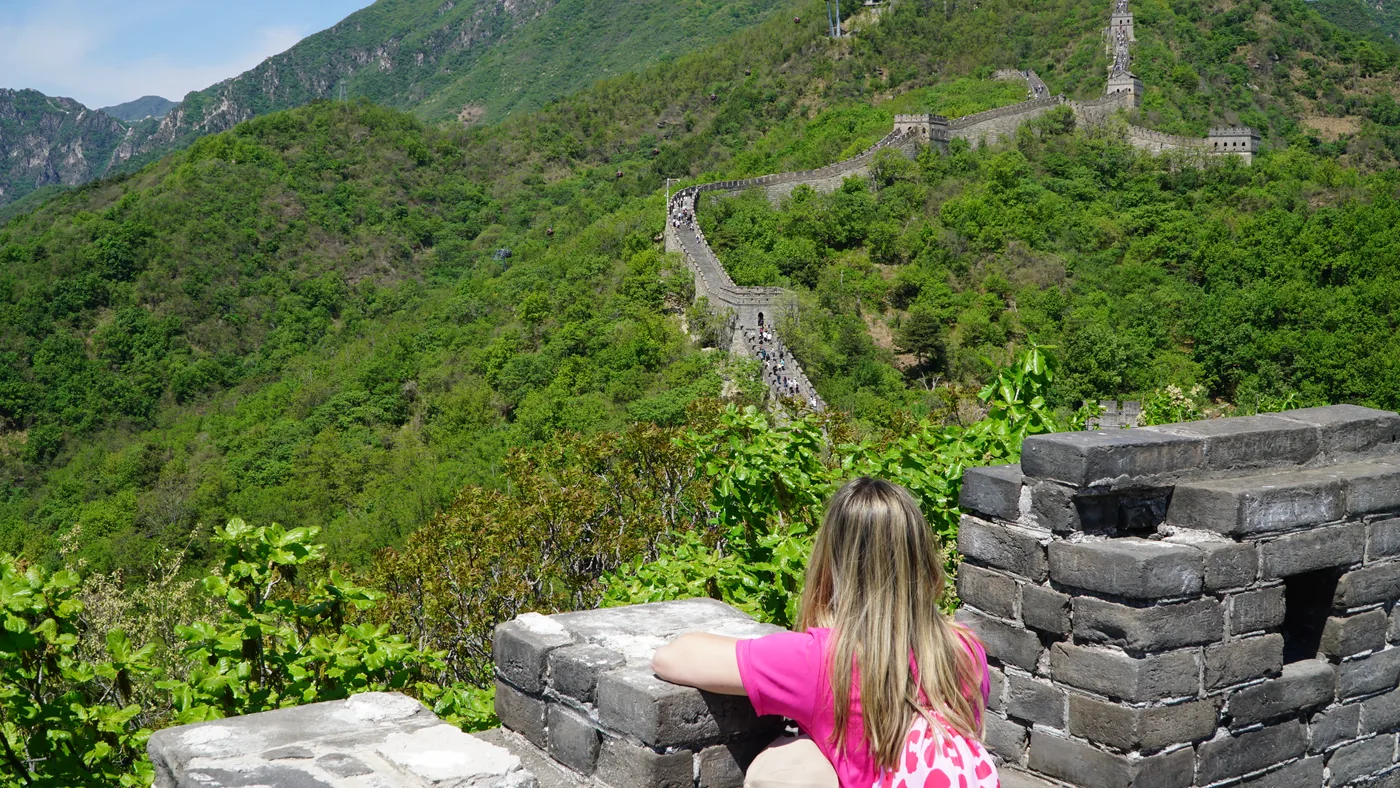
China: a box full of surprises
China was the biggest box of surprises of all my travels: from Shanghai to the Avatar mountains, from the terracotta warriors to the pandas of Chengdu.
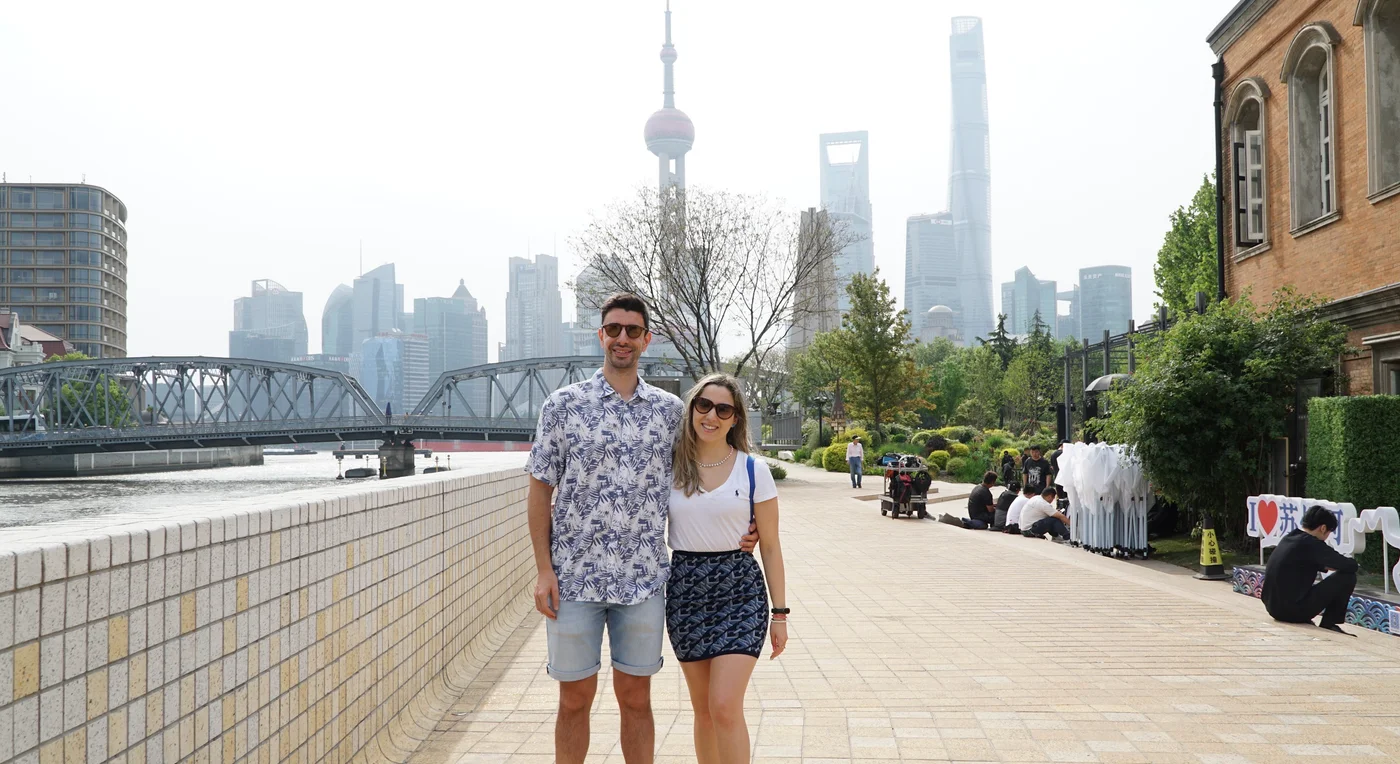
Shanghai Tower, China's Highest Observation Deck
Going up the Shanghai Tower, the highest observation deck in China: our experience on the 118th-floor observatory, plus tickets, opening hours and tips for your visit.

Visiting the Pandas at the Chengdu Research Base
We went to Chengdu just for the giant pandas, and our visit to the Chengdu Research Base of Giant Panda Breeding completely exceeded expectations. Here's what it was like to see these adorable troublemakers up close, plus everything you need to know to plan your own visit.