Singapore's Chinatown, Between Temples and History
This article was not sponsored and all opinions are genuine. It contains affiliate links, which means I may receive a small commission if you book through them, at no extra cost to you.
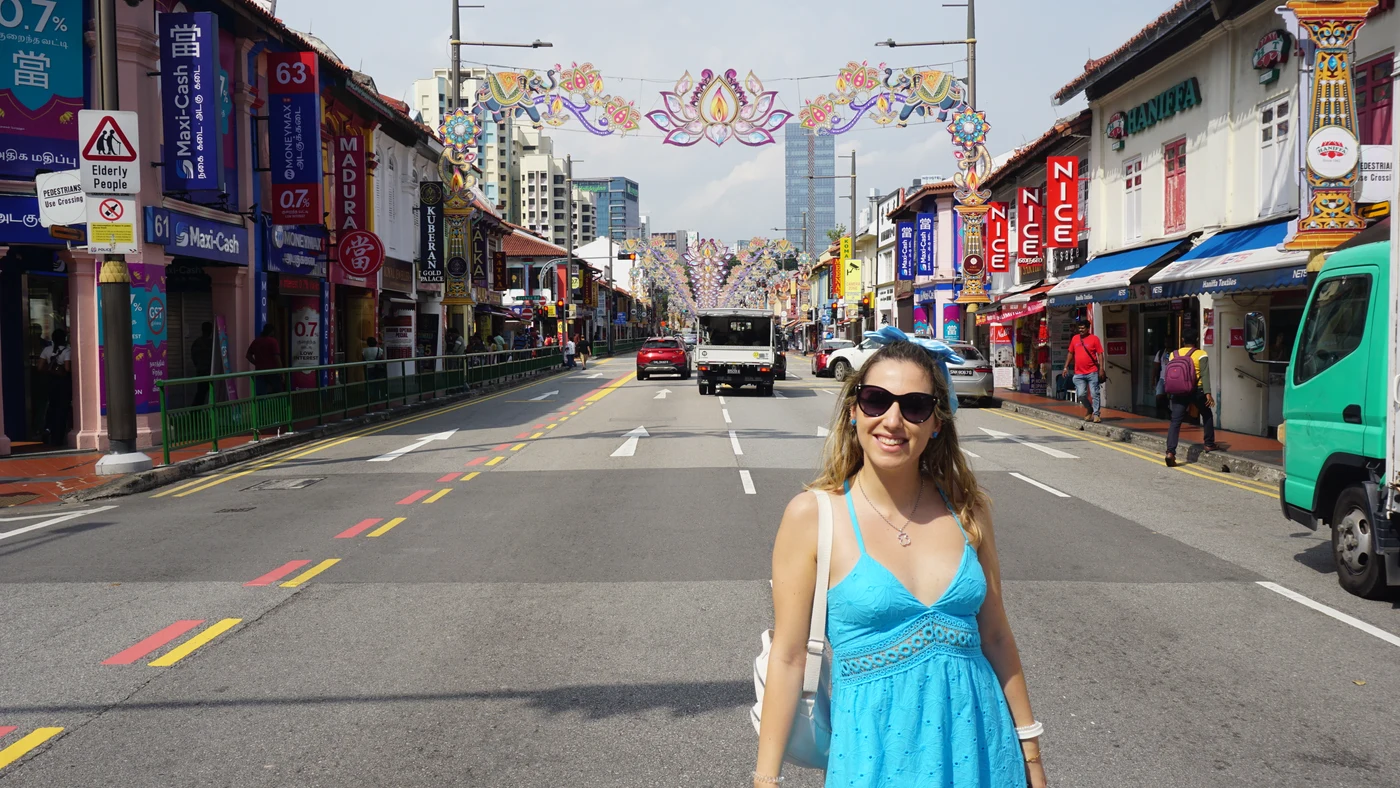
When we hear the word Chinatown, we usually picture streets full of red lanterns, souvenir shops and restaurants with ducks hanging in the doorway. Singapore's Chinatown sits right in the heart of the city and brings together, in just a few streets, temples of different religions, a museum that shows us how people lived here in the past and plenty of buildings linked to the immigrants who arrived in Singapore. It is a neighbourhood that dates back to the 19th century, when the British decided to divide the different communities into specific areas of the city.
We visited the city in October 2024, during a two-day stopover in Singapore, before heading on to the final destination of our honeymoon in Australia. As we had little time and the sights were relatively close to each other, we did practically everything on foot, from the Chinatown Heritage Centre to Thian Hock Keng, passing through the Sri Mariamman Temple, the Buddha Tooth Relic Temple and South Bridge Road. In this article I will tell you a little about the history of the neighbourhood, share both our experience and what we saw at each place, and give some practical information for anyone who wants to fit a visit to Singapore's Chinatown into their trip.
The History of Singapore's Chinatown
The history of Chinatown begins shortly after the British arrived in Singapore. In 1819, Sir Stamford Raffles founded a trading post in this region on behalf of the British East India Company and, with the port growing at an almost exponential rate, the city soon needed to be organised. The 1822 urban plan, drawn up by Lieutenant Philip Jackson following Raffles' instructions, set aside the area to the south-west of the Singapore River for the Chinese community, which at the time became known as the Chinese Campong. But the neighbourhood did not appear all at once. It began to develop in the 1820s in Telok Ayer, close to the old shoreline, and gradually spread to Kreta Ayer in the 1830s, as more immigrants arrived.
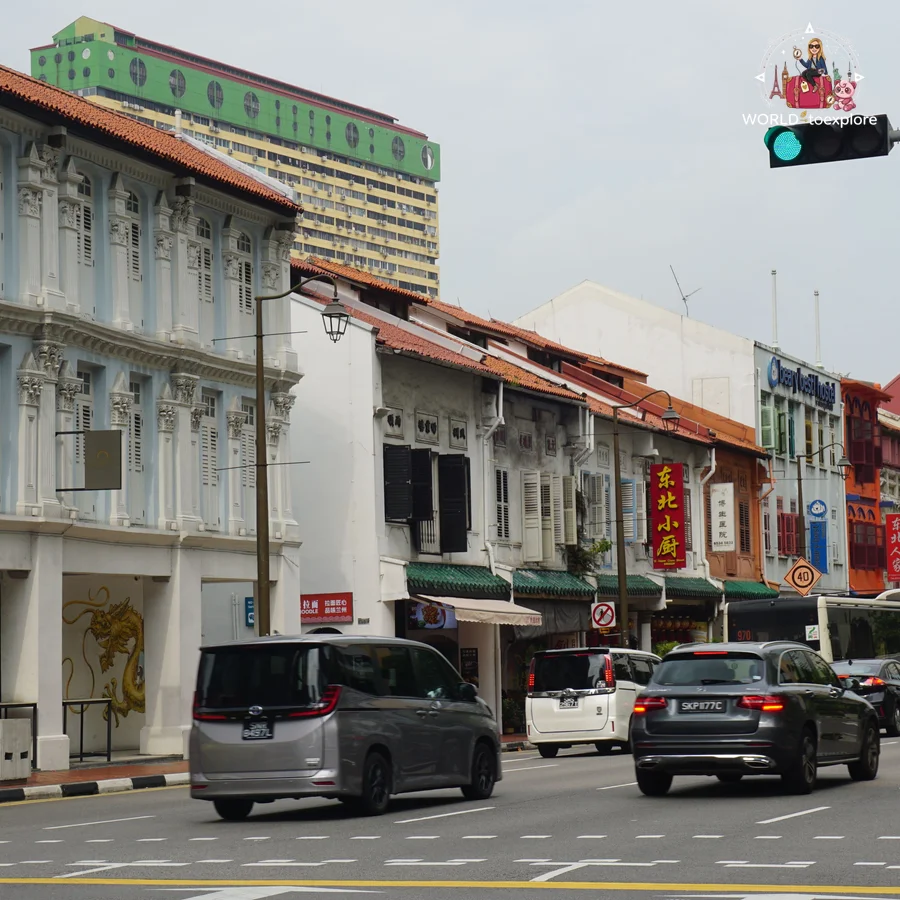
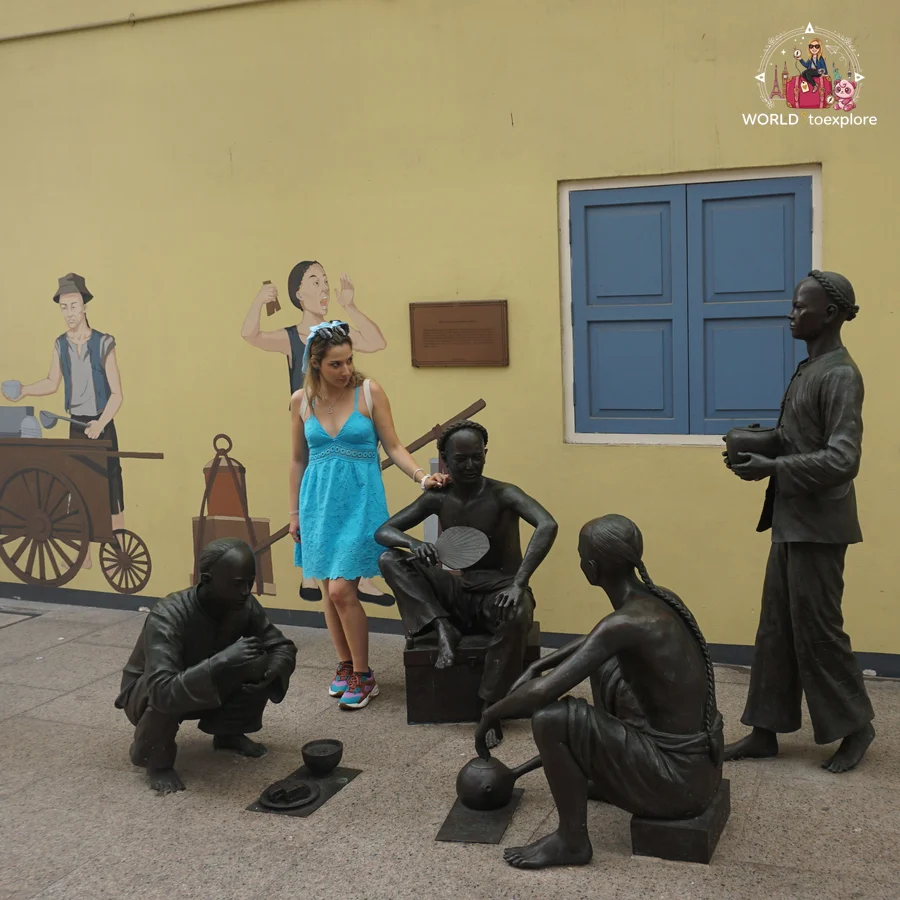
Most of the immigrants who arrived in Singapore came from southern China and crossed the sea in search of work and a better standard of living. They came from different regions and spoke different languages, such as Hokkien, Teochew, Cantonese and Hakka. As they settled in the city, these communities tended to cluster in their own areas, where they built temples that also served as meeting places and social hubs. The Hokkien settled mainly around Telok Ayer Street, while the Cantonese gathered more around Temple Street. From 1843, plots of land began to be granted for building along streets such as Pagoda Street, Temple Street and Smith Street. This is how many of the shophouses that still give the neighbourhood its character came about, with shops on the ground floor and living space on the upper floors. There are also two curiosities about the names of these streets. Despite appearances, Pagoda Street is not named after a Chinese tradition, but after the tower at the entrance to the Hindu Sri Mariamman Temple. The same goes for Temple Street, whose name is also linked to this temple.
At the start of the 20th century, many of the shophouses on Pagoda Street were used as lodgings for so-called coolies, manual labourers who arrived in Singapore and ended up living in rather poor conditions. It was only from the 1950s that many of these buildings began to be used as shops. Later, in the 1980s, Singapore went through a period of major change. Many old buildings were being demolished to make way for new developments and skyscrapers, which led the authorities to take steps to preserve the city's historic heritage. On 7 July 1989, Chinatown and Little India were officially designated conservation areas. Today, Chinatown is the largest historic district in Singapore and still holds on to much of its original identity.
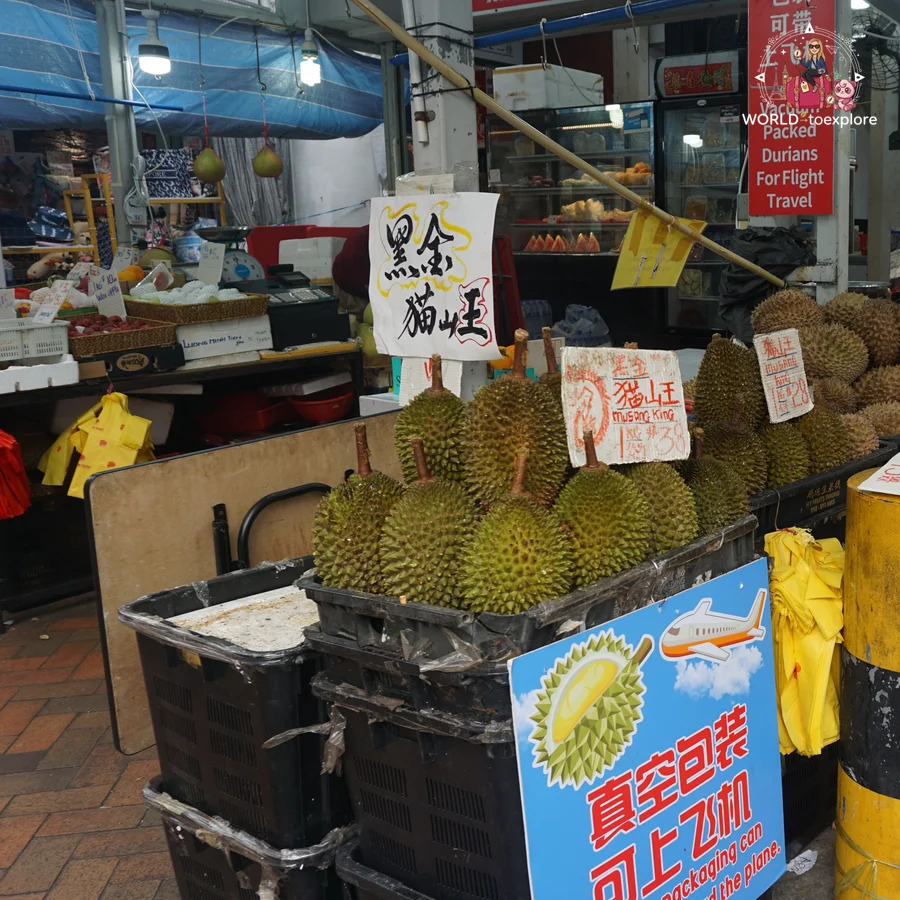
Our Route Through Singapore's Chinatown
Chinatown is not just one street, but a group of four protected historic areas, Telok Ayer, Kreta Ayer, Tanjong Pagar and Bukit Pasoh, all within the administrative area of Outram, which covers about 1.4 km² in the centre of Singapore. The heart of the neighbourhood is Kreta Ayer, bounded by New Bridge Road, Upper Cross Street and South Bridge Road, where many of the streets we walked along are concentrated. Telok Ayer is a little further away, but still within easy walking distance. As there is a lot to see, below is a map with the seven places I think are most worth visiting, so you can follow the same order or adapt it to the time you have.
1. Chinatown Heritage Centre
Located on Pagoda Street, the Chinatown Heritage Centre is housed in three restored shophouses dating from before the Second World War. It is a good starting point for exploring Chinatown, as it helps us learn more about the history of the neighbourhood and the people who lived here over the years. The centre recreates the daily life of the first Chinese immigrants, showing what the homes and lodgings they lived in looked like, many of them in very basic conditions. After the visit, it is easier to imagine what life in Chinatown was like back then and to look differently at the shophouses that still define the streets around it.
- Address: 48 Pagoda Street, Singapore 059207
- Opening hours: 10.00am to 8.00pm (last entry at 7.15pm)
- Duration: depends on your pace, but between 1 hour and 1 hour 30 minutes
- Price: 25 SGD per adult (around €18)
- Offer for foreign visitors: if you visit the Chinatown Heritage Centre between 7.00pm and 8.00pm, you can take advantage of the Last Hour Promo and pay just 20 SGD instead of the usual 25 SGD. It is best to arrive right at 7.00pm to make the most of your visit.
2. Sri Mariamman Temple
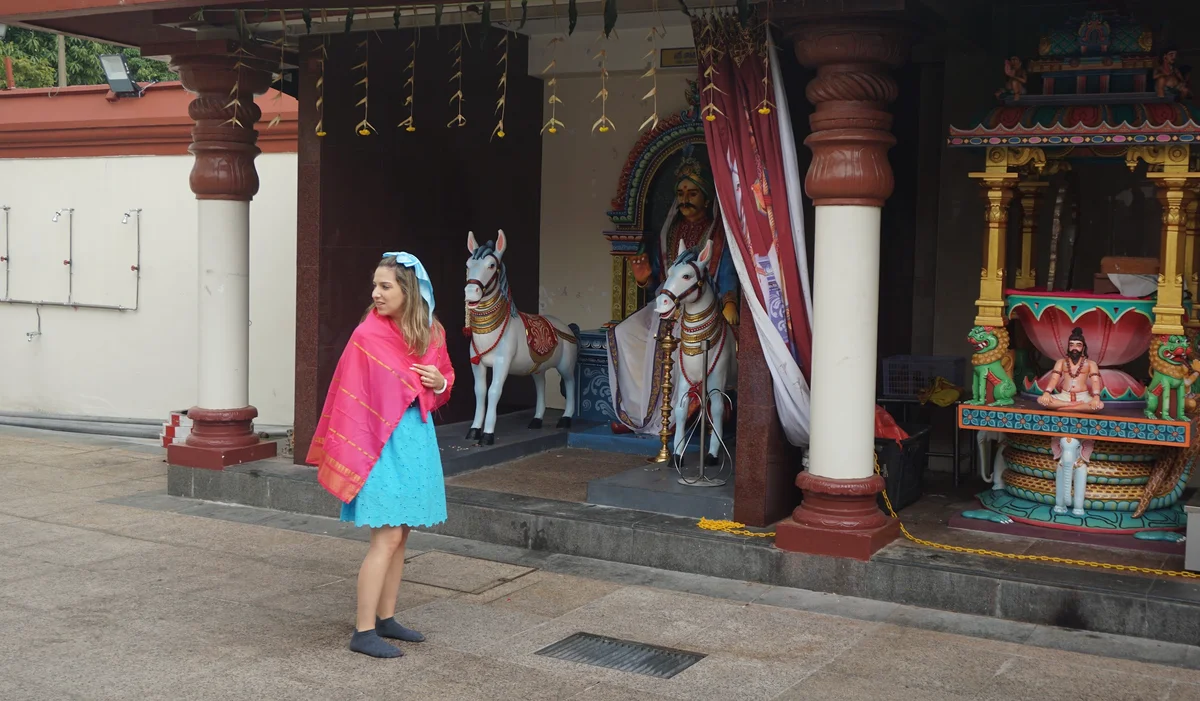
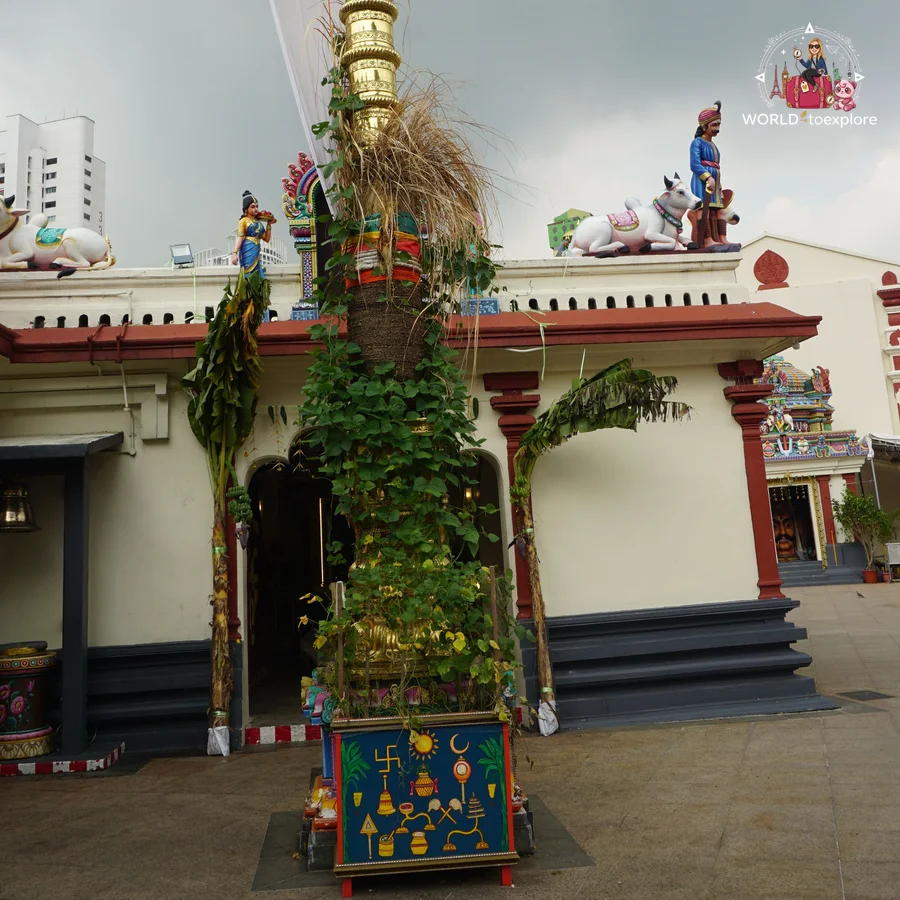
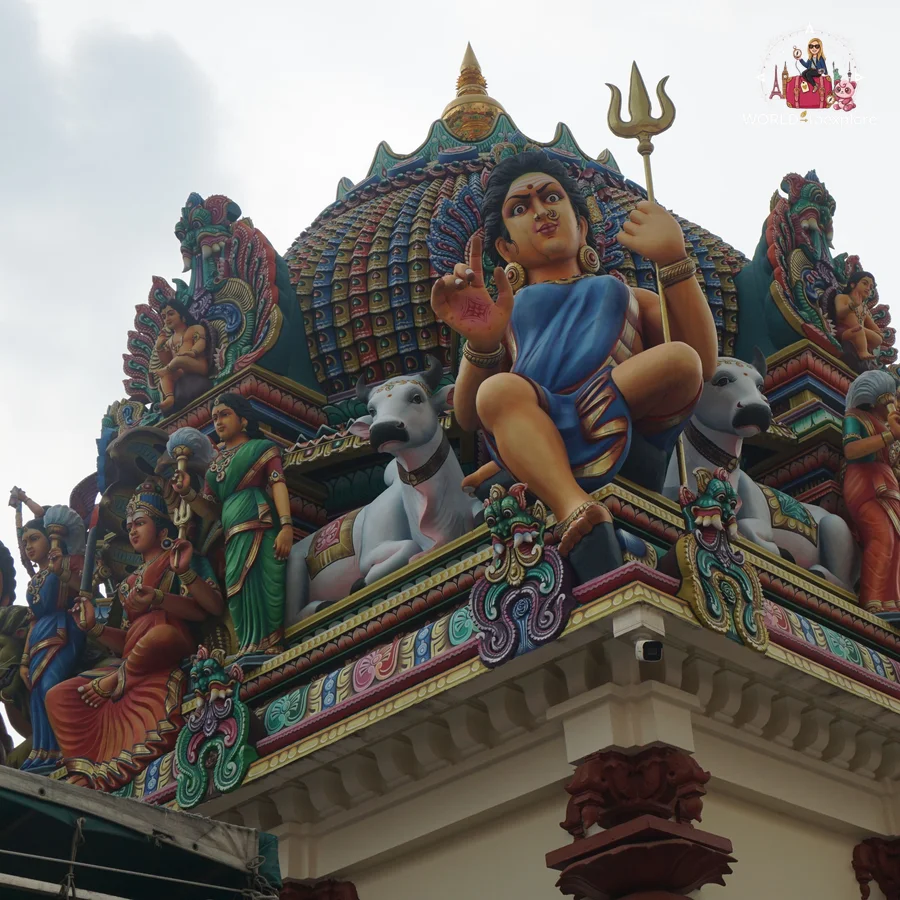
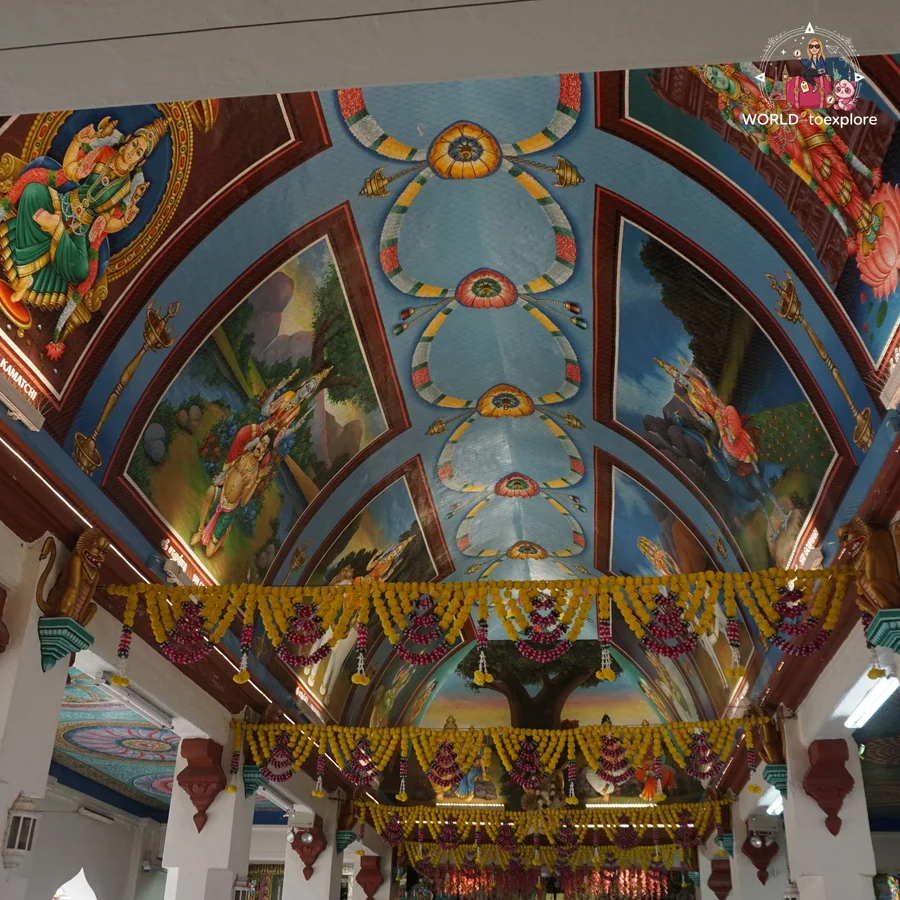
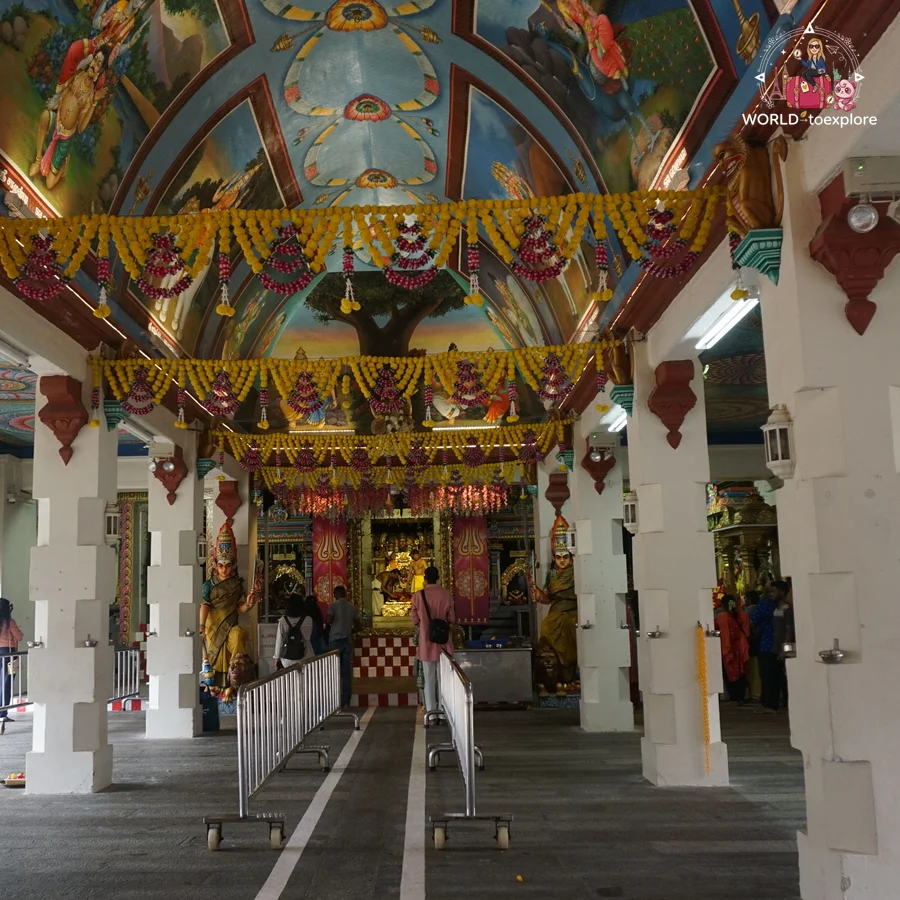
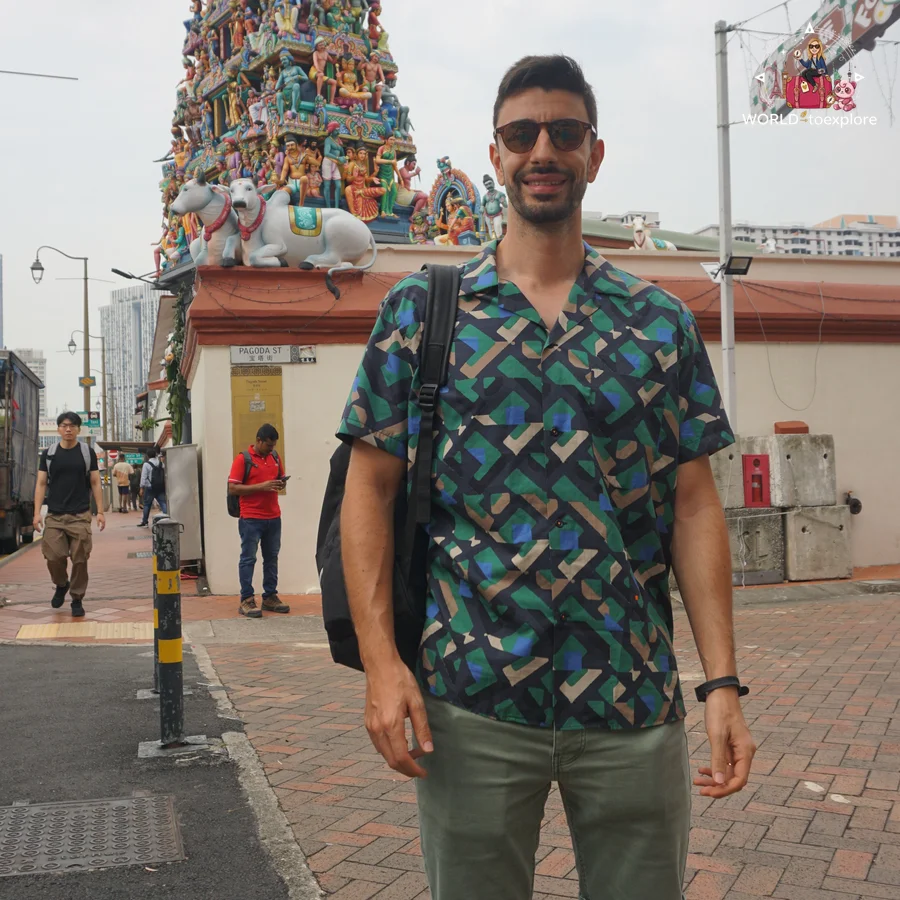
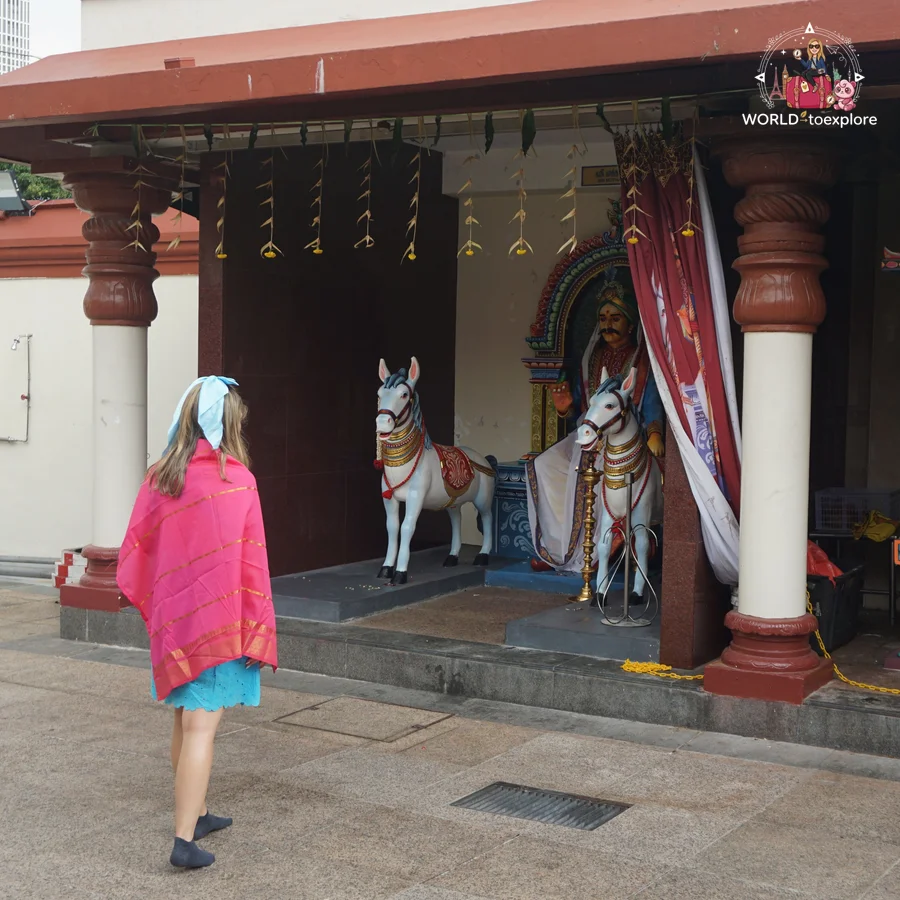
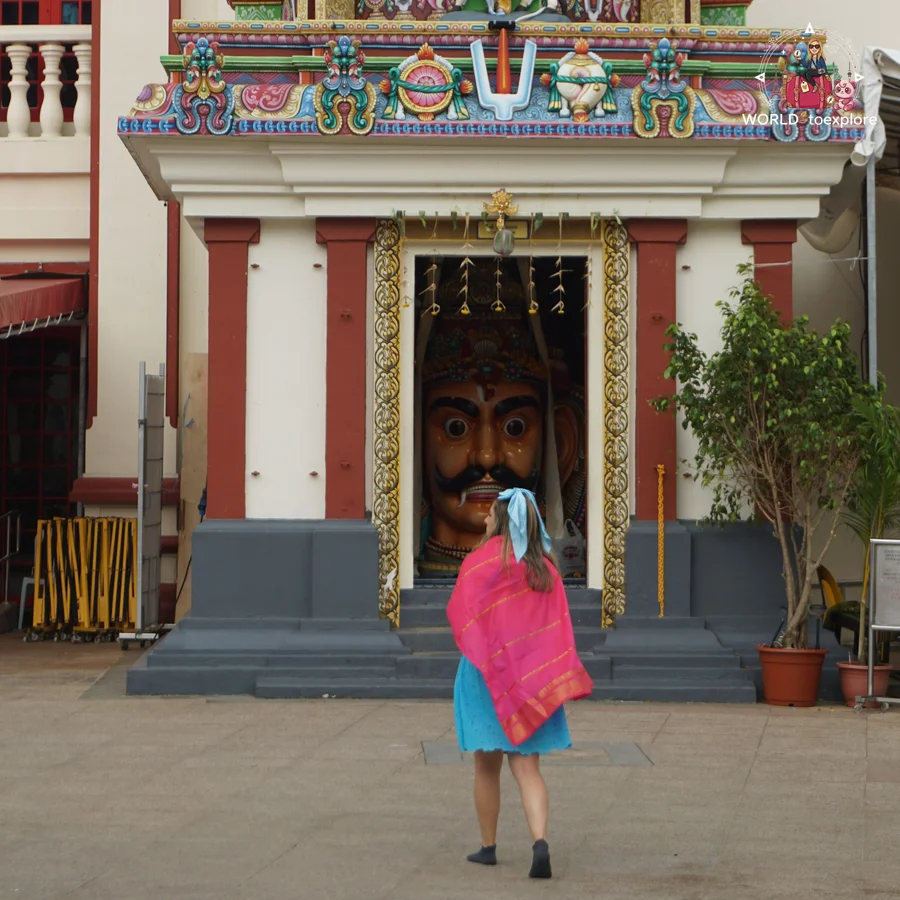
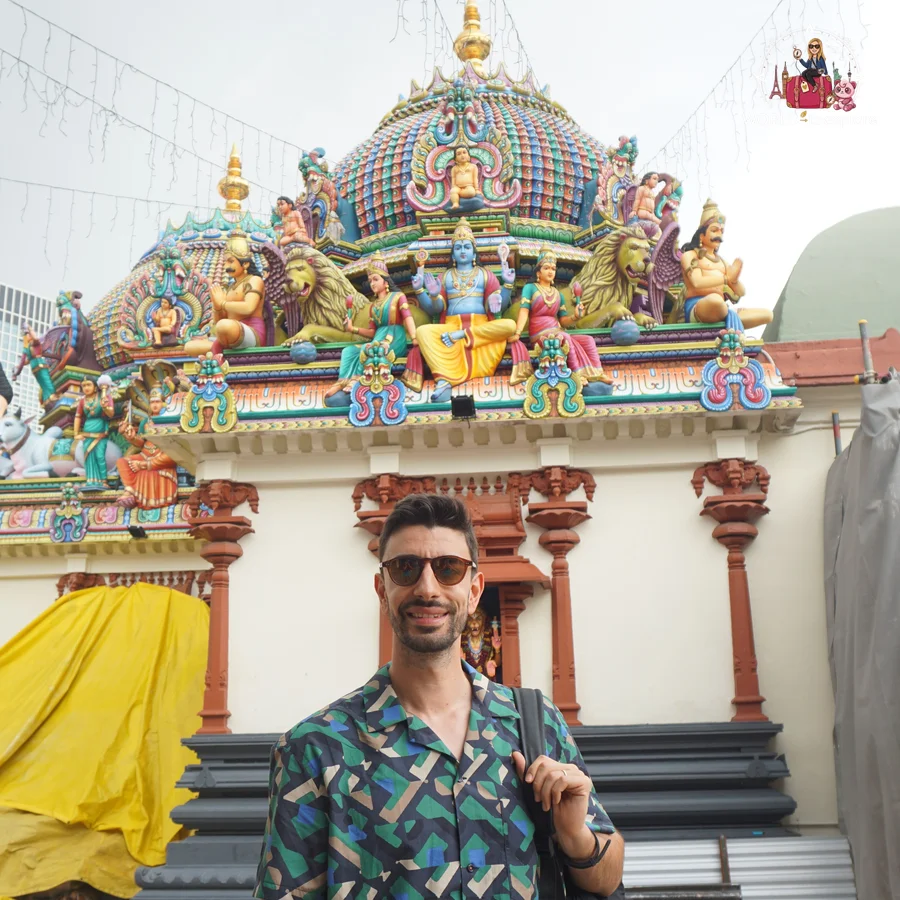
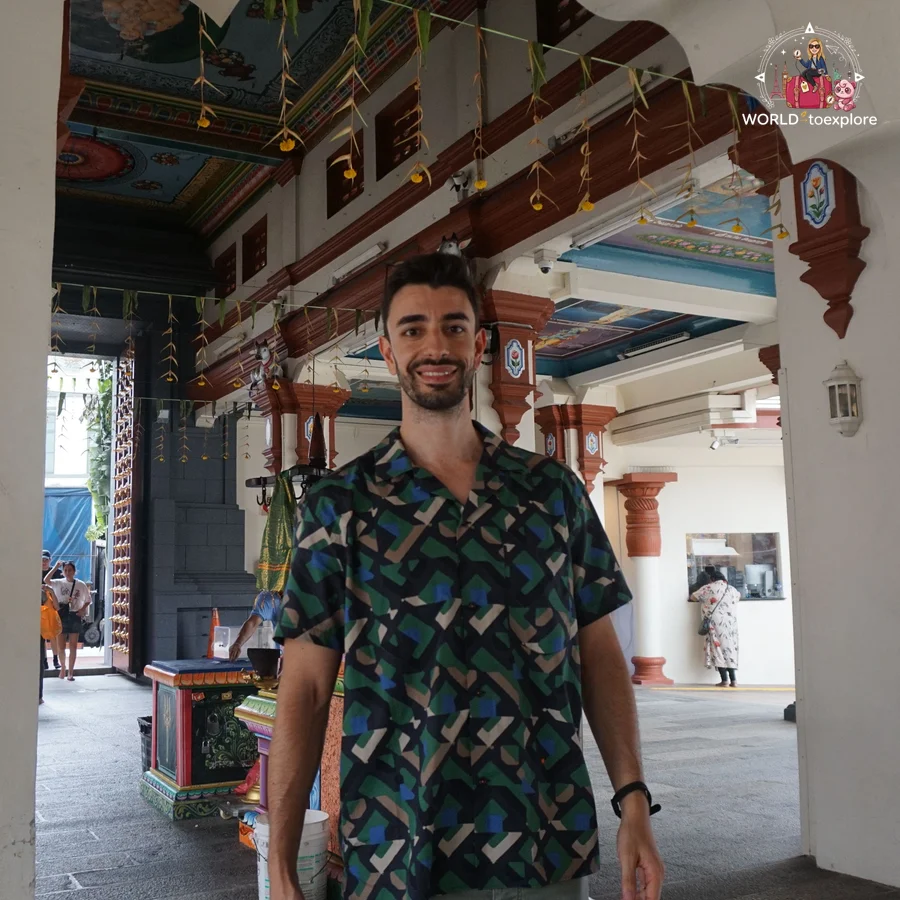
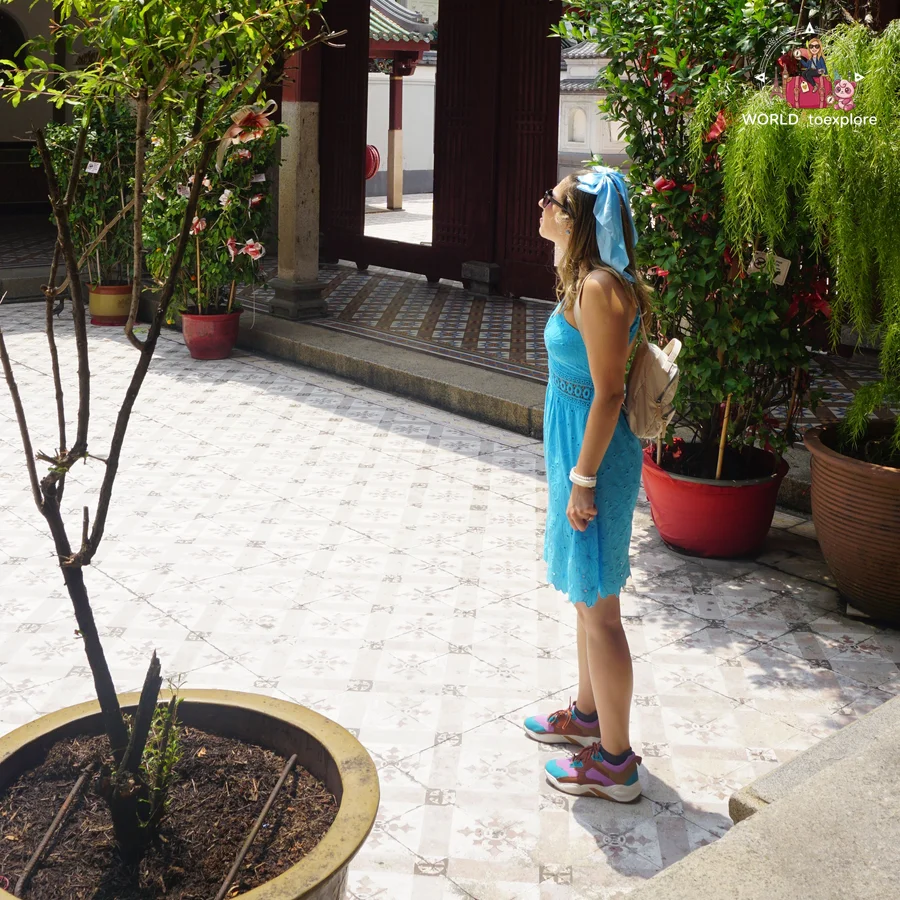
Founded in 1827 by immigrants from southern India, the Sri Mariamman Temple is the oldest Hindu temple in Singapore. Its construction was the initiative of Naraina Pillai, one of the first leaders of the Indian community on the island, who wanted to create a place of worship for the Hindu immigrants arriving here. The first temple was very simple, made of wood with a roof of palm leaves, very different from the building we see today. It sits right in the middle of Chinatown, surrounded by Chinese temples and buildings, which makes its presence even more interesting. It is dedicated to the goddess Mariamman, widely worshipped by the Tamil community, and stands out at the entrance for its gopuram, a tower covered in colourful sculptures of deities and figures from Hindu mythology. Inside, the atmosphere is very different from what Chinatown has led us to expect, with plenty of colour, flowers and offerings. If you plan to go in, remember that you must take off your shoes and wear clothes that cover your shoulders and knees. In my case, I was wearing a dress that left my shoulders and back bare, but it was not a problem, because they have scarves at the entrance that we can use to cover up during the visit.
- Address: 244 South Bridge Road, Singapore 058793
- Opening hours: 7.00am to 12.00pm and 6.00pm to 9.00pm
3. South Bridge Road
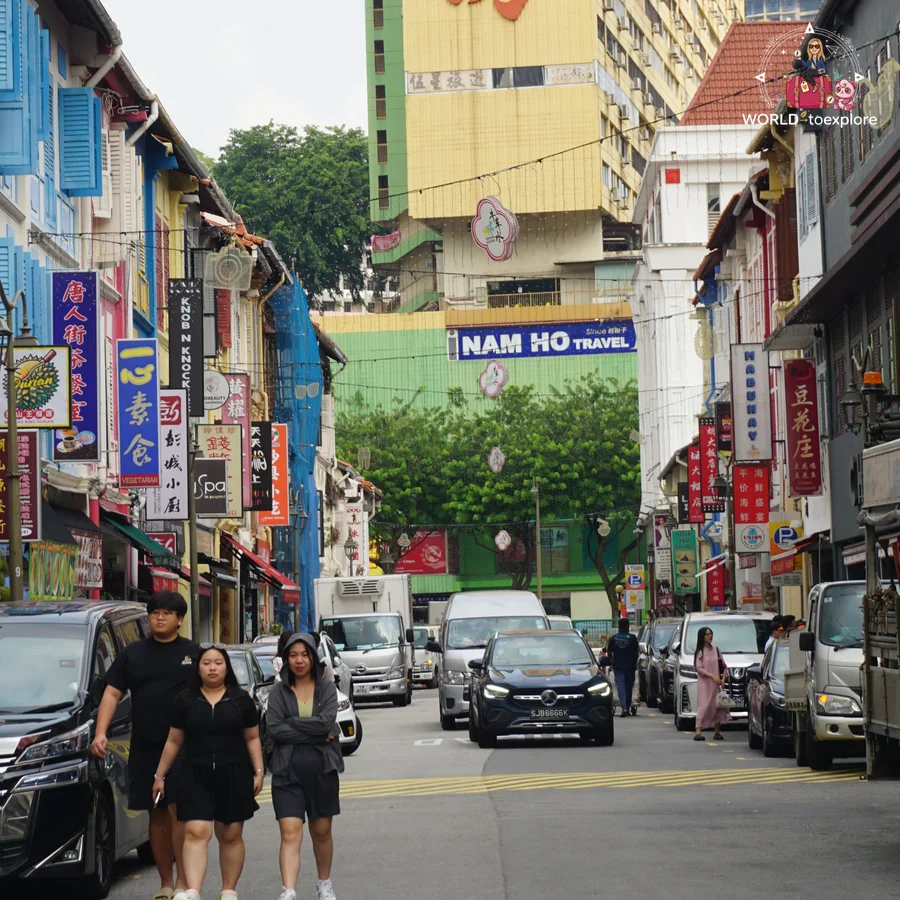
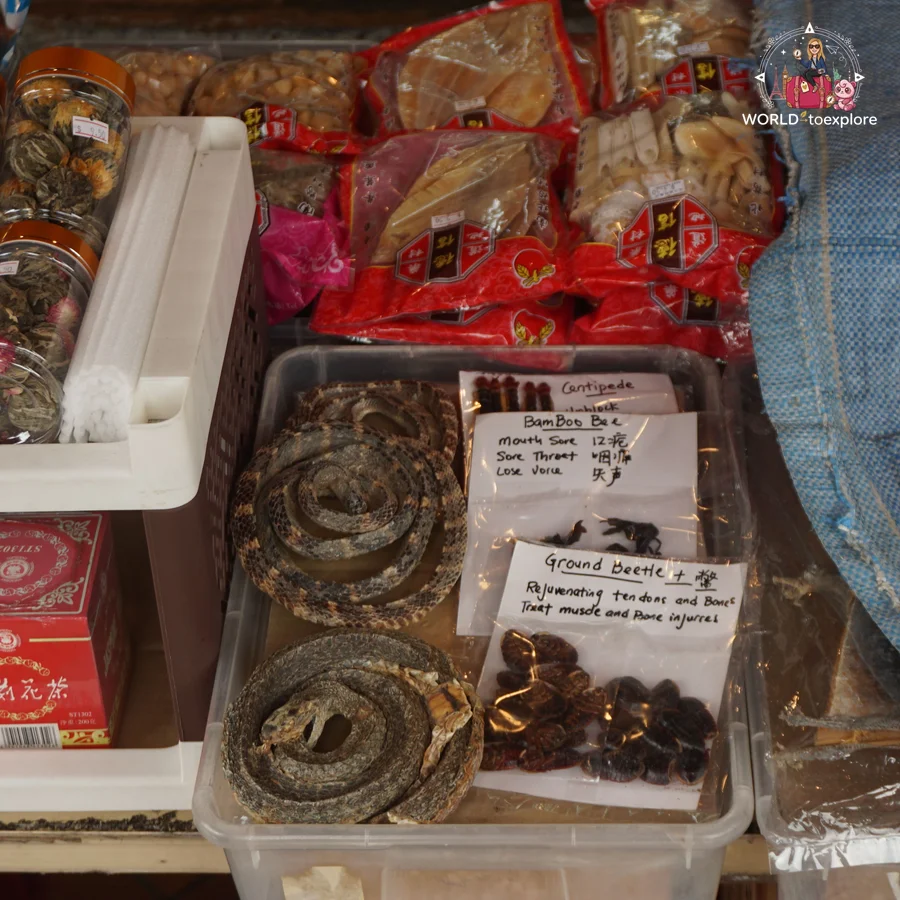
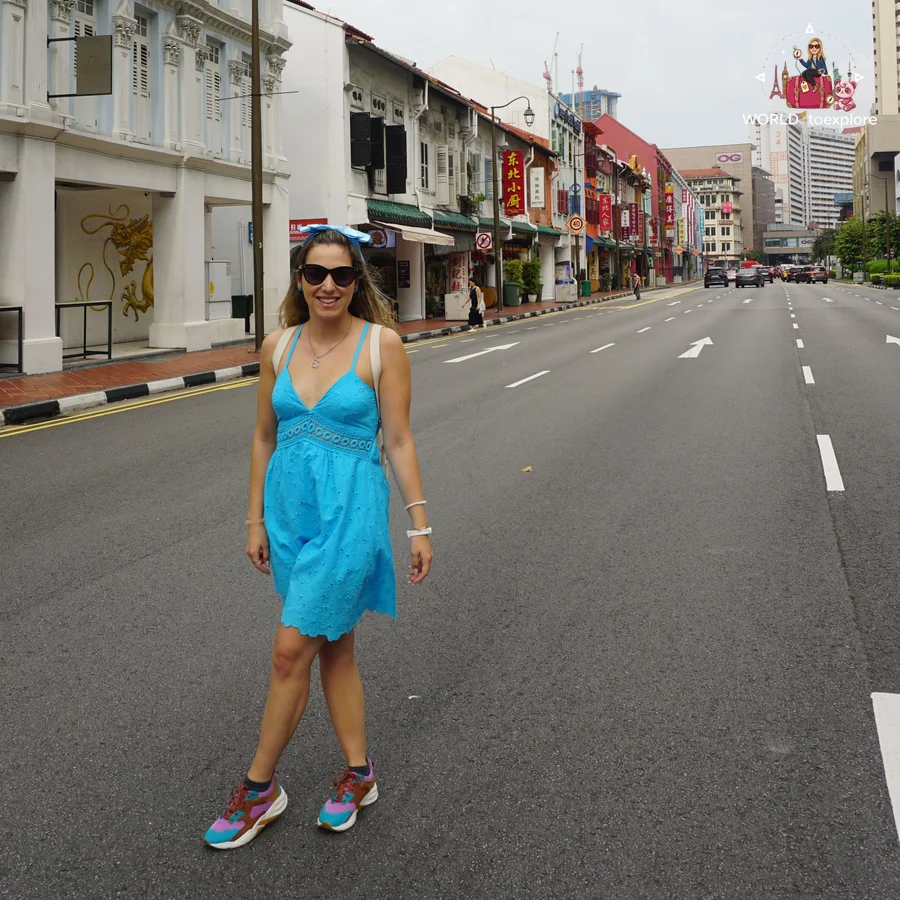
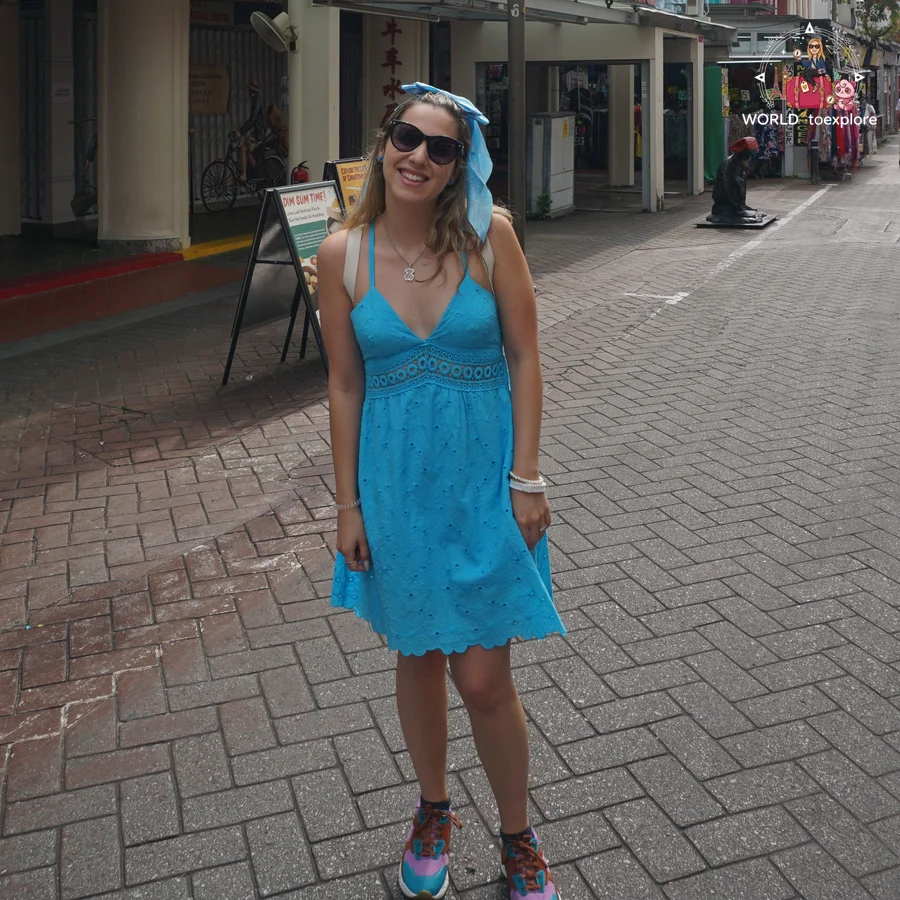
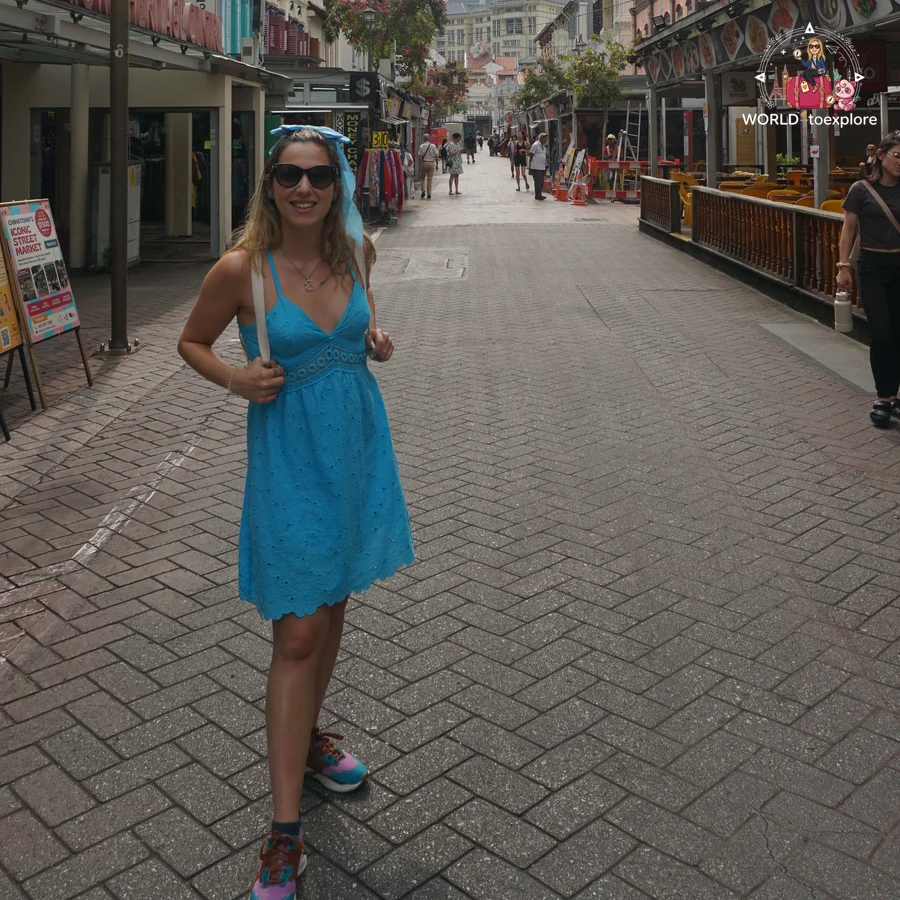
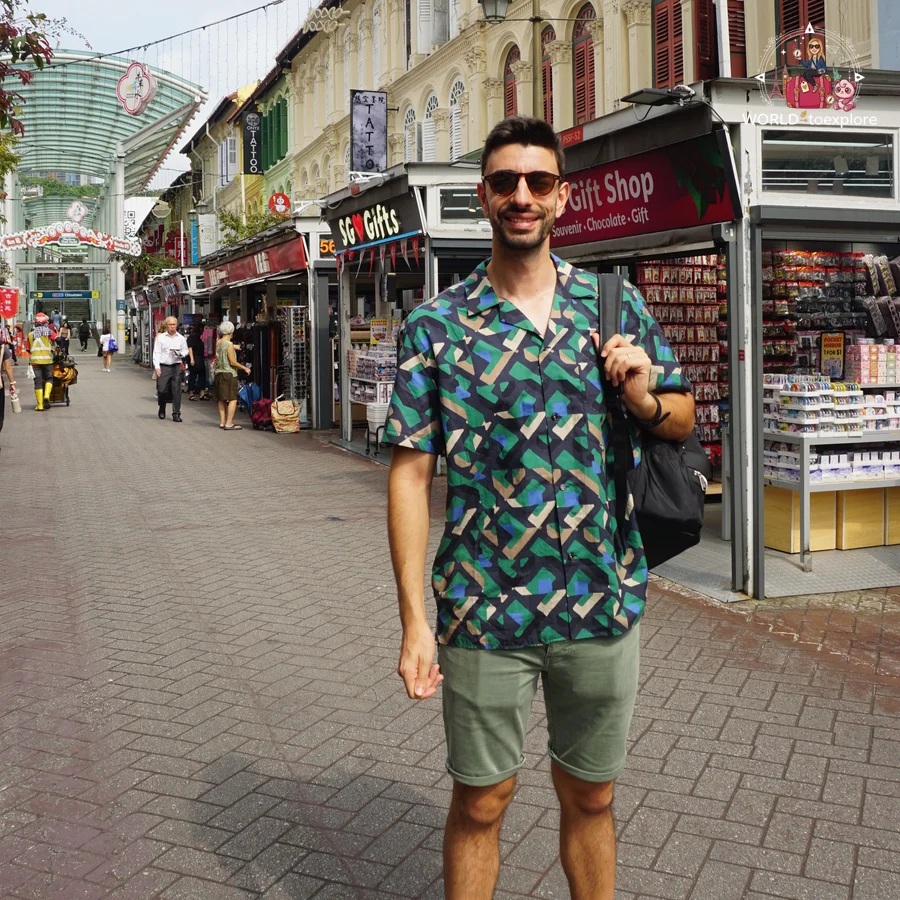
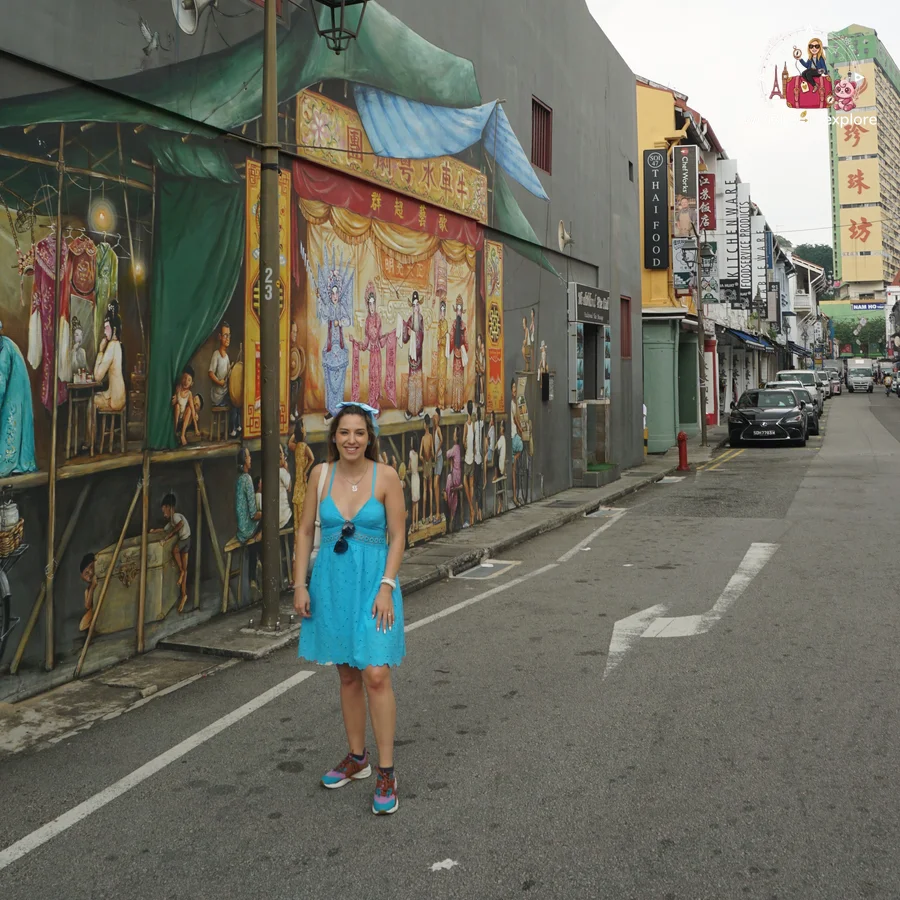
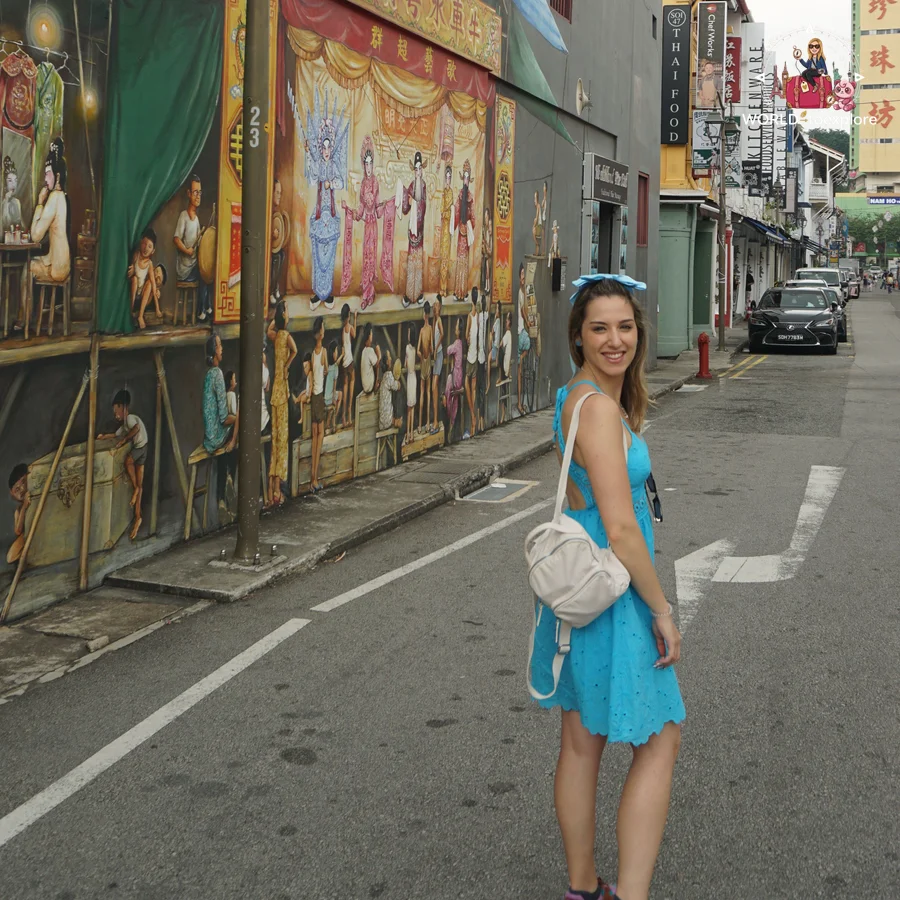
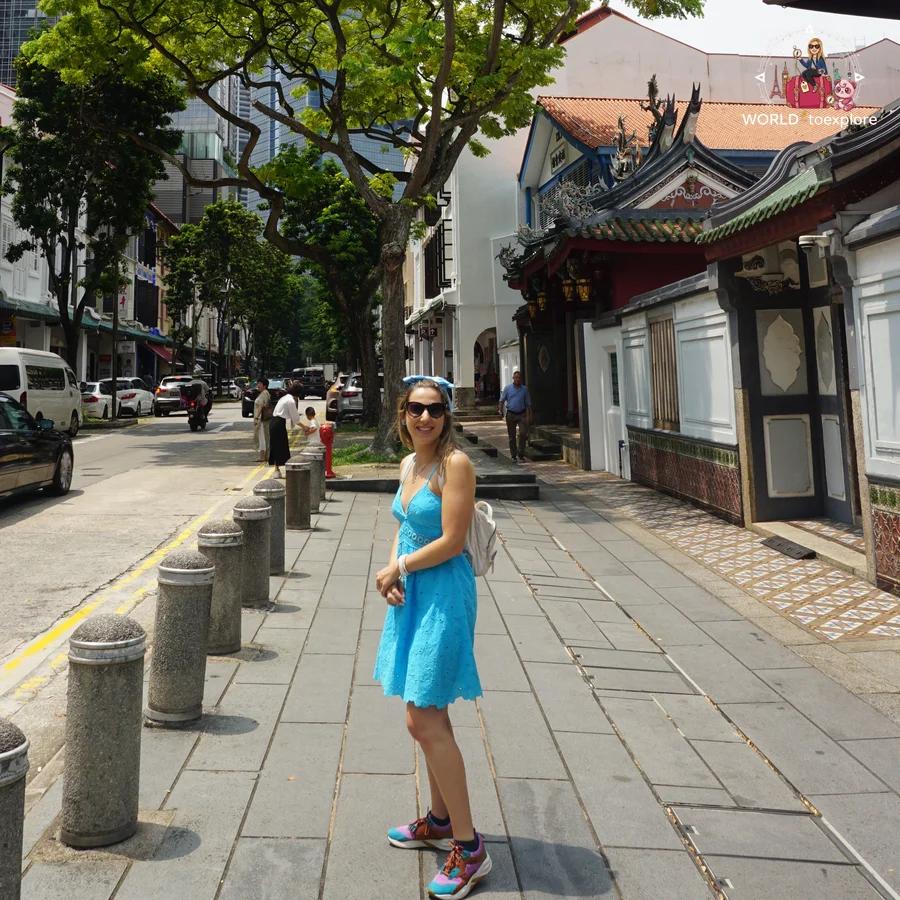
South Bridge Road is one of the main streets in Chinatown and an almost unavoidable part of any visit to the neighbourhood. It links the Sri Mariamman Temple to the Buddha Tooth Relic Temple, which are just a few minutes' walk from each other, and there is plenty to see along the way. This area, known as Kreta Ayer, is one of the busiest parts of Chinatown and brings together shophouses, small shops and temples of different religions. It is also where you will find the Masjid Jamae, a mosque that reminds us that Chinatown has always been a neighbourhood shaped by a mix of communities and cultures. If you have time, I would say it is worth walking along the street slowly, looking at the façades and spotting the small details that often go unnoticed.
- Location: between the Sri Mariamman Temple (no. 244) and the Buddha Tooth Relic Temple (no. 288)
4. Buddha Tooth Relic Temple
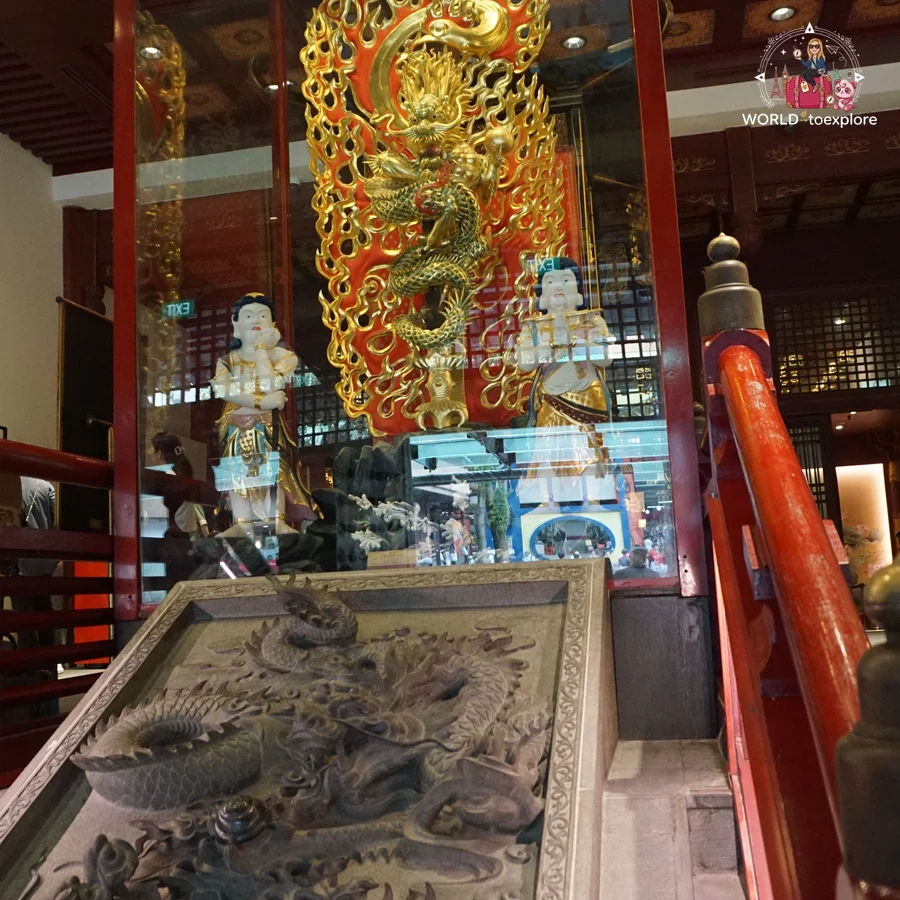
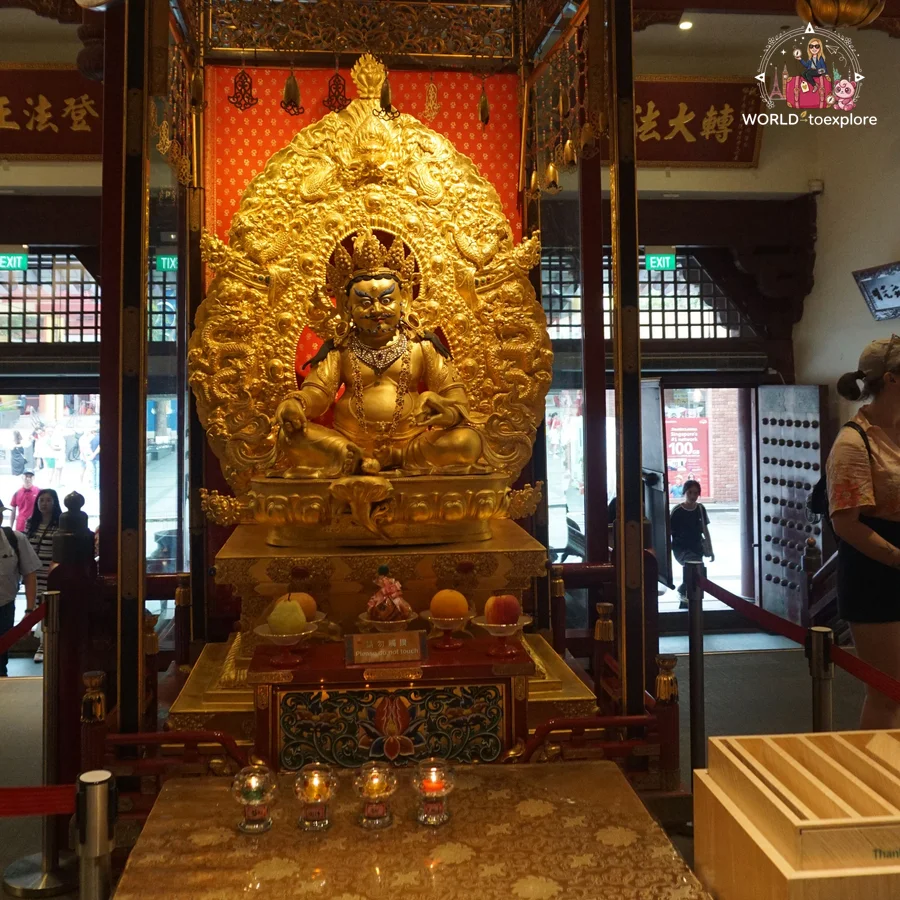
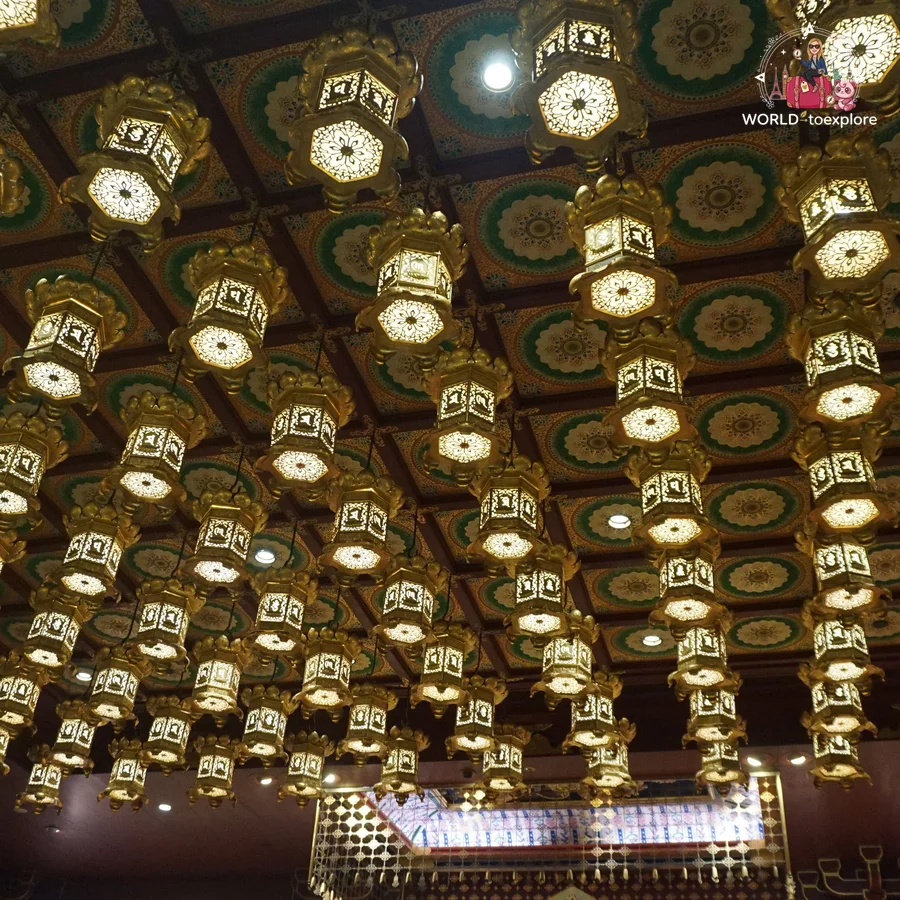
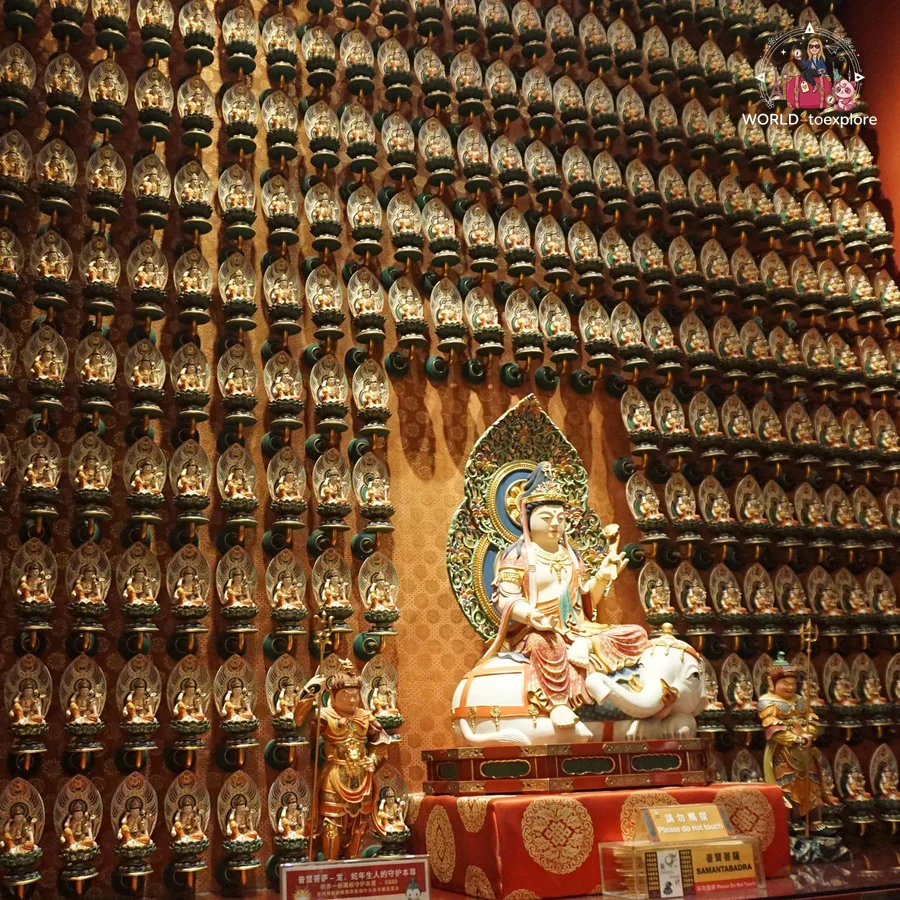
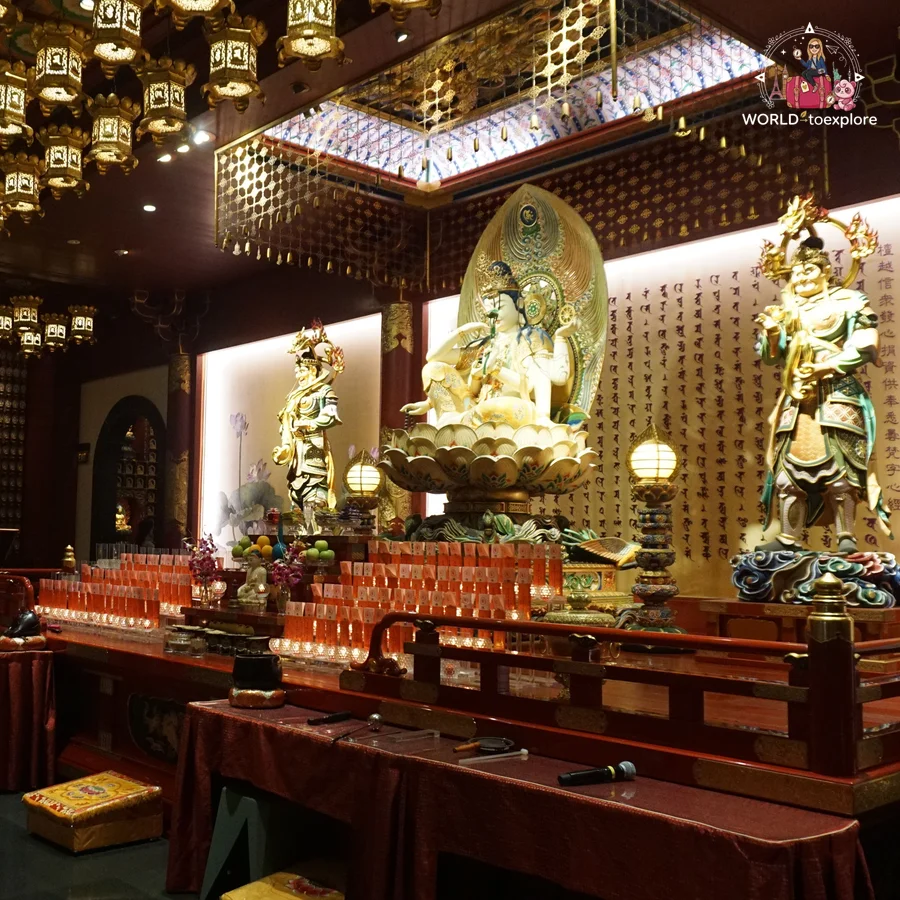
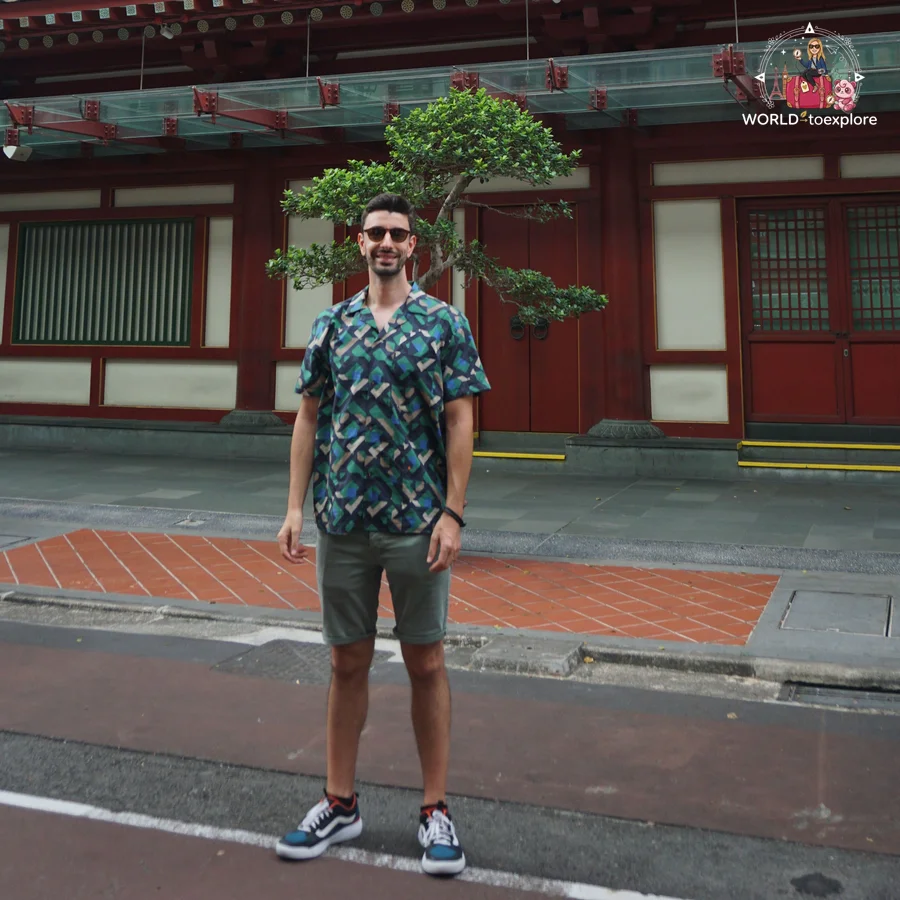
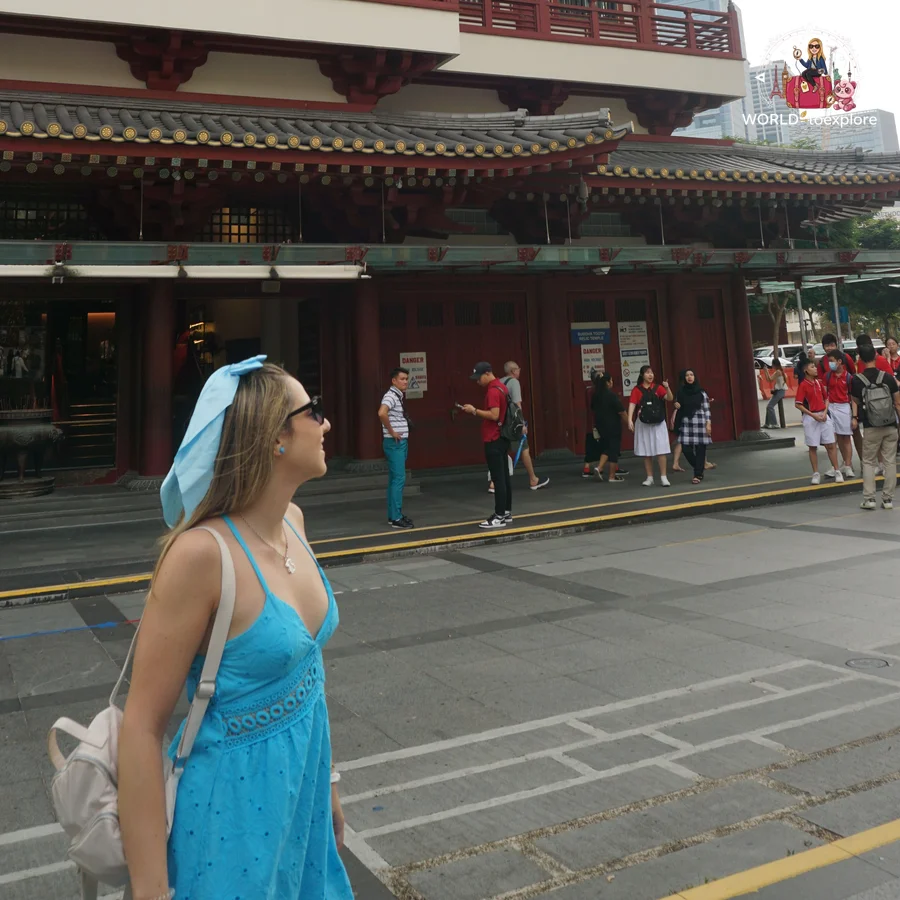
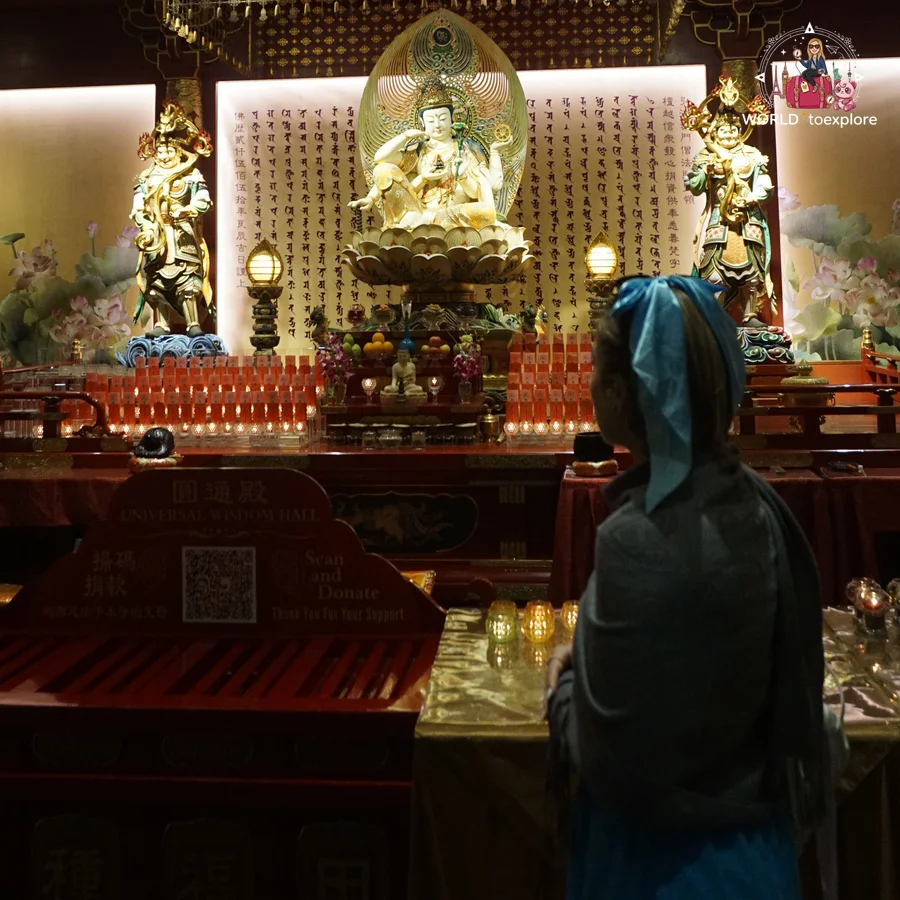
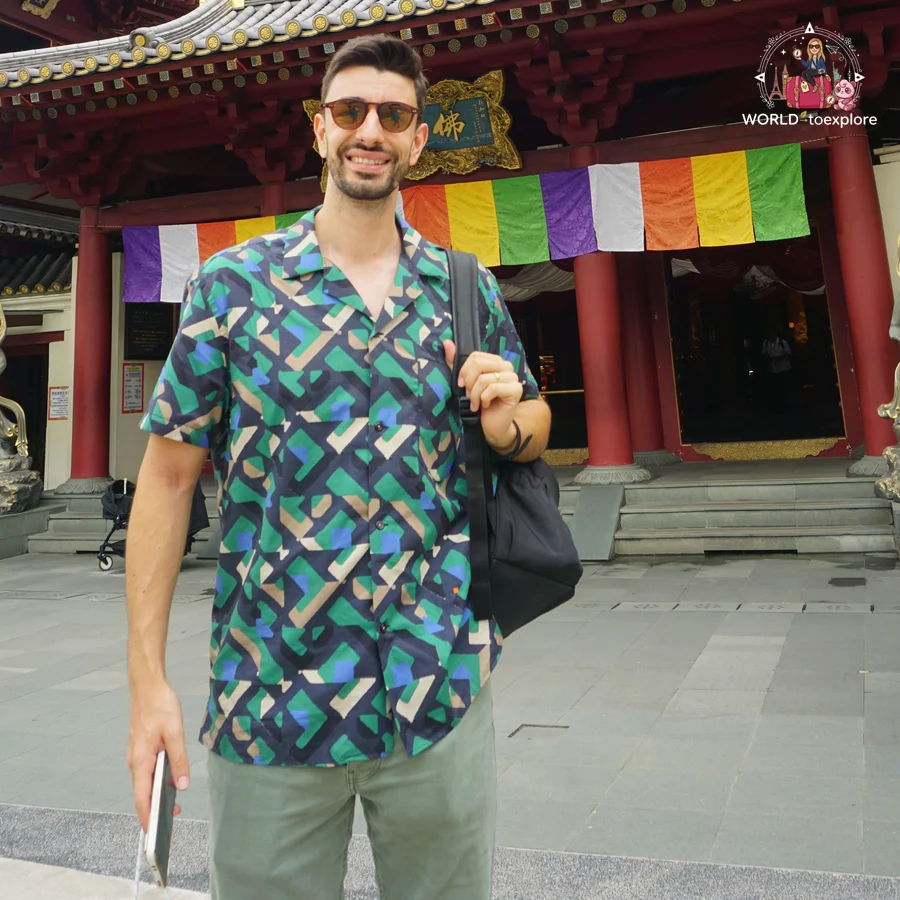
Opened in 2007, the Buddha Tooth Relic Temple has an architecture inspired by the Tang dynasty and a red and gold façade that contrasts with the shophouses on the surrounding streets. The temple was built to house what is presented as a relic of the Buddha's left canine tooth, kept in a golden stupa. The authenticity of the relic has, however, been the subject of debate. Besides the prayer hall, the building also has a museum dedicated to Buddhism. Entry is free. As at the Sri Mariamman Temple, the same dress code applies. If you are not dressed appropriately, there is no problem, because at the entrance they provide scarves and sarongs that you can use during your visit.
- Address: 288 South Bridge Road, Singapore 058840
- Opening hours: 7.00am to 7.00pm (museum and relic chamber, 9.00am to 6.00pm)
- Price: free entry
5. Singapore City Gallery
The Singapore City Gallery is run by the Urban Redevelopment Authority (URA), the body responsible for urban planning in Singapore and also for the conservation programme that helped protect Chinatown in 1989. It is an interesting place to understand how the city has grown and how it continues to be planned for the future. The main attraction is the huge model of central Singapore, where we can see the buildings that already exist and the projects planned for the future. It is in Tanjong Pagar, a little way from the centre of Chinatown, but it is worth including on the route. After walking around the neighbourhood, it is interesting to see the city from another perspective and to understand better how all these areas connect.
- Address: 45 Maxwell Road, Singapore 069118
- Opening hours: Monday to Saturday, 9.00am to 5.00pm (closed on Sundays and public holidays)
- Price: free entry
6. Thian Hock Keng Temple
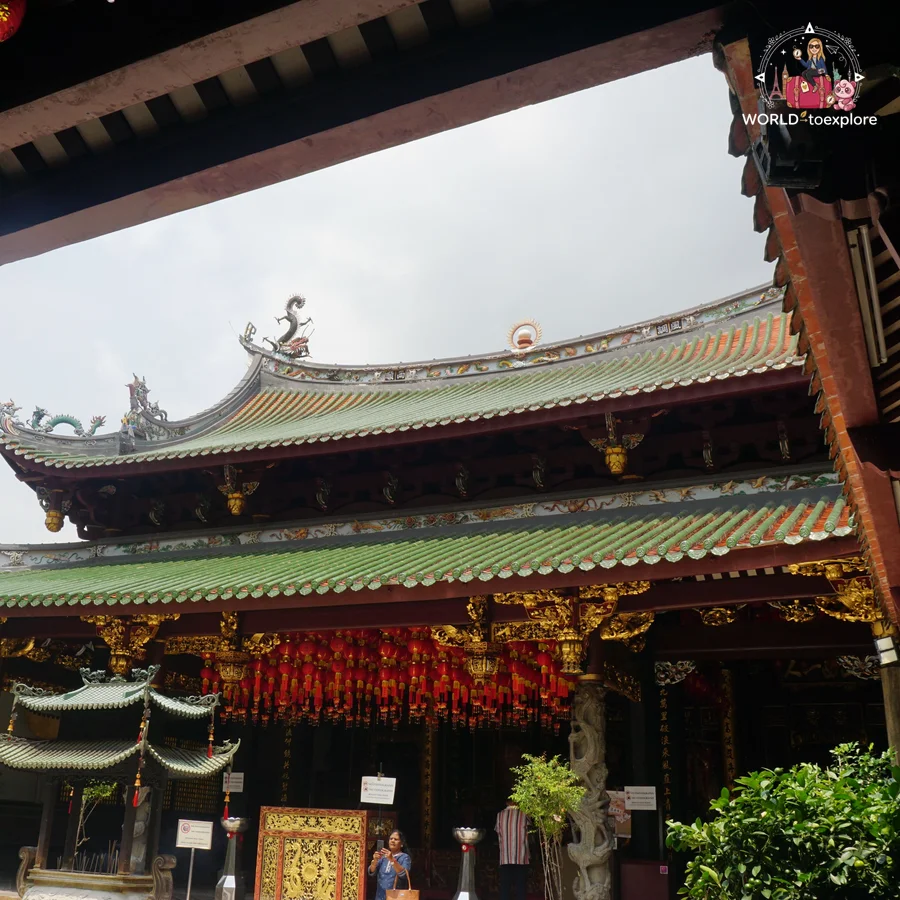
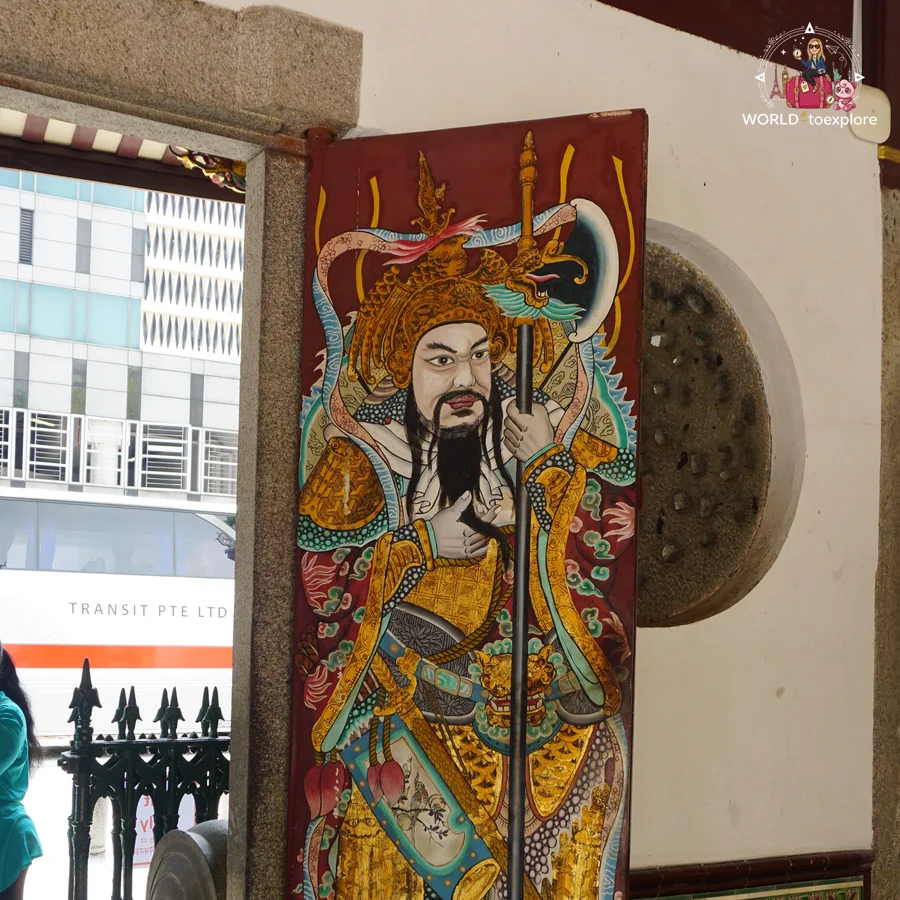
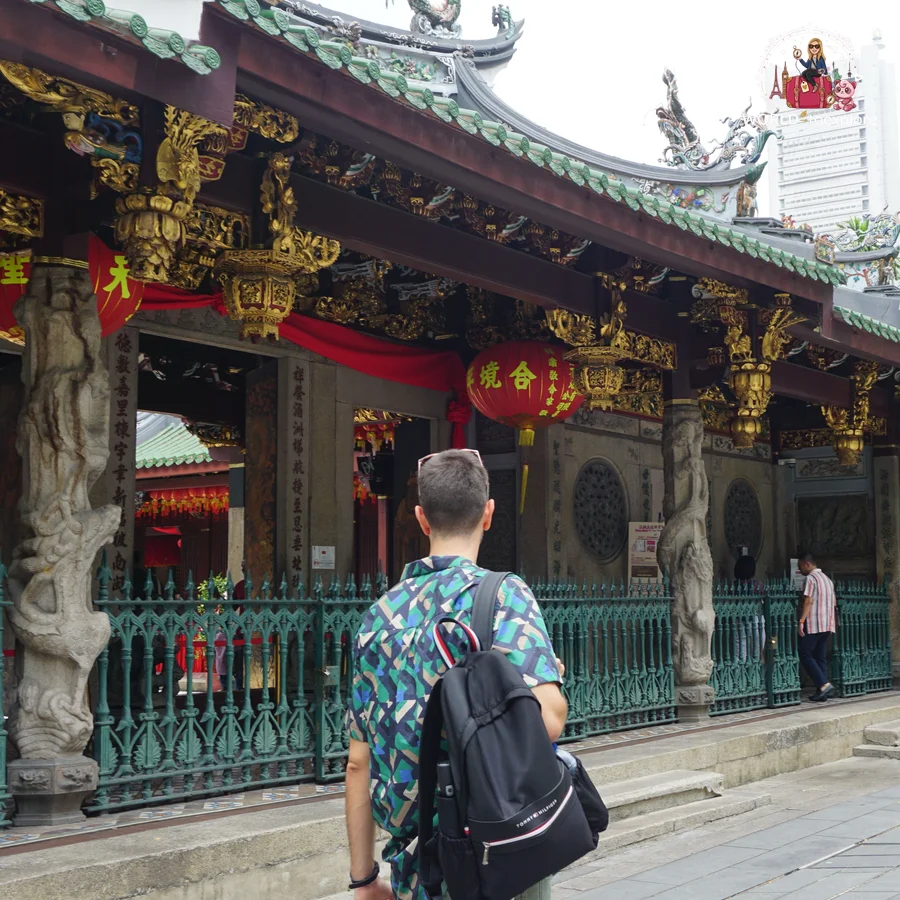
Thian Hock Keng, whose name means something like "Temple of Heavenly Happiness", is the oldest Chinese temple in Singapore. It was built between 1839 and 1842 by the Hokkien community and is dedicated to Mazu, the goddess who protects sailors. Its location was no accident, since at the time Telok Ayer Street ran along the waterfront and many of the Chinese immigrants arrived there. Before starting a new life in Singapore, many of them stopped at the temple to thank Mazu for having arrived safely after a long journey by sea. In 1973, it was designated a national monument and it remains a fine example of traditional southern Chinese architecture, with decorated roofs and many details carved in wood and stone.
- Address: 158 Telok Ayer Street, Singapore 068613
- Opening hours: 7.30am to 5.30pm
- Price: free entry
7. Telok Ayer Street
Telok Ayer means "water bay" in Malay and is one of the oldest streets in Chinatown. It began to come to life in the 1820s, when the sea still reached almost to this point. Today, the coastline is much further away, thanks to the many land reclamation projects carried out since then, but the street still preserves a lot of its history. Along the way, we find restored shophouses, cafés and places of worship for different communities, such as Thian Hock Keng, the Al-Abrar Mosque and the Nagore Durgha Shrine. It is a street to explore without rushing, looking out for the buildings that show how this area has changed.
- Location: a few minutes' walk from Thian Hock Keng, at no. 158
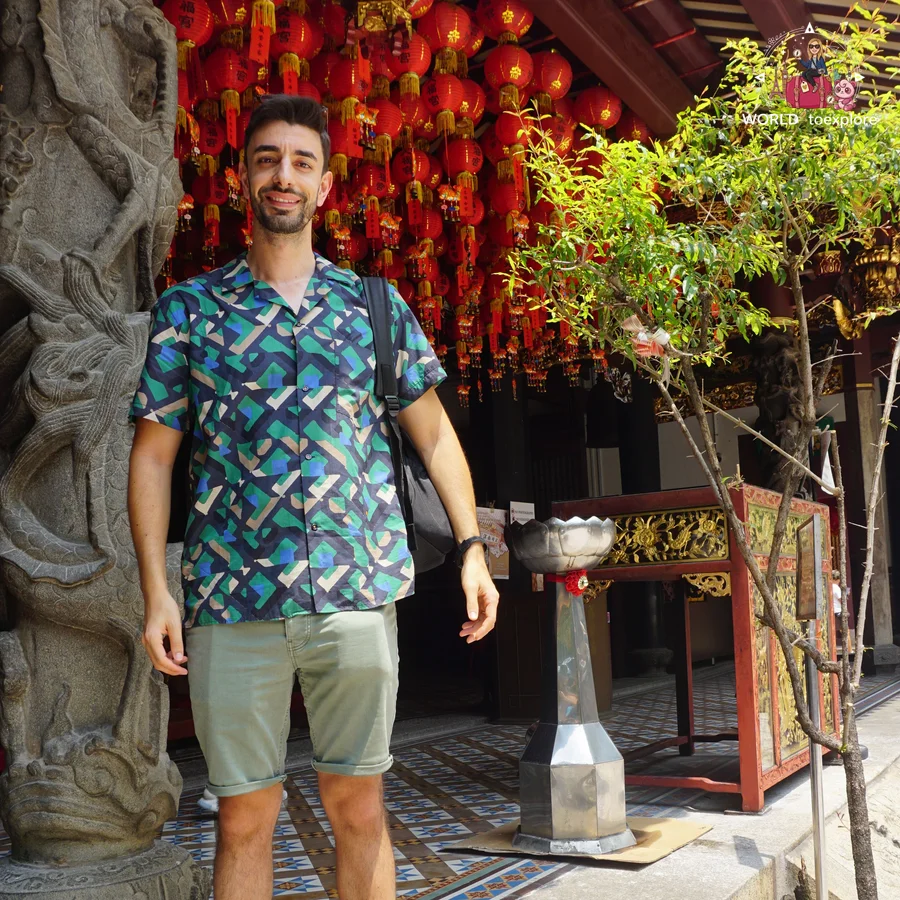
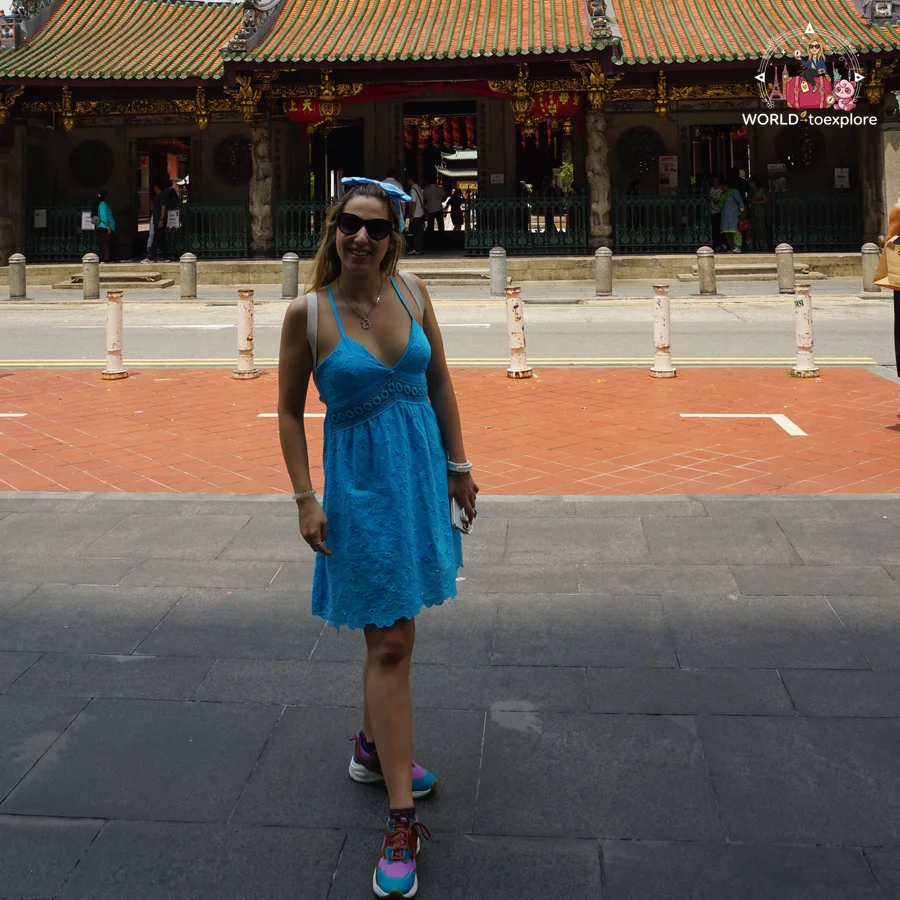
Chinatowns exist in cities all over the world, from San Francisco to Singapore, and many were born from the arrival of Chinese immigrants looking for a new life far from their country. With them came their language, food, traditions and religion, which were passed down from generation to generation and gave rise to neighbourhoods with a very distinctive identity. Naturally, each Chinatown adapted to the city where it was born and to the communities that settled there. In Singapore, that history is still very much present in the streets, in the temples and in the old shophouses, which help us understand how the first immigrants lived and how their culture remains part of everyday life in the neighbourhood. That is also what makes this area so interesting, because, despite all the changes Singapore has been through, much of its history is still alive.
Having had the chance to visit China, I look at these neighbourhoods differently. Singapore's Chinatown, like others around the world, tries to preserve and share Chinese culture, but ends up being only a small representation of what you find in China. It naturally lacks the scale and authenticity of such a vast and diverse country. Even so, I think this area is worth visiting, above all for the temples, the history and the mix of cultures you find on its streets. For anyone who has never been to China, it can be a good first introduction to this world. For those who already have, what remains is mostly the curiosity of seeing a different version, smaller and adapted to the reality of Singapore. 🩷
Planning your next trip? Book your accommodation through Booking.com and get your travel insurance with Heymondo, where you get 5% off through my link. By using these links, you are also supporting World to Explore, at no extra cost to you.