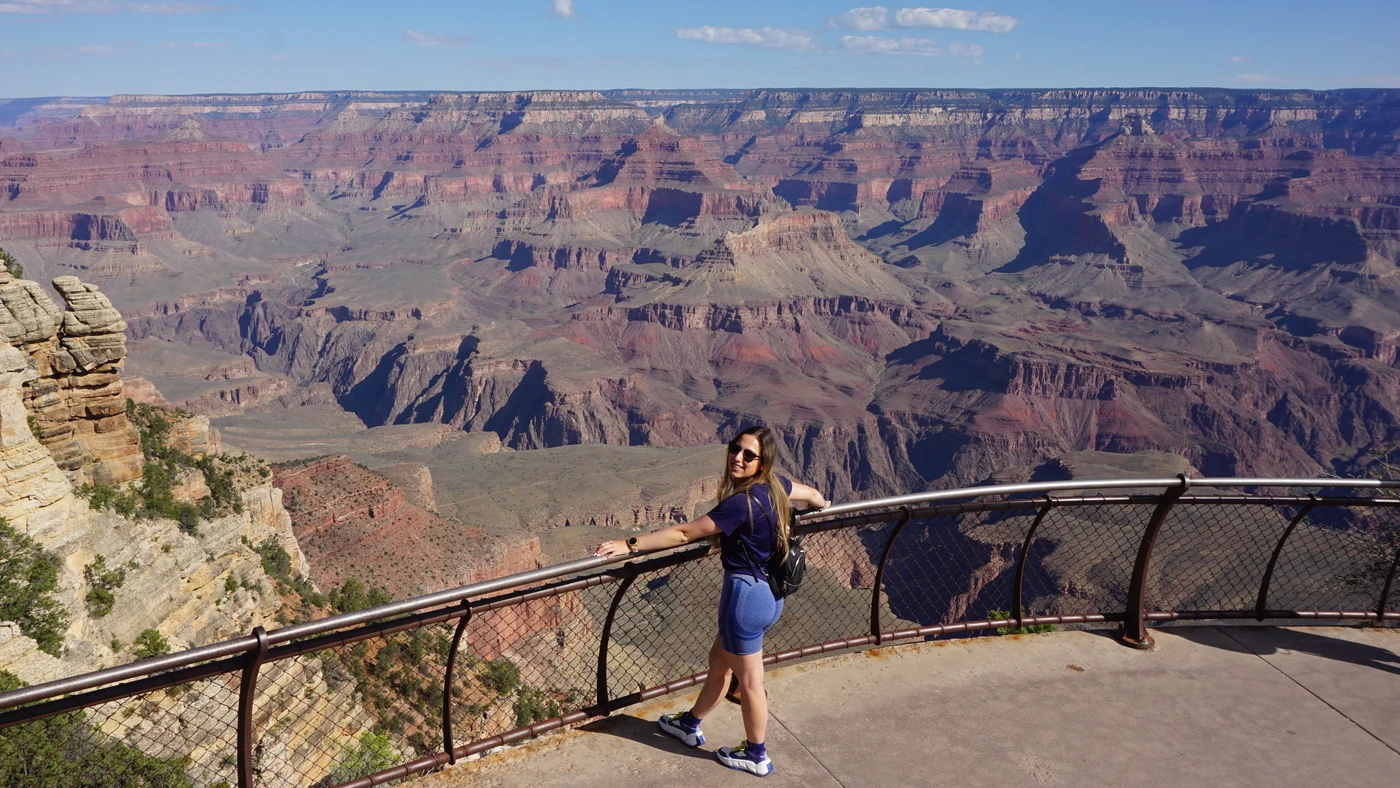
The Grand Canyon, One of Nature's Greatest Wonders
This article was not sponsored and all opinions are genuine. It contains affiliate links, which means I may receive a small commission if you book through them, at no extra cost to you.
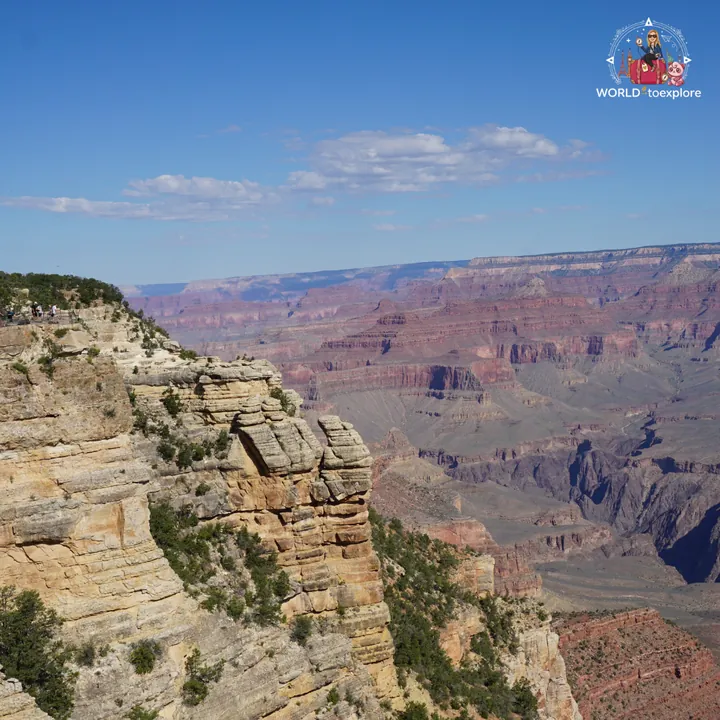
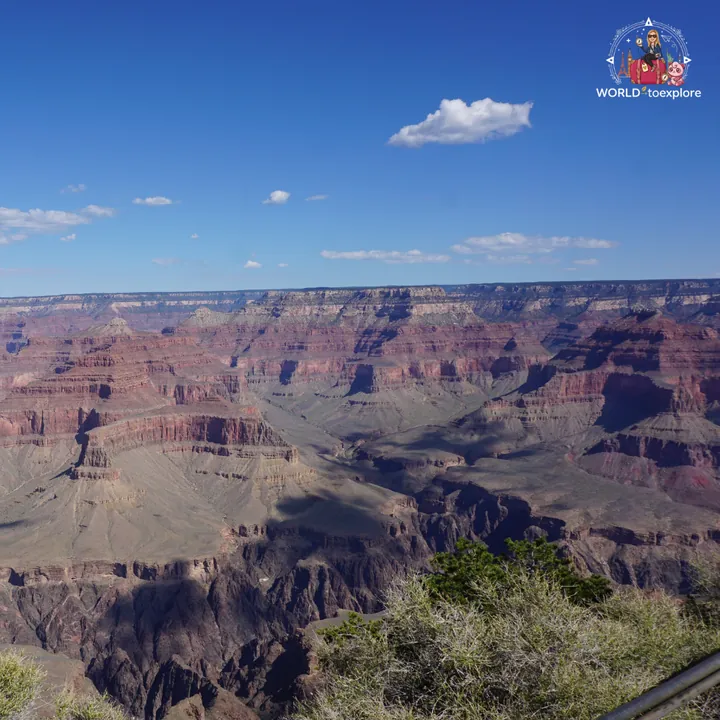
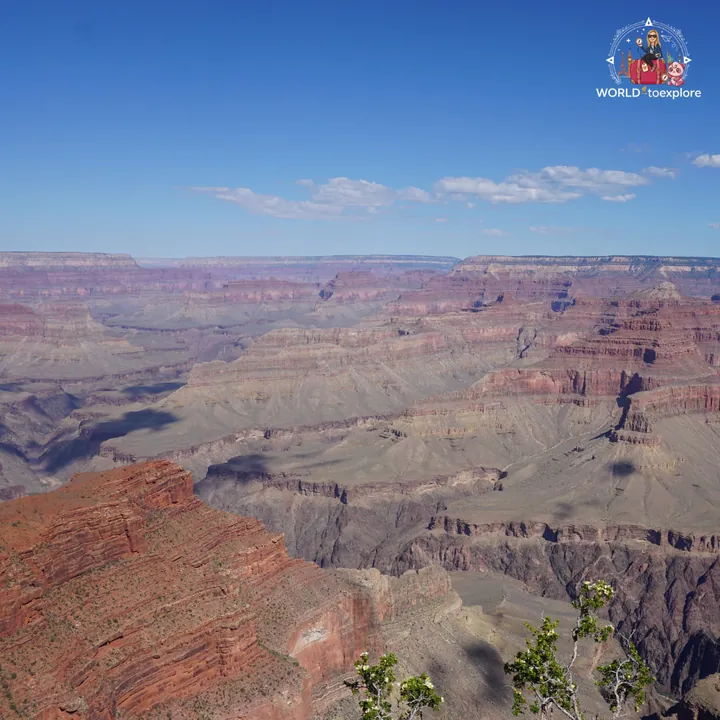
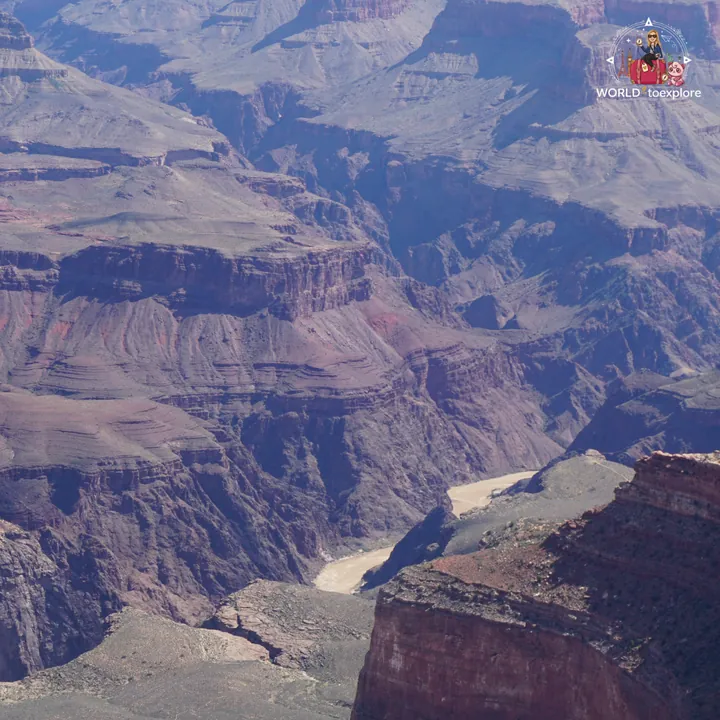
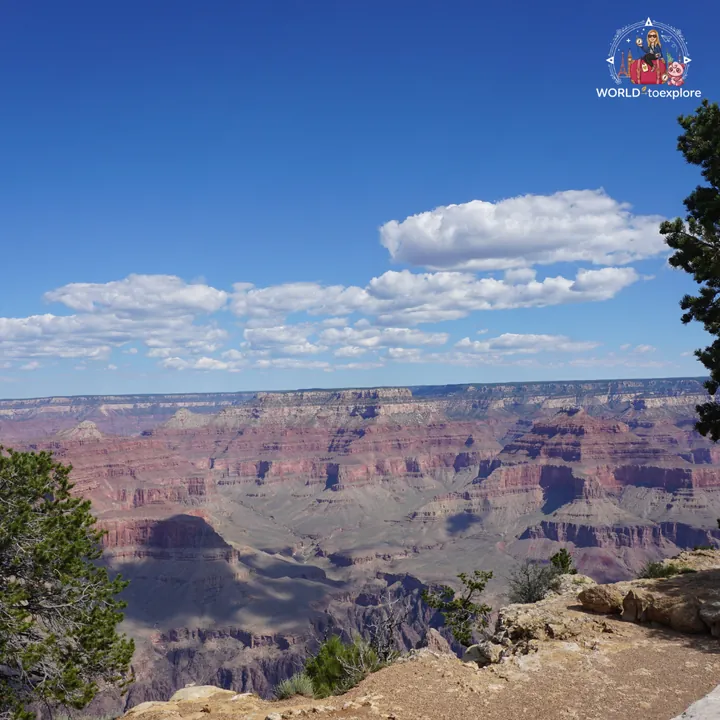
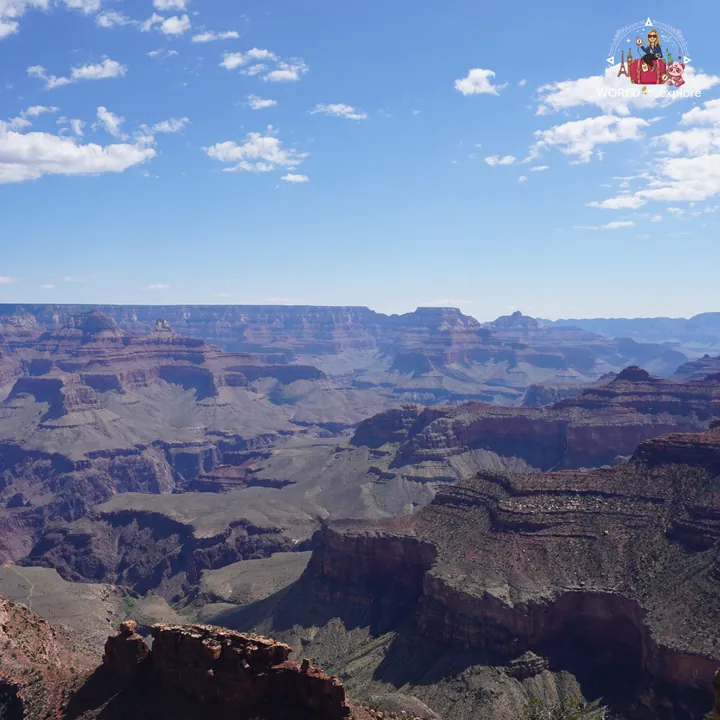
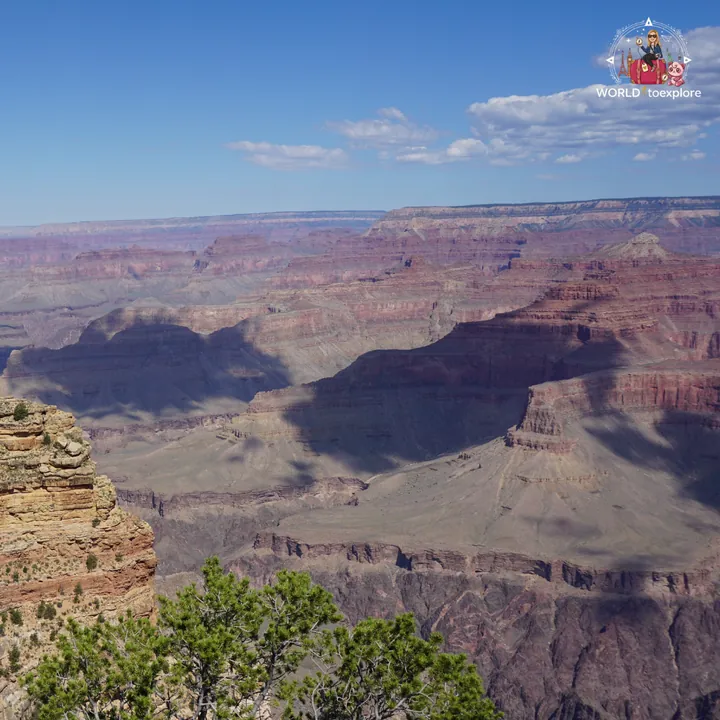
The Grand Canyon is one of the most impressive places in the United States and was one of the finalists in the New 7 Wonders of Nature election. Located in the state of Arizona, it is a true work of nature, with landscapes that seem to have no end and rock formations shaped by millions of years of erosion. No matter how many photos we had seen before, we don't think anything prepares us for the sheer scale of this place. It's one of those places you really have to see in person to understand its grandeur, because no image can convey what we feel when we are there.
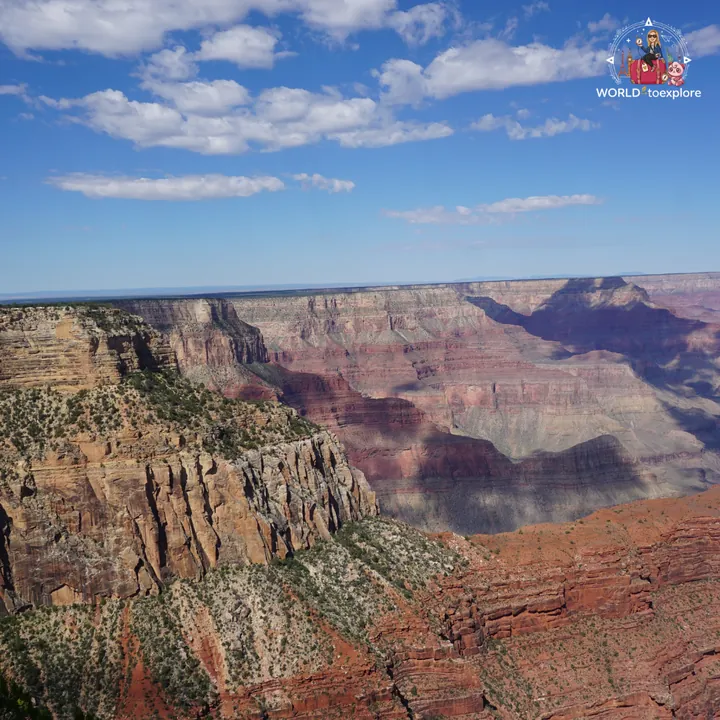
At around 446 kilometers long and with depths of more than 1,800 meters in some places, the Grand Canyon is also one of the best-known national parks in the United States. Along its many viewpoints, we find quite different landscapes, with huge rock walls and shades that keep changing with the daylight. In this article, I will tell you a little about how the Grand Canyon was formed, share how our visit went and give you some practical information if you are thinking of visiting this natural wonder.
How was the Grand Canyon formed?
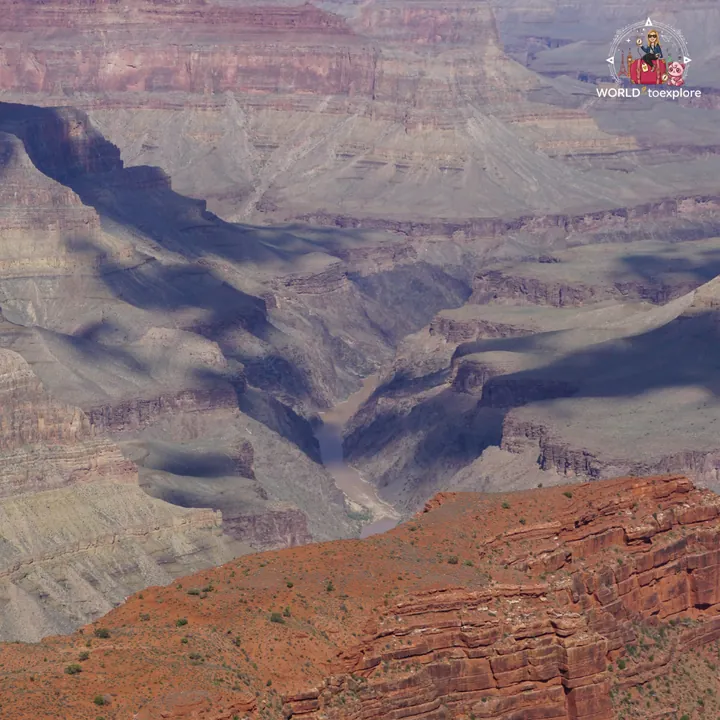
The formation of the Grand Canyon is directly linked to the action of the Colorado River, which still runs through the canyon today. However, its history is much older than the river itself. The oldest rocks found in this region are around 1.8 billion years old and, over time, were covered by different layers of sediment. Later, the movement of tectonic plates raised the land, giving rise to the Colorado Plateau. This transformation changed the landscape of the region quite a lot and created the conditions for water to slowly begin carving into the rocks. Rain, wind and temperature changes also contributed to erosion, a process that continues to this day.
It was around 5 to 6 million years ago that the Colorado River began carving the canyon we see today. As time went by, the valley became deeper and deeper, revealing layers of rock from different eras. Some of these formations came from sediment piling up on the floor of ancient seas, while others originated in desert environments or alongside rivers. That is why, when we look at the walls of the Grand Canyon, we can make out so many colors and shades, from red and orange to lighter tones. Each of these layers corresponds to a different period in the region's geological history, which allows us to understand what this part of the planet was like long before the canyon existed.
Long before it became one of the main tourist attractions in the United States, the Grand Canyon was already home to different Indigenous peoples. The oldest archaeological remains found in the region are around 12,000 years old and show that several communities lived alongside the canyon, using its natural resources to survive. Later, the region began to attract the interest of explorers and researchers, who helped make the Grand Canyon known to the rest of the country. In 1869, the explorer John Wesley Powell led an expedition down the Colorado River, traveling through the Grand Canyon and helping to reveal this region, which until then had been little studied by American researchers. In 1908, President Theodore Roosevelt declared the area a National Monument, in an attempt to protect the landscape and its natural resources. Eleven years later, on 26 February 1919, Grand Canyon National Park was officially created, and it remains one of the most visited in the United States.
Useful information about the Grand Canyon
- Location: Arizona, United States.
- Main areas: South Rim (the best known and the one we visited), North Rim and West Rim.
- Getting there: We left Kingman, where we were staying, at 6.30am and the journey took about 3 hours in total.
- When to arrive: We arrived at around 8.45am, on a Monday in August 2023, and it was super quiet.
- Parking: We parked in car park number 1, where there were still plenty of spaces available.
- Entrance fee: US$35 per private vehicle, valid for 7 days and covering all occupants. There are also fees of US$30 for motorcycles and US$20 for visitors on foot or by bike. You can check the up-to-date prices on the official website.
- Additional fee for international visitors: Since 1 January 2026, visitors who are not US residents and are aged 16 or over have to pay an extra US$100 per person on top of the standard entrance fee, unless they hold the specific annual pass for non-residents. Luckily, this fee did not exist when we visited the park in 2023.
- Opening hours: The South Rim is open 24 hours a day, all year round. The opening hours of visitor centers, restaurants and shops vary depending on the season.
- Length of visit: We spent between 5 and 5 and a half hours in the park, making the most of our time, but you can easily spend the whole day.
- Reservations: There is no need to book park entry in advance, and there is no timed-entry system.
Our experience at the Grand Canyon
The Grand Canyon has three main areas: the South Rim, the North Rim and the West Rim. The South Rim is the best known and most visited, with plenty of viewpoints, trails, accommodation and restaurants. It was also the one we chose to visit, not least because it is open all year round and has good facilities for exploring the park. The North Rim is quieter and receives far fewer visitors, but it has fewer services and closes during the winter months. The West Rim, meanwhile, lies outside Grand Canyon National Park, on the land of the Hualapai Indigenous community. This is where we find the famous Skywalk, a glass platform over the canyon, as well as other interesting spots, such as Eagle Point and Guano Point.
We visited the Grand Canyon South Rim on a Monday in August 2023, in the middle of the school holidays in the United States. I must admit I was a bit worried we would find the park full of locals and tourists, especially because August is usually one of the busiest months. As we were staying in an Airbnb in Kingman, we had to get up very early. We woke up at around 5.15am, had breakfast at home and, shortly before 6.00am, we were already on our way to the Grand Canyon. Along the way, we made just one stop at a service station in Williams to fill up the car and stretch our legs a little, which we badly needed! We arrived at the park at around 8.45am and, to our surprise, everything was super quiet. We went through the park entrance stations, where we only had to show the ticket we had already bought online, and ended up parking the car in car park number 1, where there were still plenty of spaces available.
We already had a well-defined plan for what we wanted to visit and knew it would be a tiring day. The goal was to stay at the Grand Canyon until around 3.00pm and use that time to see as much as possible. As we don't mind walking a lot, especially with such incredible views, we knew it wouldn't be much of a sacrifice. In fact, with scenery like that, walking hardly feels like an effort! So I will now share the route we followed during the hours we spent at the Grand Canyon. But before starting the visit properly, our first stop was, of course, the restroom, because after almost three hours of travel it was time to empty our bladders!
Before showing you the route, there is some important information about how we got around inside the park. From March to November, most of the places we wanted to visit can't be reached by car, because the park requires you to take the shuttle bus, which limits the freedom of those who like to go at their own pace a little. However, the buses work so well that this ends up not being a problem. There are three main lines. The Village (Blue) Route has buses every 12 to 15 minutes, the Kaibab Rim (Orange) Route every 15 to 20 minutes and the Hermits Rest (Red) Route every 12 minutes. There is also the Tusayan (Purple) Route, which connects the town of Tusayan, next to the park entrance, to the visitor center. You can check the timetables on the park's official website.
1. Grand Canyon Visitor Center
The Grand Canyon Visitor Center opened in 2001 and is a good place to start your visit to the park. Inside, we find 3D maps, interactive guides, a short film and several cultural exhibitions that help you understand how the Grand Canyon was formed and where the main points of interest are. It is also a good opportunity to learn a little more about the history of this place, and it also has a small shop selling souvenirs and a few snacks.
- Opening hours: 9.00am to 4.00pm, which may vary depending on the time of year
2. Mather Point
Mather Point is one of the best-known viewpoints in the Grand Canyon, as it is located right at the start of the park, just five minutes' walk from the Grand Canyon Visitor Center and the main car parks. Its name is a tribute to Stephen Tyng Mather, a Chicago businessman who was the first director of the National Park Service, the body responsible for managing national parks in the United States. From here, we have an impressive view over the canyon, with some spots where you can see the Colorado River, Phantom Ranch and the trails that cross the landscape.
🚌 From the Grand Canyon Visitor Center, take the Village (Blue) Route bus, heading Westbound, and get off five stops later, at Hermits Rest Route Transfer. There, switch to the Hermits Rest (Red) Route and get off at Hopi Point, after about four stops. The journey takes approximately 40 to 45 minutes in total.
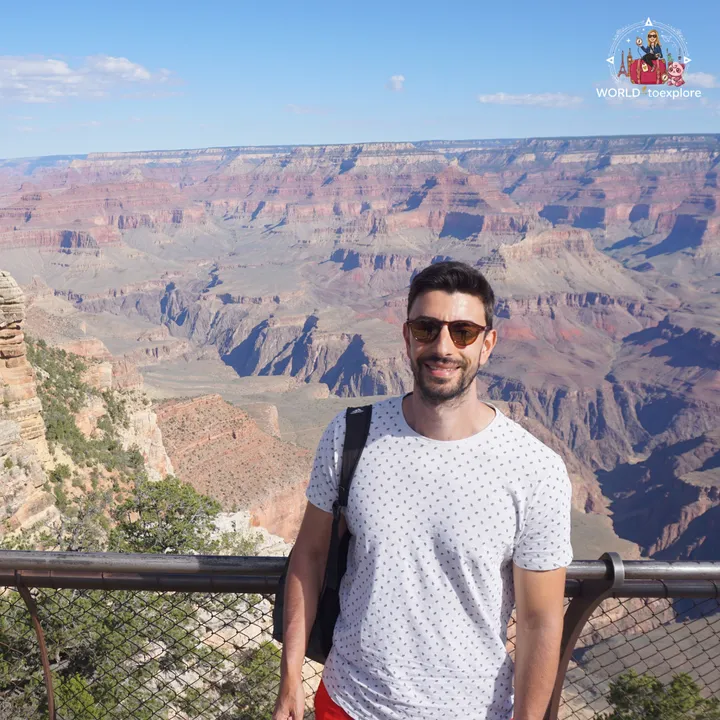
3. Hopi Point
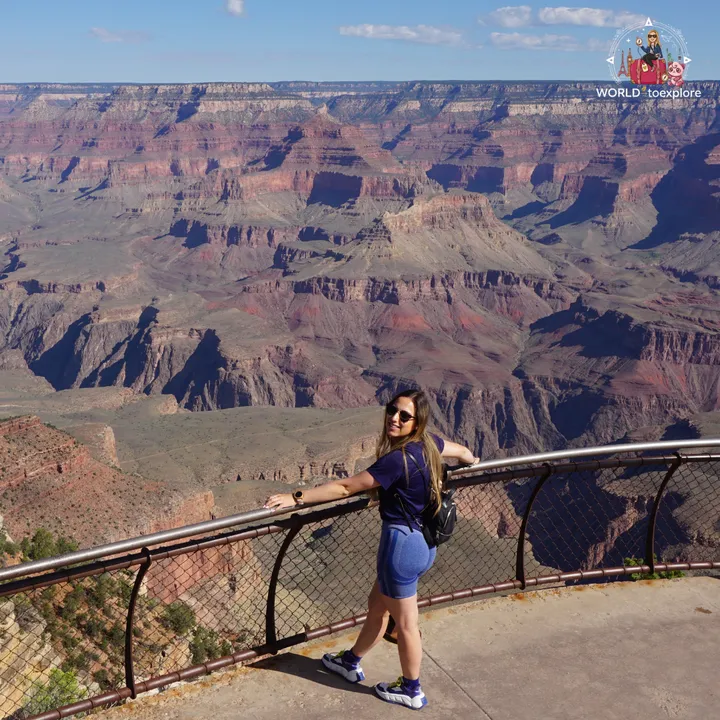
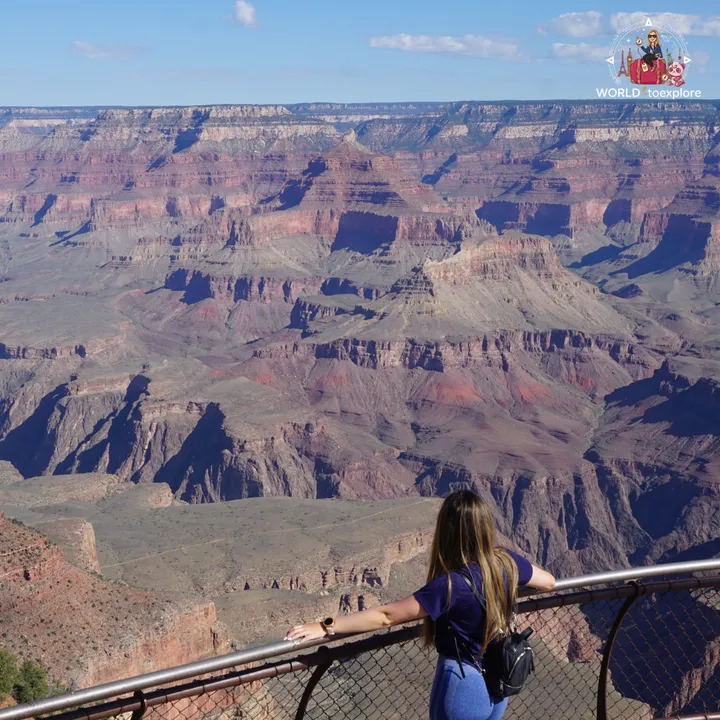
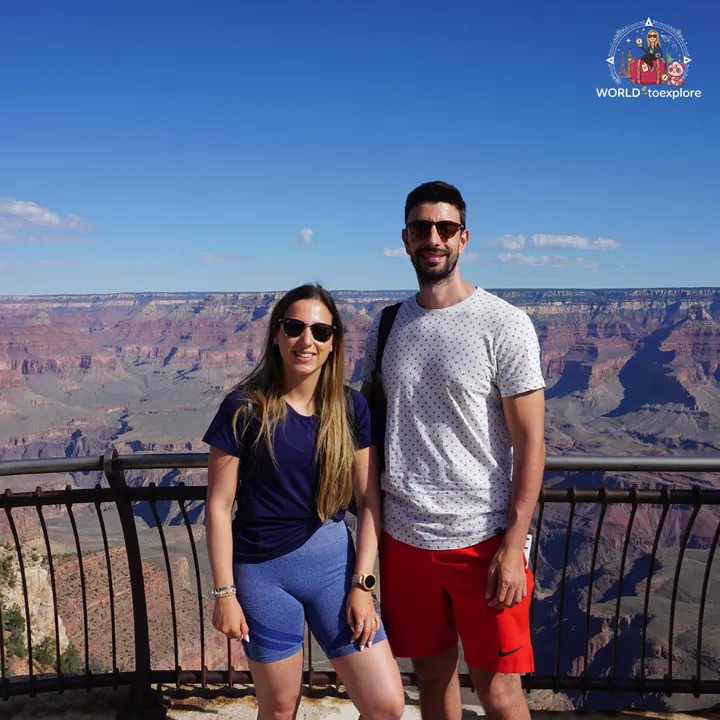
The view from Hopi Point stretches along the canyon and lets you see the Colorado River, which makes this viewpoint especially popular at sunrise and sunset. Before receiving its current name, it was called Rowe's Point, in honor of Sanford Rowe, a businessman who organized guided tours of the Grand Canyon. Its privileged position was also useful in the past, as it hosted several fire lookout towers during the 20th century. For most of the year, you can only get here on foot or by the park shuttle bus.
4. Powell Point
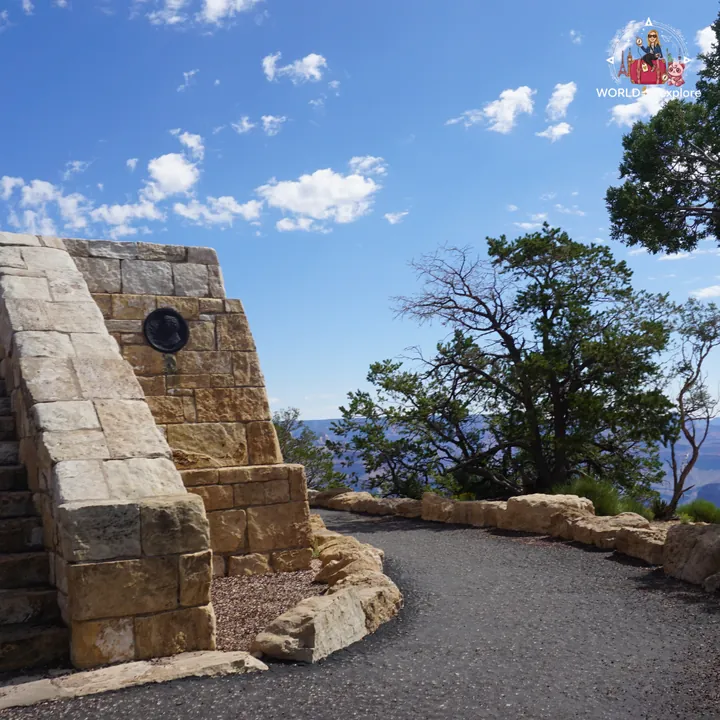
As well as offering a panoramic view over the Grand Canyon, Powell Point holds an important tribute to the history of the exploration of the Colorado River. At this spot there is a large stone memorial dedicated to John Wesley Powell and his team, who carried out expeditions down the river in 1869 and 1871-1872. Powell, a former American soldier, designed his own boats and put together a team of former combatants to explore the course of the river and record areas that did not yet appear on maps of the region. These journeys were particularly important for getting to know one of the most difficult areas to explore in the southwestern United States and for paving the way for future expeditions. The monument is considered the largest in the park and this spot was chosen for the inauguration ceremony of Grand Canyon National Park, in 1920. The choice was no accident, as the surrounding landscape offers a privileged view over the canyon.
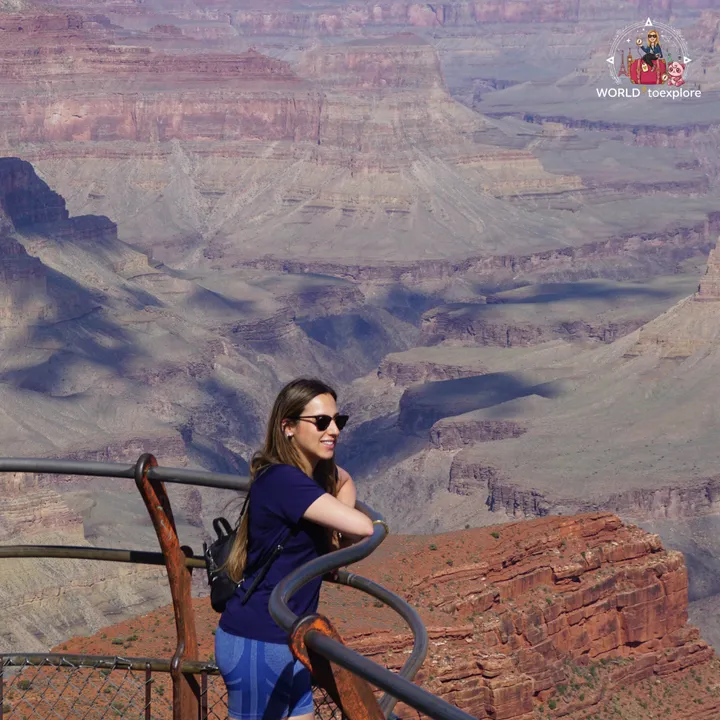
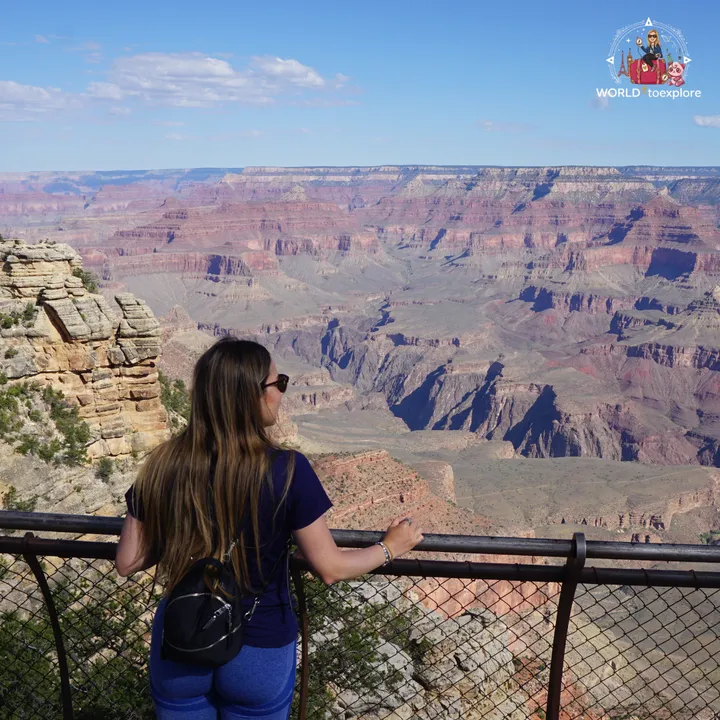
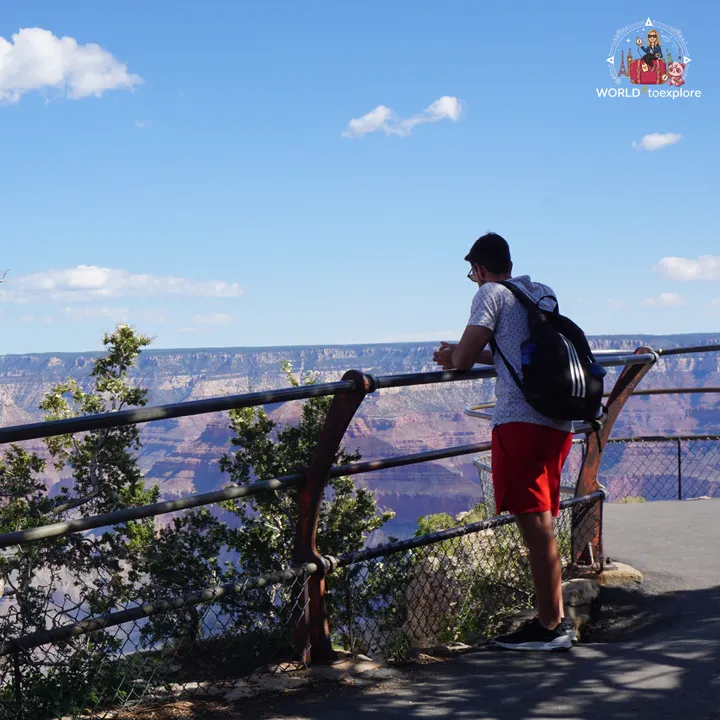
5. Maricopa Point
Maricopa Point sits in a particularly narrow part of the Grand Canyon, where a small strip of land extends about 30 meters over the canyon, ending in an almost vertical drop. From this viewpoint, we have a wide view of more than 180 degrees over the various canyons, the trails crossing the landscape and even some stretches of the Colorado River. The name of the place refers to the Maricopa people, who lived in south-central Arizona and were known for the peaceful relationship they had with the first white pioneers. Next to the viewpoint, there are still remains of an old mine, including a large gate and a clearing on the edge of the canyon.
6. Trailview Overlook
Trailview Overlook is the first stop on the Hermits Rest (Red) Route of the Grand Canyon buses and offers a fairly complete view of this area of the park. The viewpoint has several staircases leading to two observation platforms, from where we can see Grand Canyon Village, the park's main service hub, home to several hotels, restaurants, shops, the train station and other buildings supporting visitors. It is also one of the busiest areas of the South Rim and a starting point for many of the trails and tours in the Grand Canyon. From here you can also see the Bright Angel Trail, one of the best-known hiking routes in the park, which descends through the inside of the canyon for about 15 km to the Colorado River. It is a very demanding trail, with a steep drop and a particularly hard climb on the way back. Believe me, just watching people hike it made me tired!
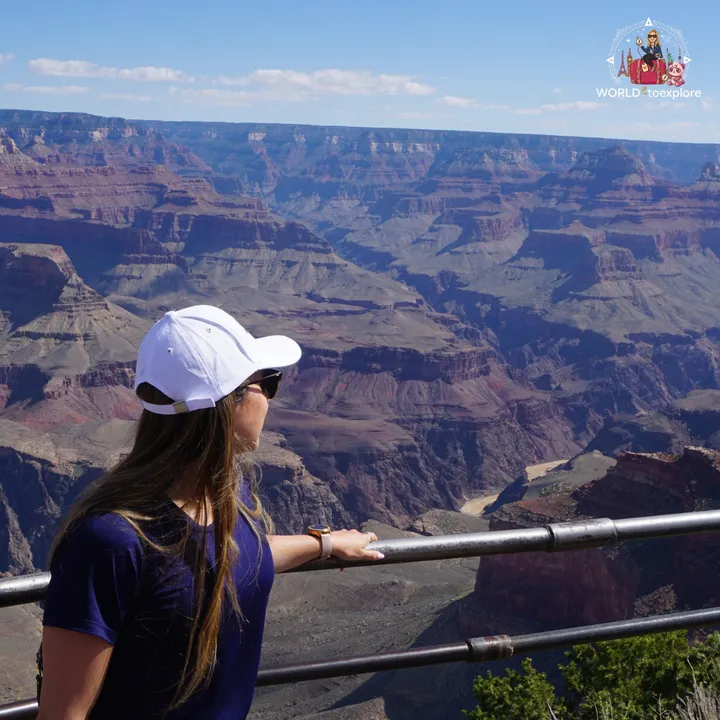
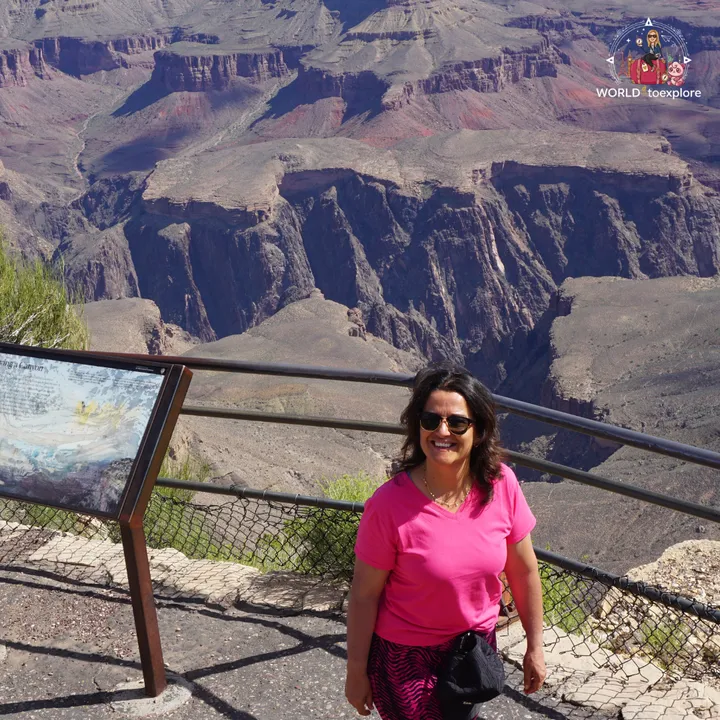
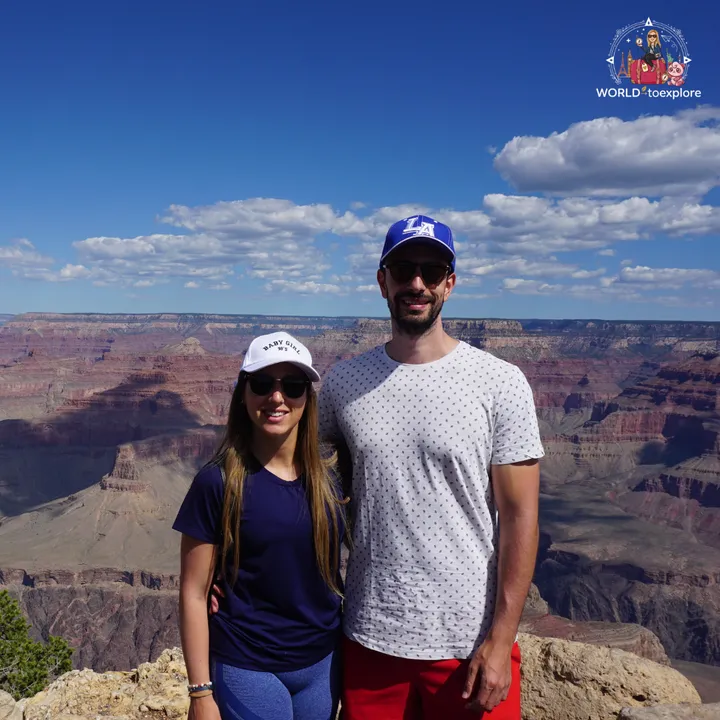
7. Mary Colter’s Lookout Studio
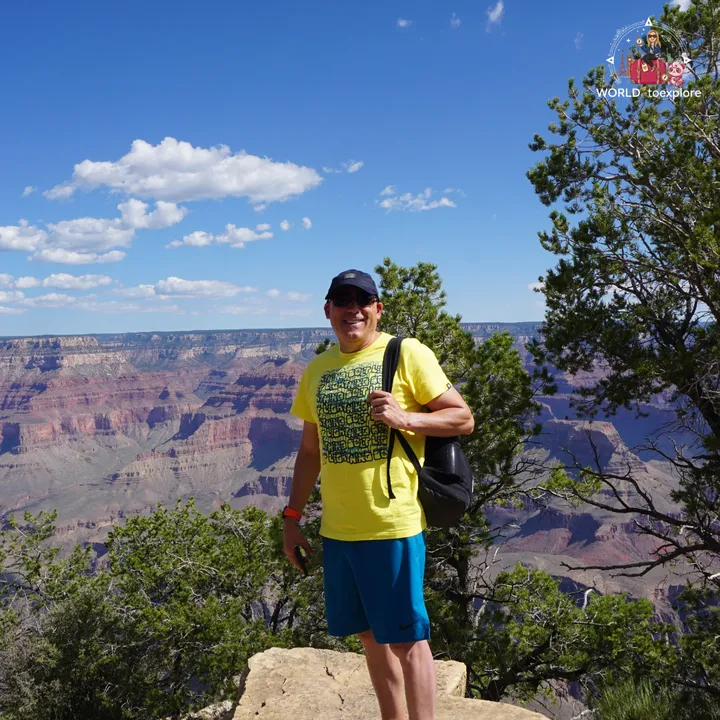
Lookout Studio, also known simply as The Lookout, is a stone building constructed in 1914, which today works as a gift shop and viewpoint. Outside, there are several telescopes that let you see the Grand Canyon landscape better, although using them costs coins. The building was designed by the American architect Mary Colter, who was responsible for six buildings in the park, all designed to blend into the landscape and respect the identity of the region. In this case, Colter drew inspiration from the old dwellings of the region's Indigenous peoples, creating a stone structure reminiscent of the ruins of ancestral buildings that can still be found in the southwestern United States today.
- Opening hours: 9.00am to 5.00pm
8. Matrimony ‘Heart’ Rock
While walking the Rim Trail, between Kachina Lodge and El Tovar Hotel, it's worth keeping an eye out for a small heart-shaped stone set into the stone wall. Known as Matrimony ‘Heart’ Rock, it is thought to have been placed there around 1934, during the reconstruction of the wall along the trail. According to legend, one of the workers fell in love with a young woman from the Harvey Girls, a group of women hired to work in the hotels and restaurants of the Grand Canyon, who had to remain single during that period. As the girl could see that spot from her bedroom window, the worker is said to have placed the heart-shaped stone in the wall as a declaration of love. A little romantic story hidden in the middle of the Grand Canyon landscape!
9. Hopi House
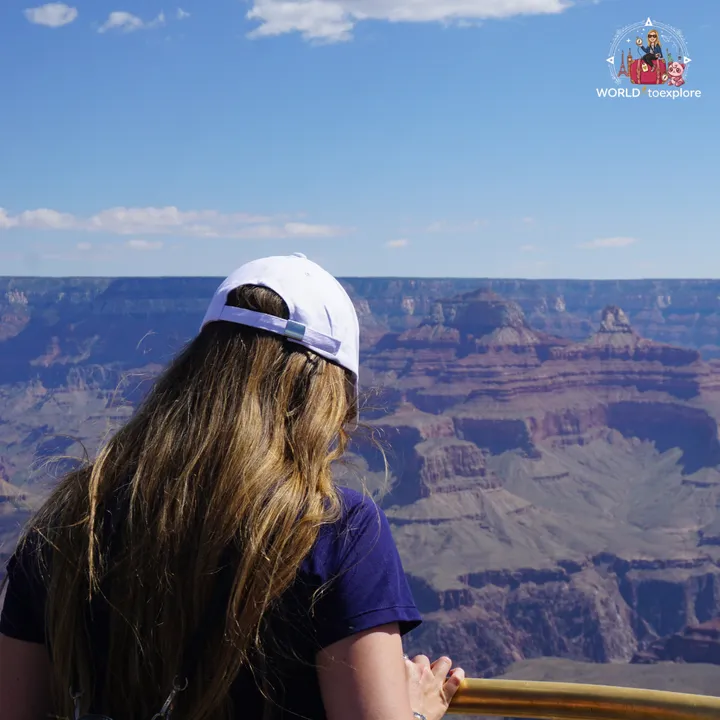
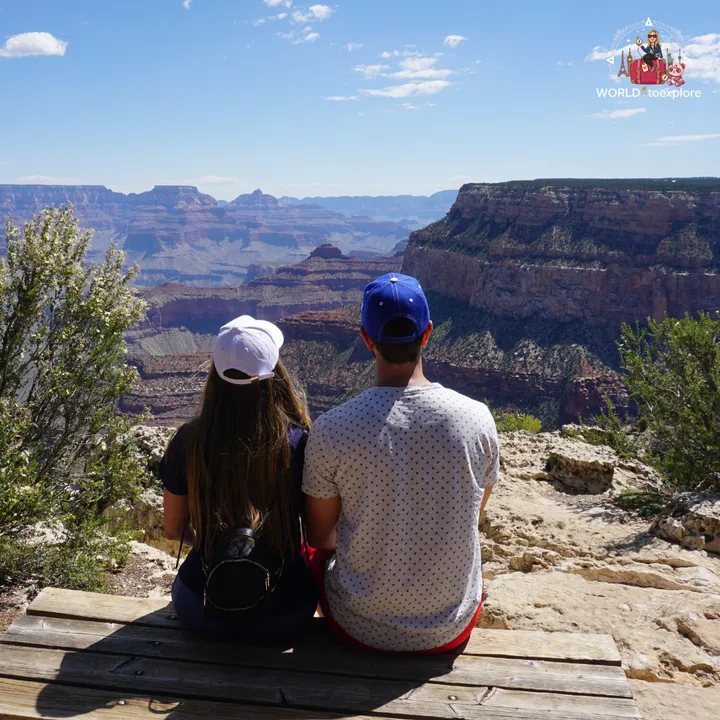
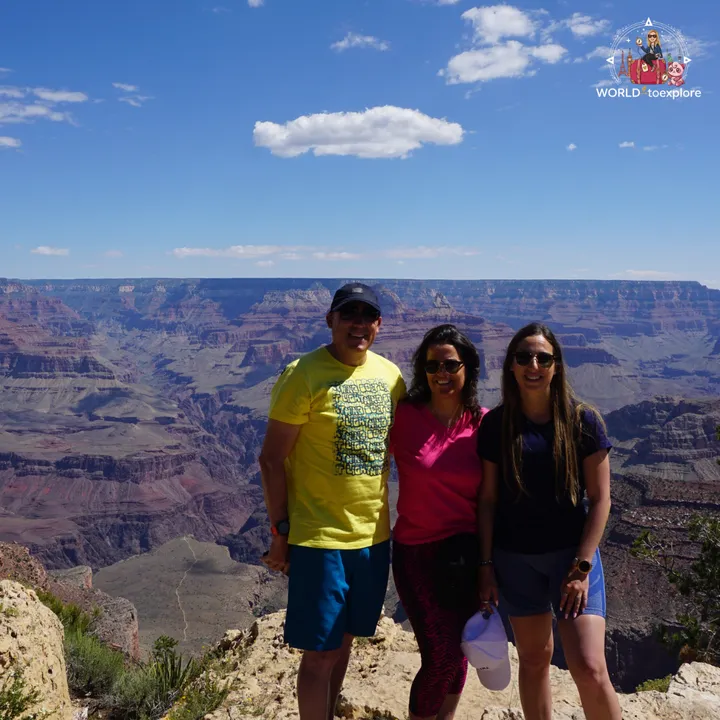
Hopi House was built in 1905, following the traditional architecture of the Hopi Indigenous tribe, and is another of the works of the architect Mary Colter at the Grand Canyon. The building was commissioned by the Fred Harvey Company, which wanted to create a space dedicated to promoting and selling the crafts of Native American peoples. Mary Colter used stone and other materials to blend the building into the surrounding landscape. Today, Hopi House is open to the public and works as a shop and exhibition space, where we can find Indigenous crafts, some traditional techniques and several souvenirs of the park. It is also an opportunity to learn more about the culture and traditions of the Indigenous peoples who lived in this region long before the arrival of European settlers.
- Opening hours: 9.00am to 6.00pm in summer and 9.00am to 5.00pm the rest of the year
10. Verkamp’s Visitor Center
Verkamp’s Visitor Center occupies a historic building that began as a craft and souvenir shop. In 1898, John George Verkamp moved to the Grand Canyon and opened his business there, selling pieces by Indigenous artisans to the visitors who were starting to arrive in the region, still in a simple tent. The shop in the current building only opened a few years later. Unlike many shops of the time, Verkamp chose from early on to buy directly from local artisans, helping to publicize their work. Today, the space works as a visitor center and has several exhibitions dedicated to life in the Grand Canyon community and to the history of the Verkamp family, showing what it was like to live and work on the edge of the canyon.
- Opening hours: 8.00am to 6.00pm
🚌 Take the Village (Blue) Route bus at the Train Depot stop, heading Westbound, and get off 10 stops later, at Market Plaza Eastbound. The journey takes about 30 to 40 minutes.
11. Grand Canyon Village Market & Deli
Grand Canyon Village Market & Deli, also known as Market Plaza, is a very practical place for anyone visiting the park who needs to find almost everything in one spot. Inside, there is a gift shop, a clothing shop, a restaurant and a small supermarket with fruit, drinks, snacks and quick meals. There are also other conveniences, such as the only bank inside the park, a post office and a hiking equipment rental center. It ends up being an important support point for visitors, especially for those spending several days at the Grand Canyon who need to buy supplies or sort something out without leaving the park.
- Opening hours: market from 7.00am to 8.00pm and deli from 7.00am to 5.30pm
We ended up having lunch here and chose hot dogs with fries. They were by no means the best we've ever had, but they did the job and were perfect for satisfying our hunger. Besides, considering the usual food prices inside national parks in the United States, we even found the meal quite affordable.
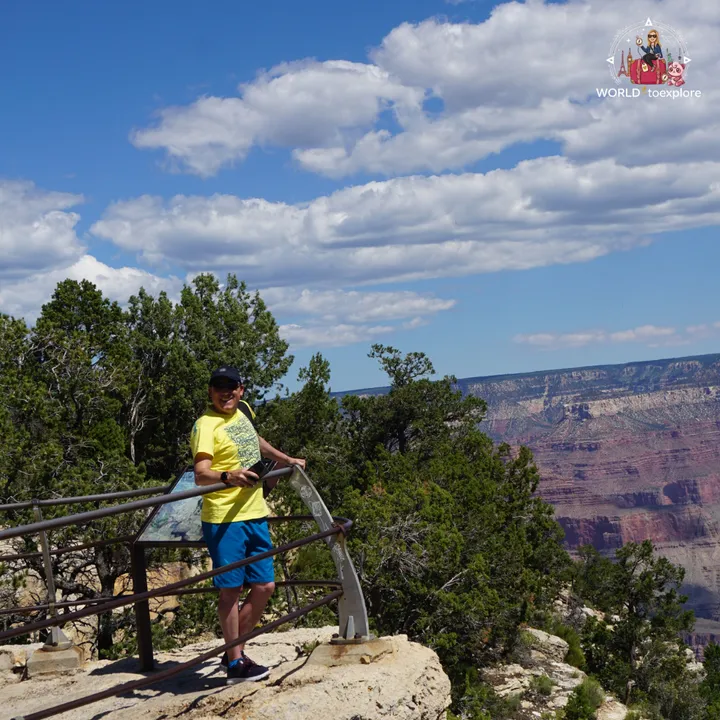
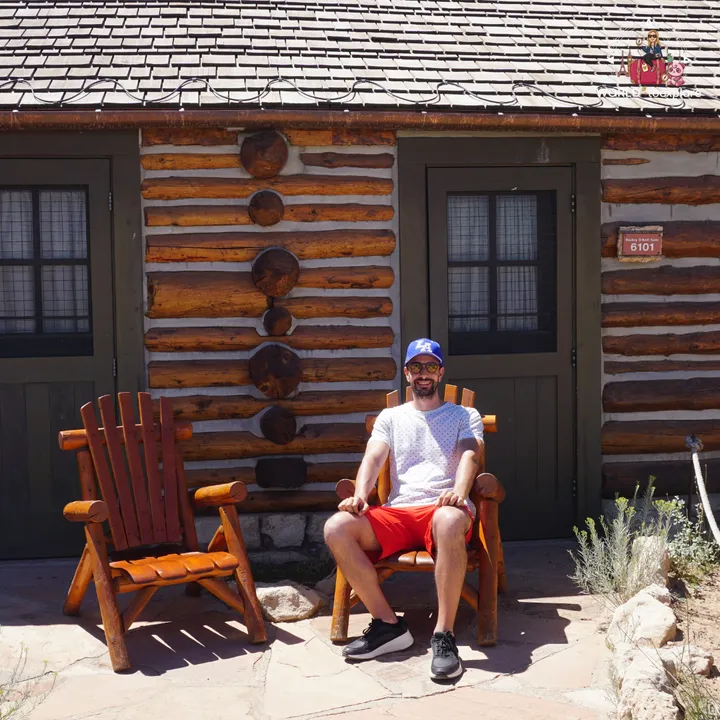
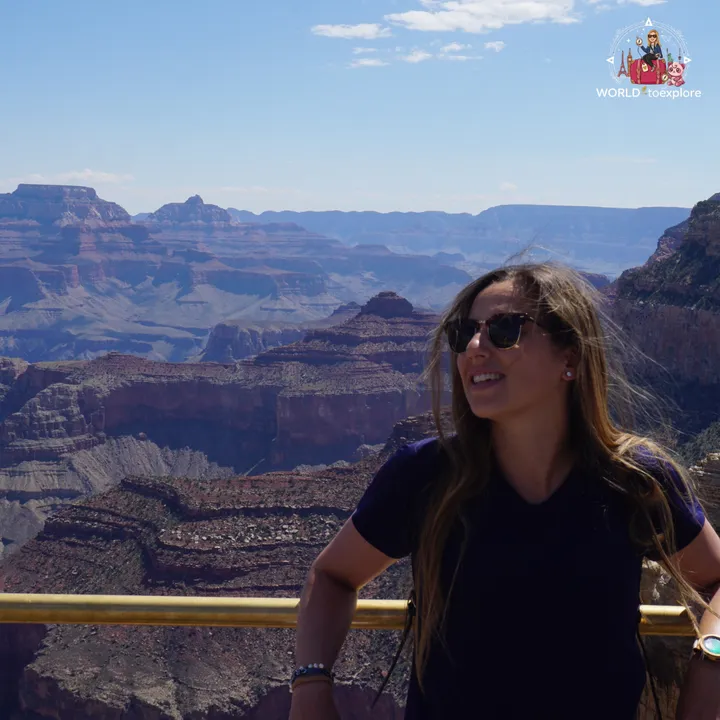

Our visit to the Grand Canyon was planned down to the last detail to make the most of our time. As we wanted to fit in a few more stops during the day, we decided to dedicate only the morning to the park. We had the route well organized and, in the end, realized it was enough time to see all the places we had chosen, without rushing from one place to another. After leaving the Grand Canyon, we continued on to Williams, where we took the chance to stroll around the center for a while. We carried on to Seligman, another well-known stop on Route 66, and still had the chance to make a quick stop at the Hackberry General Store, an old service station full of classic cars, antiques and Route 66 memorabilia. As we were staying in an Airbnb in Kingman, we still had a good few hours of driving ahead of us. These little stops along the way felt really good, not only to see new places, but also to stretch our legs and rest a little from the journey.
If you are thinking of visiting the Grand Canyon, I recommend planning your day well and wearing comfortable shoes. There is a lot to see and, with an organized itinerary, you can make the most of your visit even if you have little time available, as was our case. 🩷
You can also check here all our articles about the United States and, if you like exploring national parks, take a look at our article on Red Rock Canyon too!
Planning your next trip? Book your accommodation through Booking.com and get your travel insurance with Heymondo, where you get 5% off through my link. By using these links, you are also supporting World to Explore, at no extra cost to you.
You Might Also Like
1-Day Itinerary in Sacramento
Twenty stops for one day in California's capital, from the grand State Capitol to the Gold Rush charm of Old Sacramento beside the river.

5 Attractions to Visit in the Castro
Rainbow flags, Harvey Milk's camera store and the origins of the pride flag: five stops that make San Francisco's Castro unmissable.
6 attractions in San Francisco's Chinatown
Six highlights of the oldest Chinatown in the United States, from a fortune cookie factory to a hidden temple and a pagoda-topped tower.