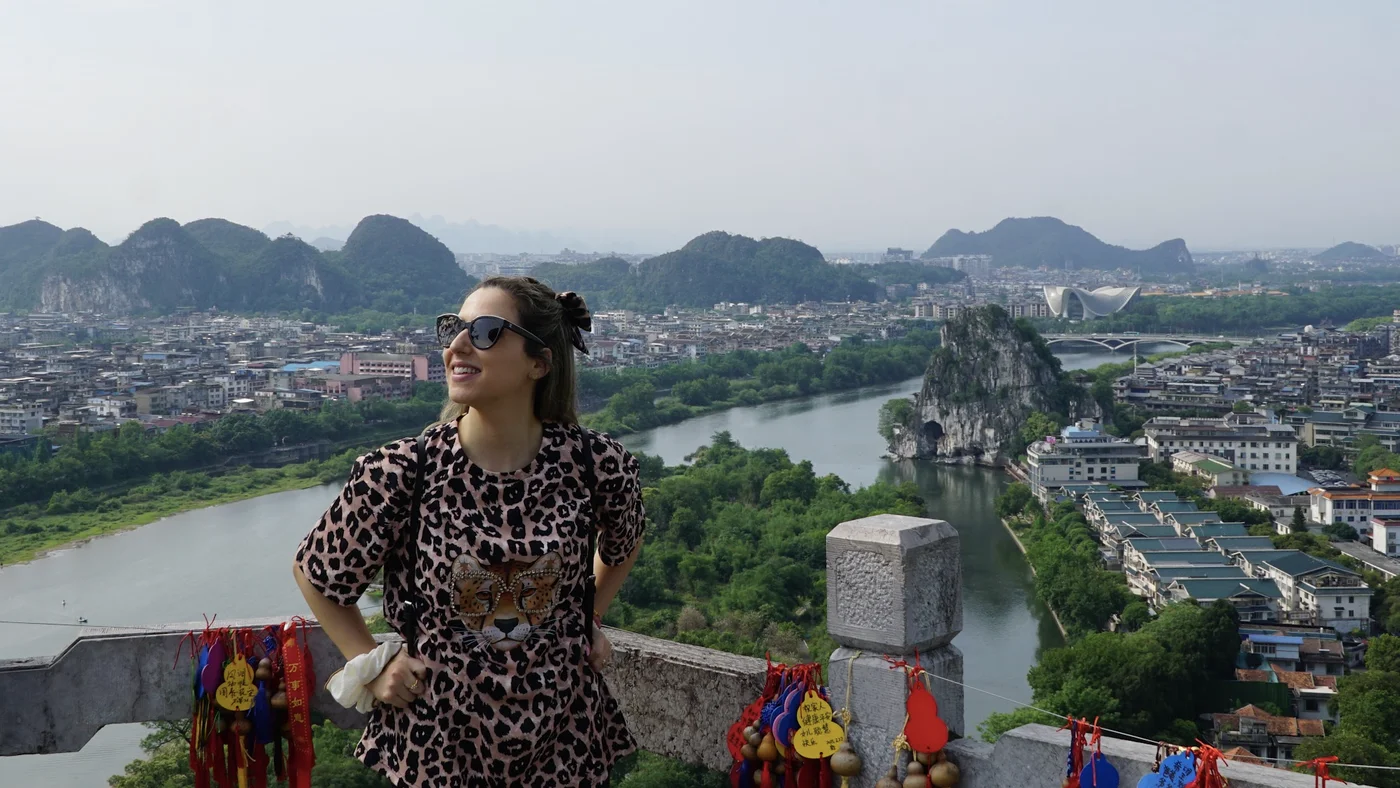
Diecai Hill, One of Guilin's Best Viewpoints
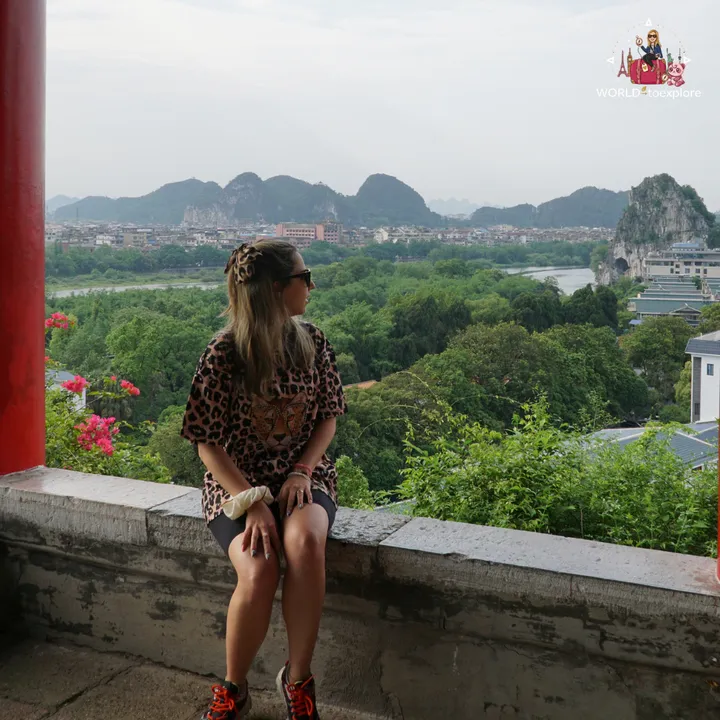
Right in the centre of the city, Diecai Hill is one of Guilin’s best-known spots for a different, elevated view over the city. It’s not a huge hill, but you do need to climb a fair number of steps to reach the different viewpoints. The climb is manageable though, especially since there are a few points of interest along the way. From up top you get panoramic views over the Li River, the city and the karst mountains surrounding the whole region.
We fitted the visit to Diecai Hill in early in the morning, on our only full day in Guilin, since we’re clearly early-bird people. If we weren’t among the first to enter the complex, we were easily in the top 10. There’ll be time to sleep when we’re home! We took the climb and the whole route at a relaxed pace, since it was really hot and getting around quickly wasn’t really an option. In this article, I’ll tell you what our visit was like, what we found along the climb, and whether we think Diecai Hill is worth including in a Guilin itinerary. And while we’re at it, if you’re also visiting China, you can find all our posts about the country here.
The history behind Diecai Hill
Diecai Hill sits right by the Li River and is made up of several hills and peaks, with Bright Moon Peak as the highest point. The name Diecai relates to the look of the hill’s rock formations, which appear in several stacked layers. It can be hard to picture just from the description, but these layers look a bit like folded silk cloth, giving the hill a very distinctive appearance. Over the years, Diecai grew in importance not just for its scenery and views over Guilin, but also for the caves, inscriptions and other historical features found throughout the complex. Today, it’s known above all for bringing together, in a relatively small space, nature, history and some of the best spots to look out over the city of Guilin.
Its importance grew during the Tang dynasty, when Guilin began attracting writers, poets and other cultural figures. One name associated with the site is Yuan Hui, an official from that same dynasty said to have visited the hill in the 8th century and written about what he found there. From then on, it became increasingly tied to Guilin’s history and culture, drawing people who came not just for the scenery, but also for the rock formations and caves in the area. Some of the traces left by those visits can still be found on the rocks today and form part of the route through the complex.
One of the things that stands out most about Diecai is the inscriptions scattered across its various rocks. Over the years, people passing through carved poems, phrases and other records into the stone, many of them related to Guilin’s scenery. There are inscriptions from different periods, which turns the walk into a kind of journey through the city’s history. Some are quite visible, while others appear tucked among the rocks and caves, so it’s worth paying attention as you climb to spot them. Another important feature of Diecai is the Wind Cave, a cave that runs through the hill and also holds several inscriptions and carvings. There are around 178 inscriptions carved into the rocks and 98 Buddha statues, spread across 24 niches. Many of these pieces were added at different points in time and show just how important this place was to those visiting Guilin.
Beyond its historical importance, Diecai also became known for its connection to Guilin’s scenery. The view over the Li River and the surrounding mountains made it a sought-after spot, and over time the region’s landscape found its way into poems, paintings and other artistic works, helping shape Guilin’s image as one of the most beautiful places in China. Over the years, the area was gradually adapted to welcome visitors, and today it has a well-marked route linking the various points of interest on the hill, with paths, stairs and viewpoints that make it fairly easy to explore the complex, even though some sections are steeper. The complex covers around 10.8 hectares, and Bright Moon Peak, the highest point, reaches 223 metres in altitude. Today, Diecai Hill is one of Guilin’s best-known attractions and remains one of the go-to spots for a panoramic view over the city and the surrounding landscape.
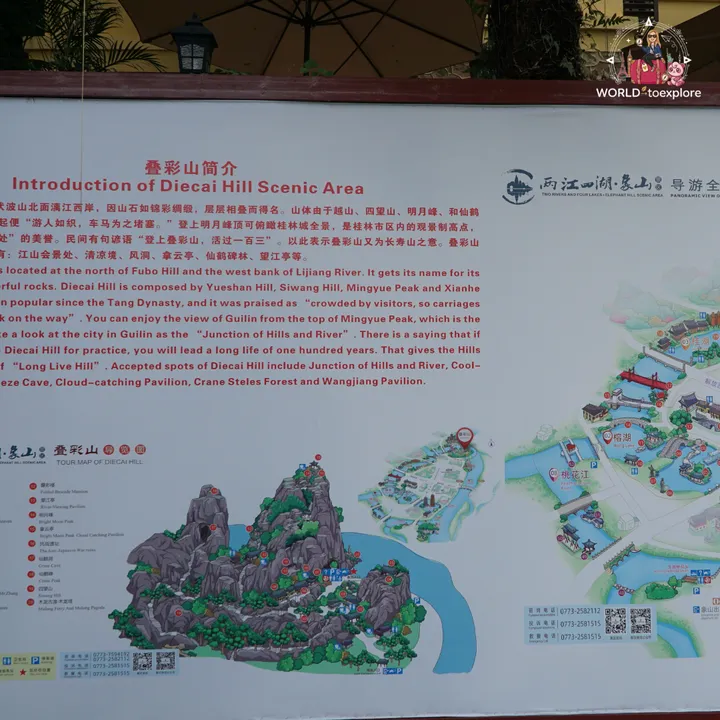
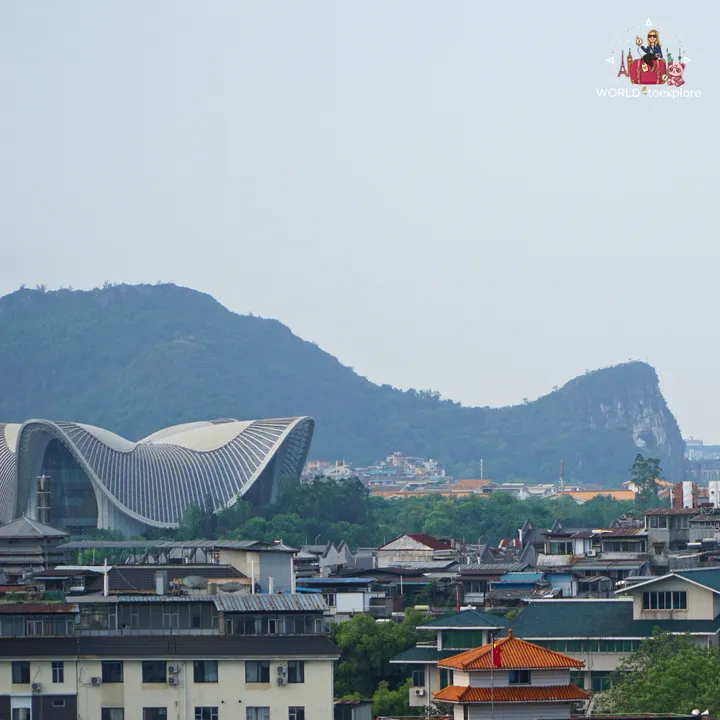

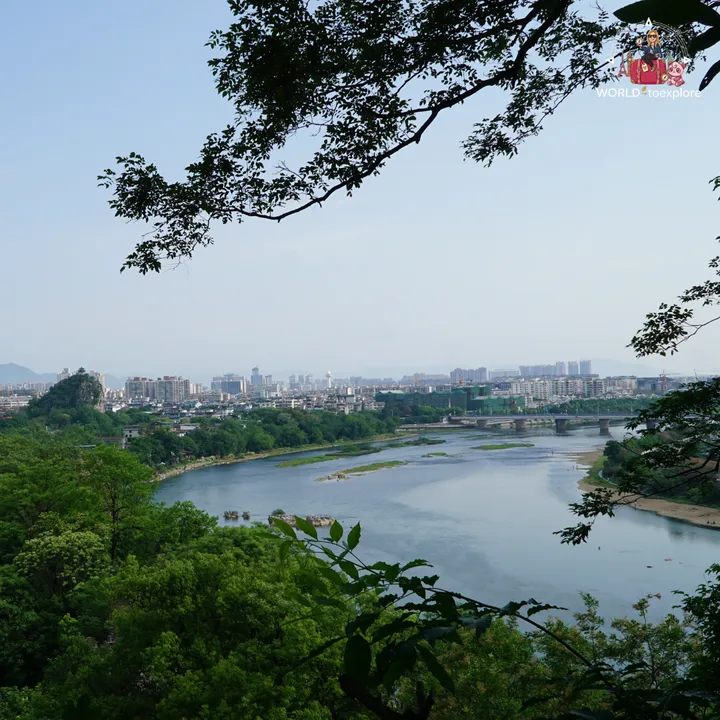


What to see
Within the Diecai Hill complex there are several points of interest, some right along the main route, others requiring a small detour. To help you get a better sense of what you’ll find on the hill, the main spots are listed below, along with a short description to give you some context on each one.
Bright Moon Peak (明月峰)
At 223 metres, Bright Moon Peak is the highest point on Diecai Hill and one of the spots that best justifies all the sweat of the climb. At the top, the Cloud-Catching Pavilion marks the highest point on the route and offers a panoramic view over Guilin. It’s one of those places worth stopping at for a few minutes, if only to catch your breath before heading back down.
Wind Cave (风洞)
Wind Cave is a cave that runs through the hill, and its name comes from the draught you feel inside it. Since there are openings that allow air to circulate, a kind of current builds up inside the cave. On hotter days, I can tell you that stepping in here feels really good. As you approach, you immediately notice a cool breeze coming from the cave, which in our case helped cool us down a bit before we carried on with the climb.
Diecai Pavilion (叠彩亭)
Diecai Pavilion sits right at the start of the main path leading up to Bright Moon Peak. It’s a traditional Chinese pavilion, with a green roof, red columns and a cross-shaped floor plan, built as a resting spot. The original pavilion was built during the Qing dynasty, commissioned by Qin Huan, who was in charge of Guilin’s administration at the time, and it was later rebuilt in 1958. On the front, there’s a plaque reading “Diecai Mountain”, written by the calligrapher Wang Xiajü. Right next to the pavilion there’s also an old inscription reading “Jiangshan Huijing Chu”, which translates roughly to “the place where the river and mountain scenery meet”.
Yuyue Hill / Yuyue Pavilion
Yuyue Hill is known mainly for the Yuyue Pavilion, a small pavilion built at the top of the hill. The pavilion has traditional Chinese architecture and is one of several resting spots along the route. From here you get a different perspective on Bright Moon Peak and can take a closer look at the hill’s various rock formations.
Crane Peak (Xianhe Peak) and Siwang Hill
Also known as Xianhe Peak, Crane Peak and Siwang Hill are two of the four formations that make up Diecai Hill, along with Yuyue Hill and Bright Moon Peak. Crane Peak gets its name from the shape of the peak, which resembles a crane. Siwang Hill’s name, meanwhile, relates to the idea of looking into the distance, which makes complete sense given the view you get from this part of the hill.
Over-the-River Pavilion / Wangjiang Pavilion and other small pavilions
Along the route you’ll also find a few smaller pavilions, such as the Over-the-River Pavilion, also known as Wangjiang Pavilion. These are mostly spots that let visitors stop for a bit to rest their legs while taking in the views of the surrounding landscape. After so many stairs, any place with a bench starts to feel like an attraction in its own right.
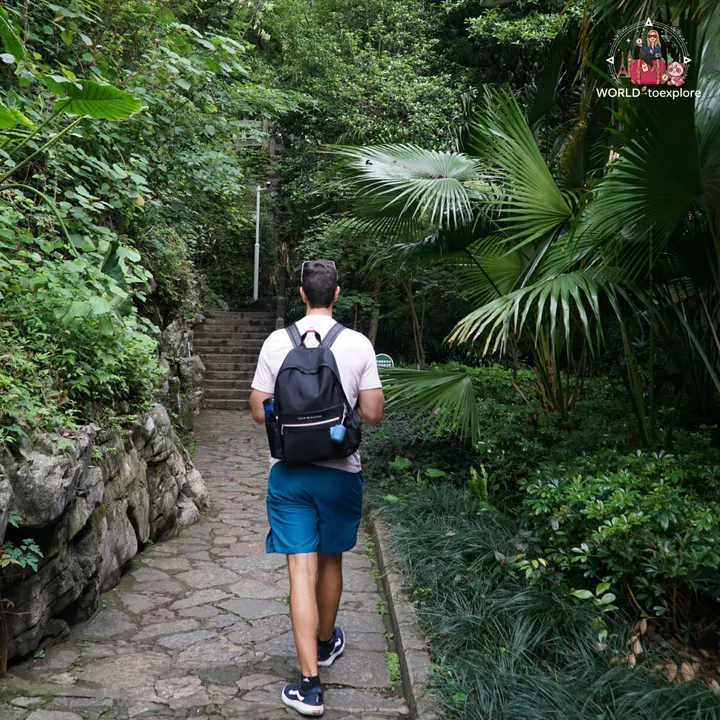
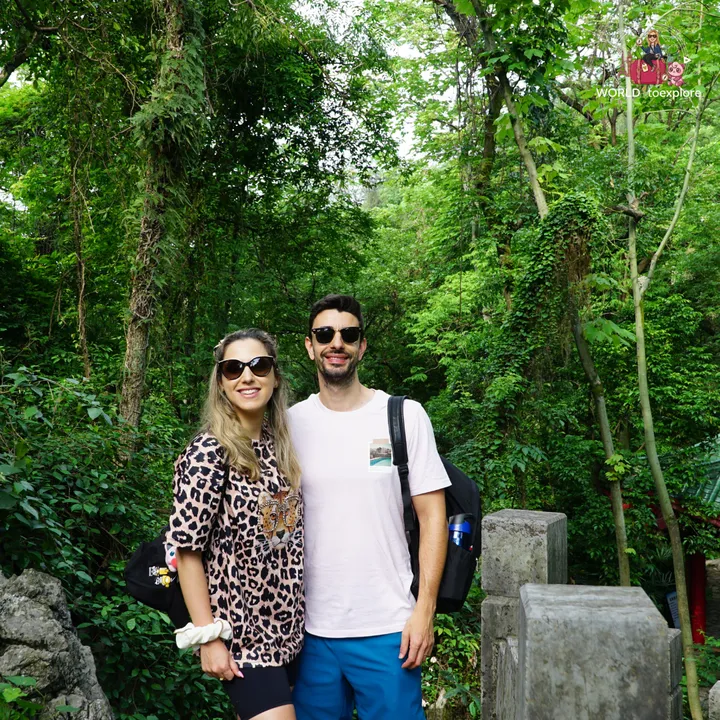
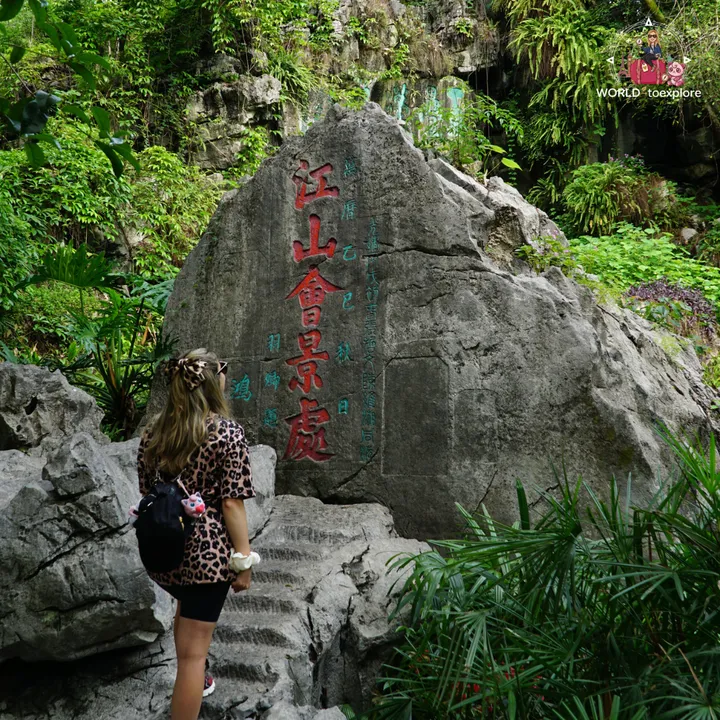
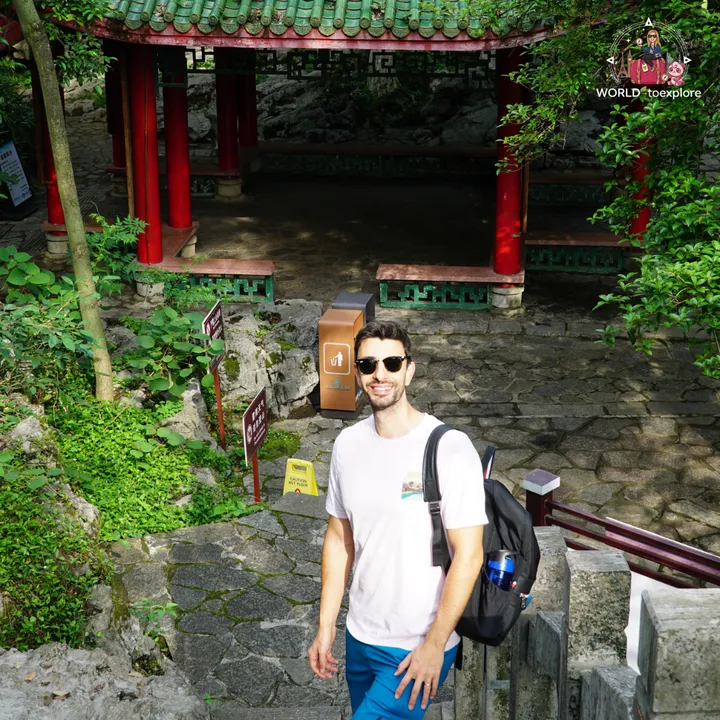
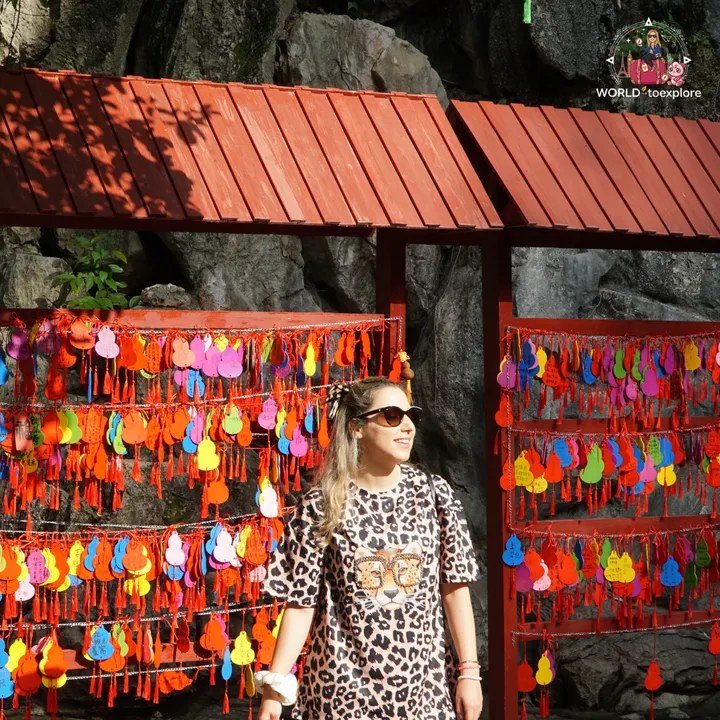
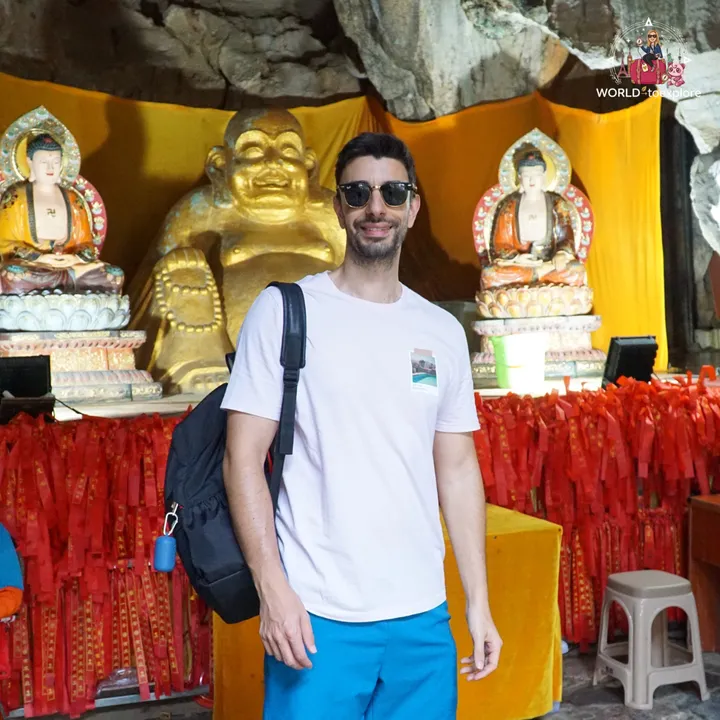
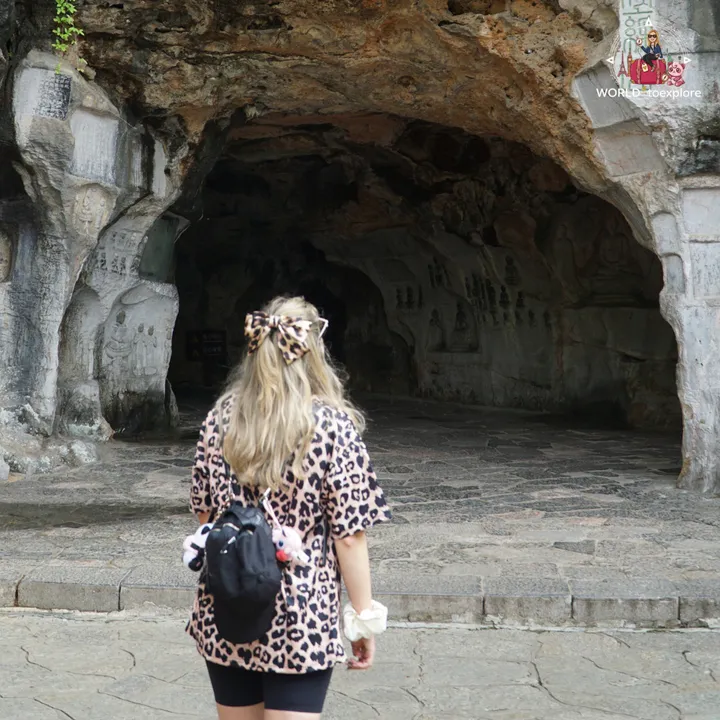
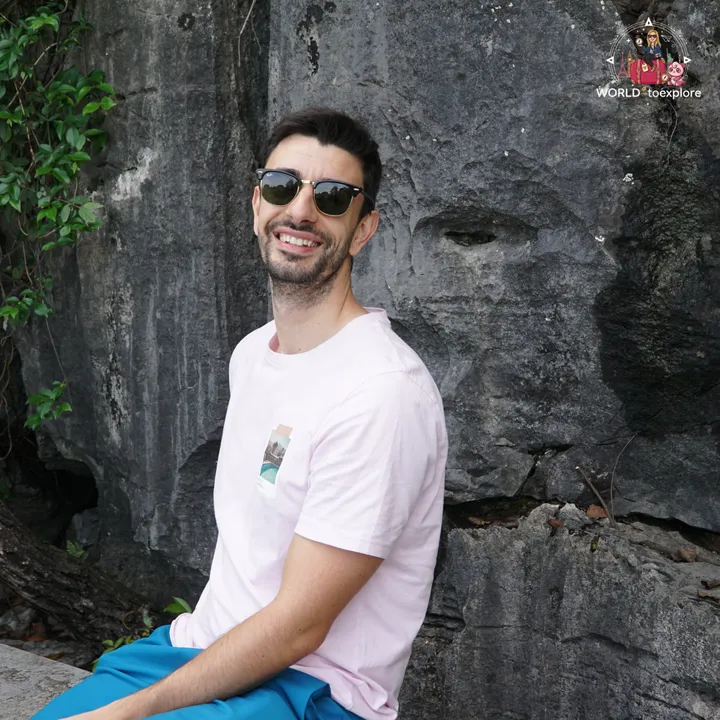
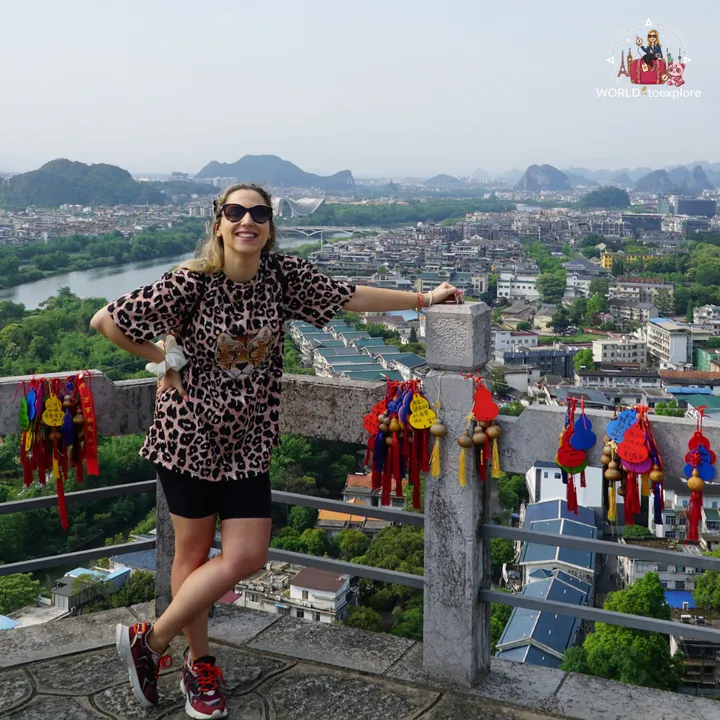
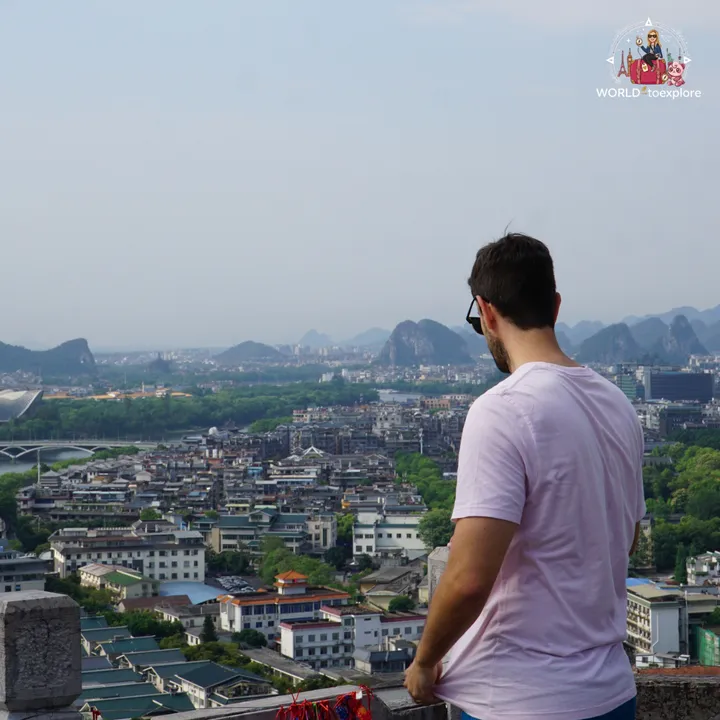
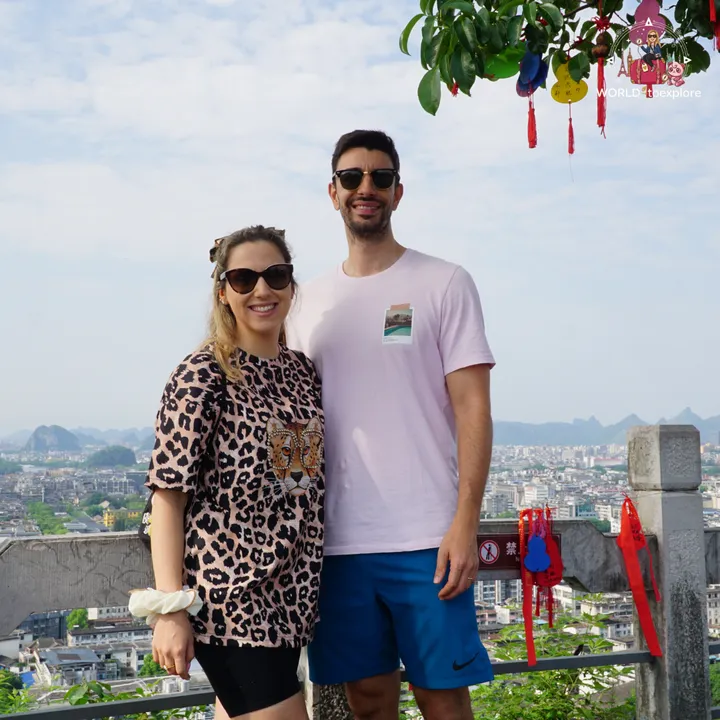

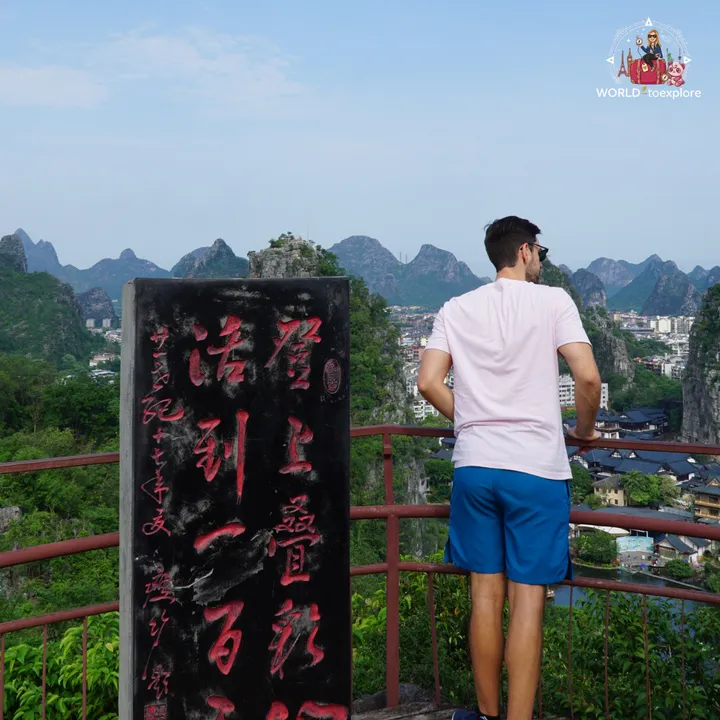

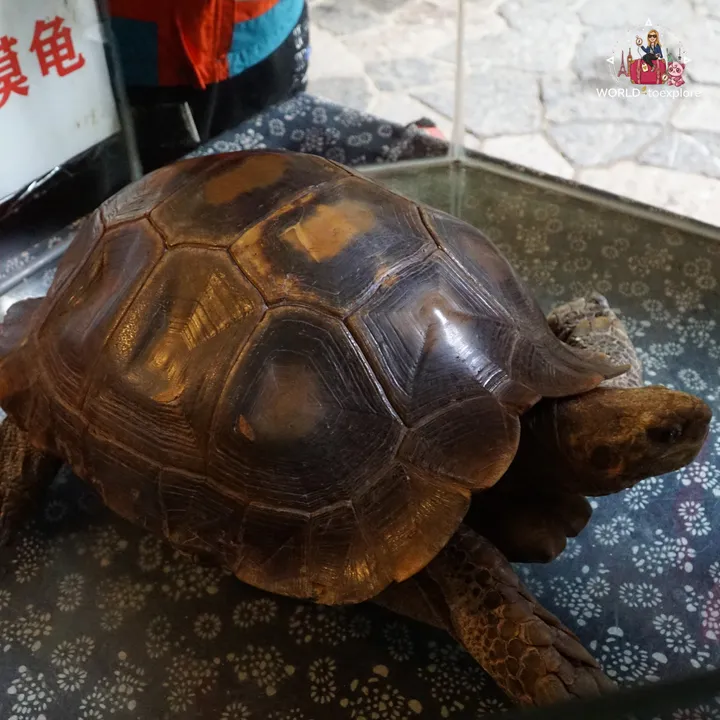
We spent just under 2 hours seeing all the points of interest on Diecai Hill, and honestly, I think that’s a pretty reasonable amount of time to do the route at a relaxed pace. We’d say we’re in decent shape, so the climb itself wasn’t too tough, but it was quite hot, which didn’t help much. We made our way up steadily, stopping now and then at the various pavilions to rest for a bit. One of the stops we enjoyed most was Wind Cave, where that cool breeze felt especially good after so many stairs. In one of the rooms leading into the cave we also spotted a giant tortoise that, from what we gathered, was quite old. I can’t remember exactly how old, but it was a lot!
I think going right when the complex opened also helped us really make the most of the visit. When we arrived there was no one ahead of us, we bought our tickets and went straight in, with entry through simple turnstiles where you validate your ticket. Throughout pretty much the whole route we crossed paths with five or six people at most, which, considering we were in China, is quite the achievement! Every so often a local would jog past us, up or down the stairs, as if it were the most normal thing in the world. I really get the feeling that, for a lot of people there, those stairs are basically a casual stroll, while we were already thinking we’d done enough cardio for the whole week. But that’s a whole other story, the stairs and the fitness levels over there… I really feel they’re built differently, at least compared to me!
- Opening hours: 7.00am to 6.30pm, April to October, with last entry at 6.00pm
- Duration of the visit: around 1.5 to 2 hours
- Price: 35 RMB per person (around €4.40)
- Difficulty: easy to moderate, but with plenty of stairs
We visited China in April 2025, on a roughly two-week trip that took us through several cities and showed us very different sides of the country. It was a real box of surprises, the kind of trip you really want to do again. Guilin helped make this trip even more special, mainly because of how different the scenery was from the other cities we’d seen. Diecai Hill was also one of our favourite visits in Guilin, especially for the perspective it gave us over the city. If you visit Guilin, we’d recommend doing the hike up the hill, because we think it’s really worth it. 🩷
You Might Also Like
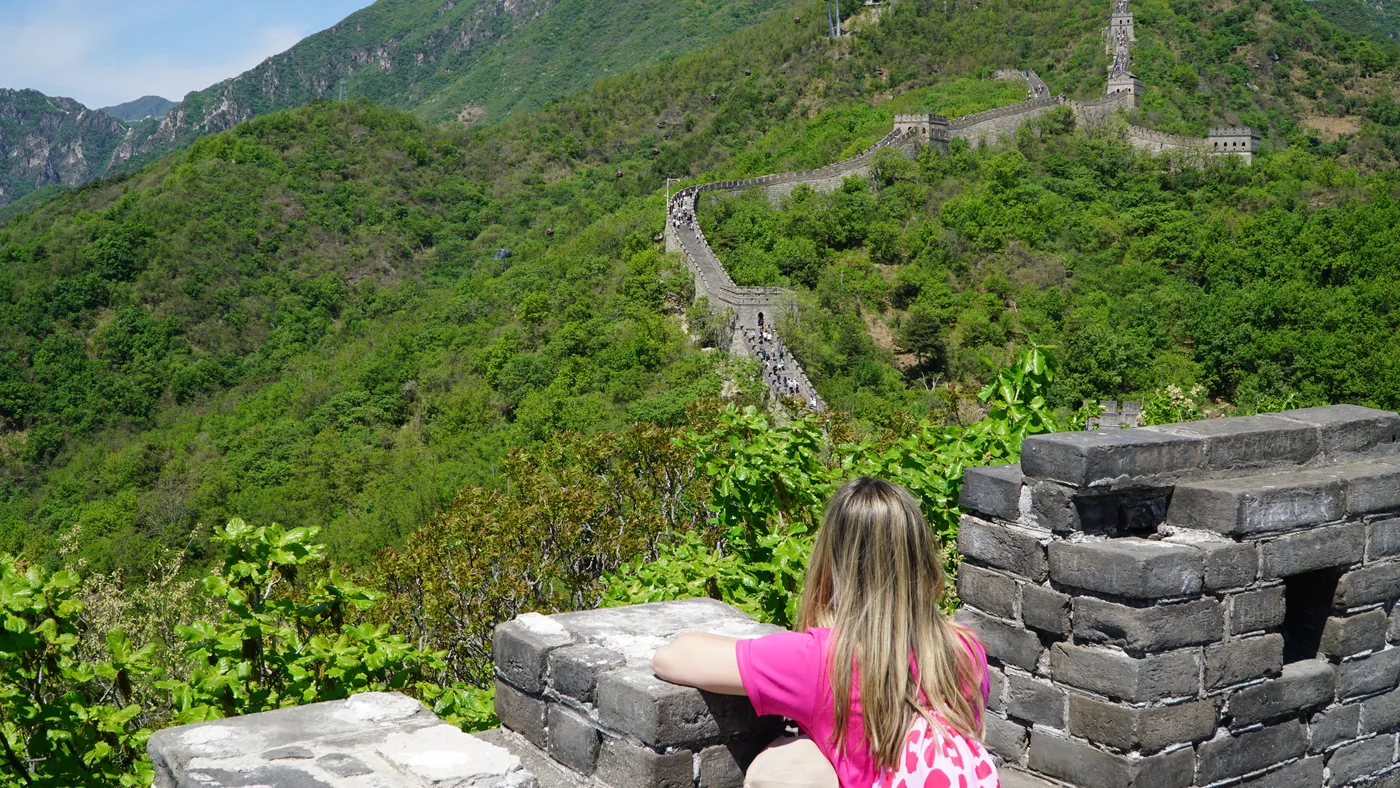
China: a box full of surprises
China was the biggest box of surprises of all my travels: from Shanghai to the Avatar mountains, from the terracotta warriors to the pandas of Chengdu.
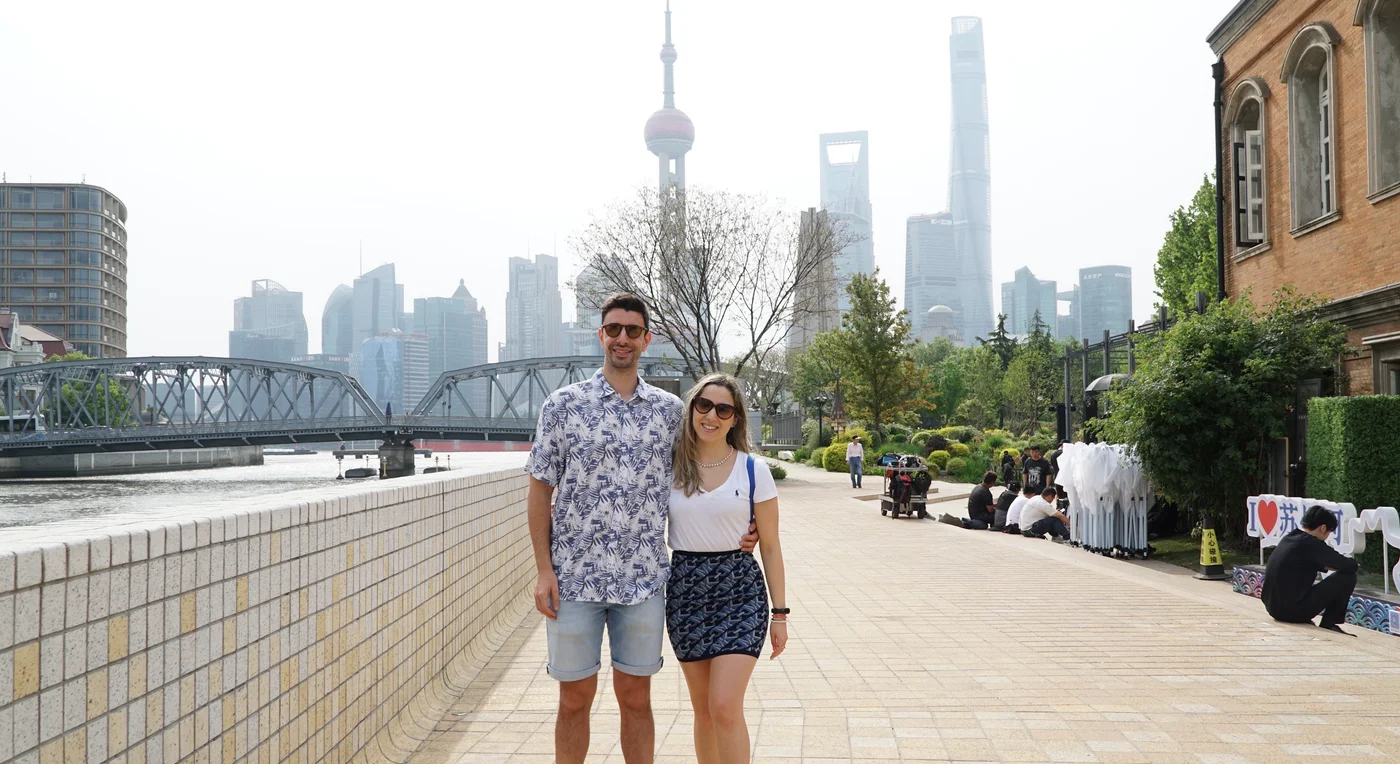
Shanghai Tower, China's Highest Observation Deck
Going up the Shanghai Tower, the highest observation deck in China: our experience on the 118th-floor observatory, plus tickets, opening hours and tips for your visit.
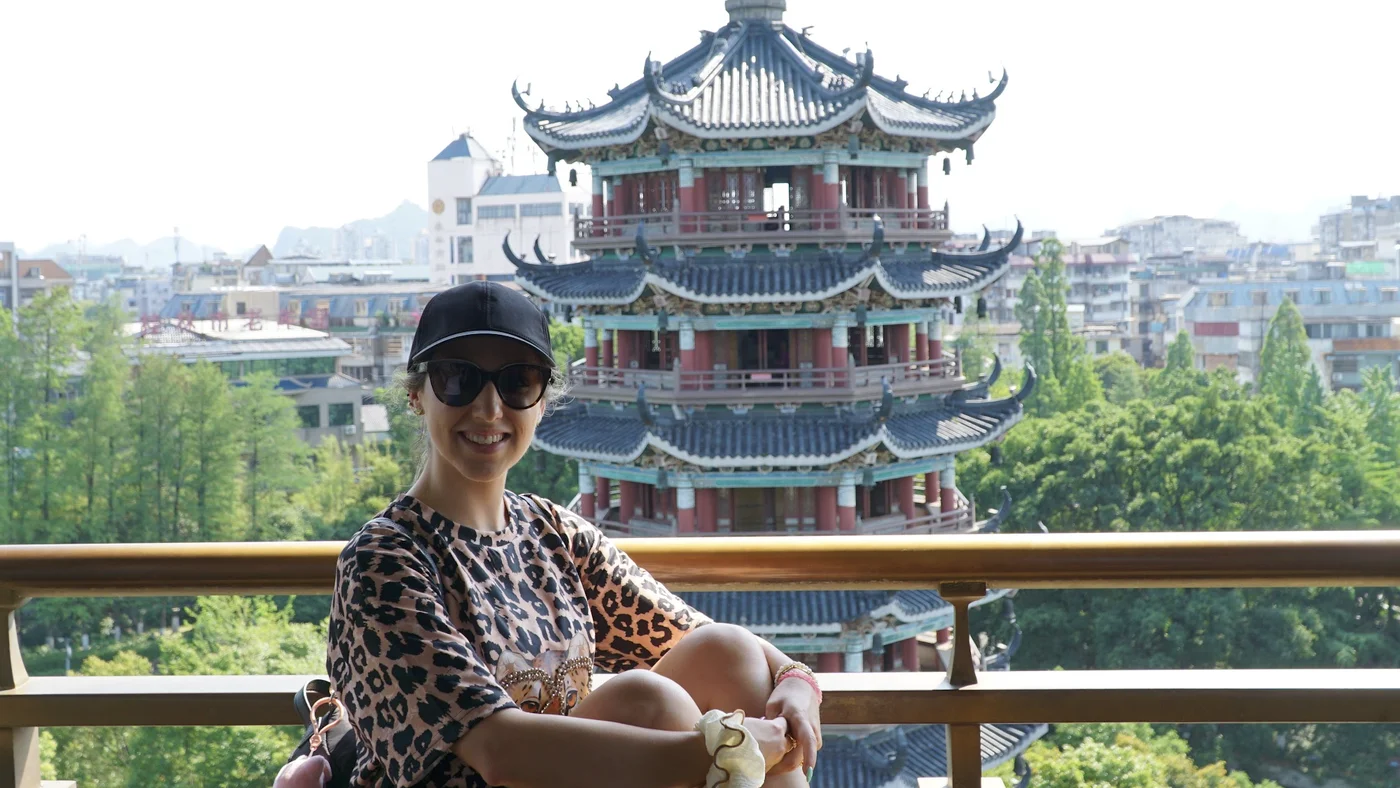
The Sun and Moon Pagodas, One of Guilin's Symbols
Golden and silver, the Sun and Moon Pagodas shine in the middle of Shanhu Lake and are one of Guilin's most beautiful postcard views. We share the history behind the two pagodas and what it was like to climb both towers, by day and by night.