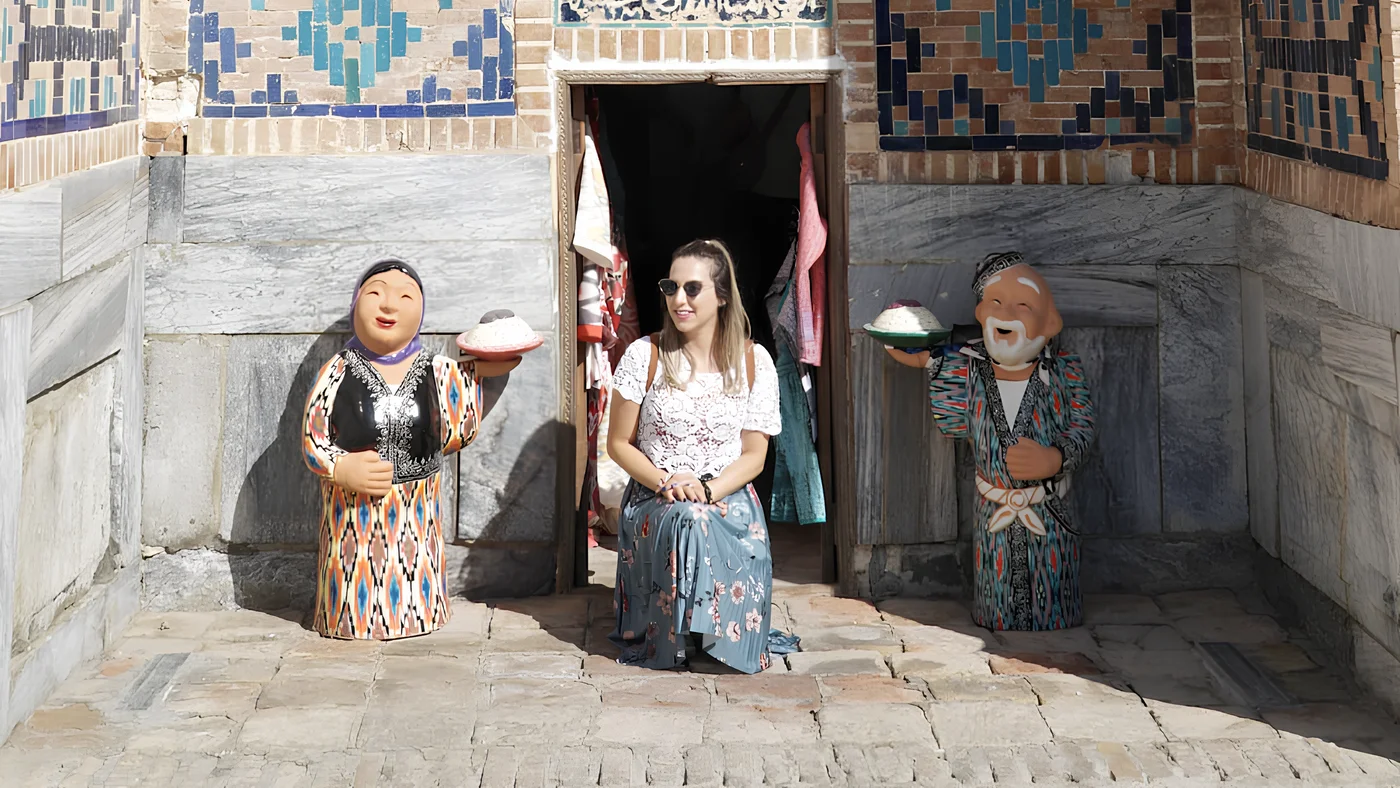
Welcome to Uzbekistan!
There are trips we choose in order to rest, others for the scenery, the beach, or simply because someone told us about a place and we couldn't stop thinking about it. And then there are the ones we choose precisely because we don't really know what to expect. That was the case with Uzbekistan! We wanted a different kind of trip, the sort that would push us out of our comfort zone. I'll admit that, before we started planning, I knew little to nothing about the country. I knew it was in Central Asia, that it had cities linked to the famous Silk Road, and not much else. But it was exactly that lack of knowledge that sparked our curiosity to go. And, before we knew it, we were booking a ten-day trip to a destination we'd never even considered visiting before.
And the truth is, if we felt we knew little about Uzbekistan, the people around us probably knew even less. It came as a shock to some people when they heard, and I think part of that comes from simple unfamiliarity, but also from the fact that the name ends in “-istan”, which even today leads to certain associations and stereotypes that have little to do with the country's reality. After being there, I can say I felt very safe, and this trip taught me something quite simple. We often build up an idea of a place without ever having been there, and when we arrive, we realise the reality is quite different. So, welcome to Uzbekistan! In this article, I want to introduce you a little better to this country and tell you about its location, history and culture.
General information
- Capital: Tashkent
- Location: Central Asia
- Population: around 37 million people
- Official language: Uzbek, though Russian is also widely used
- Currency: Uzbek som (UZS), around €1 = 13,400 UZS
- Predominant religion: Islam
- Time zone: UTC+5
Location
Uzbekistan is located in Central Asia and borders five countries, Kazakhstan, Kyrgyzstan, Tajikistan, Afghanistan and Turkmenistan. It covers an area of around 448,000 km², making it almost five times the size of Portugal. One of its most curious features is that it's a “doubly landlocked” country, meaning it has no direct access to the sea, and none of its neighbouring countries have a coastline either, so you'd need to cross at least two other countries to reach one. Uzbekistan and Liechtenstein are the only two countries in the world with this particularity.
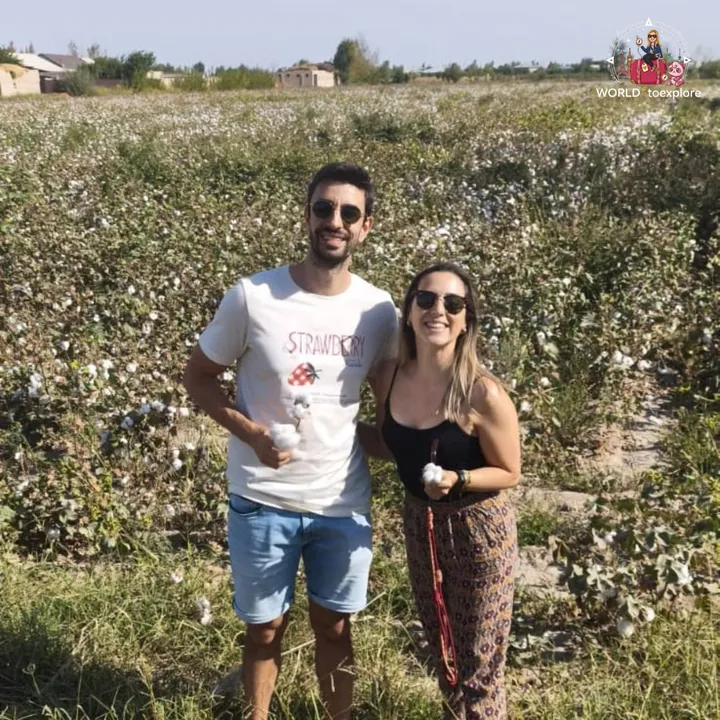
Most of Uzbekistan's territory is made up of desert and arid areas, including some of the largest stretches of desert in Central Asia. One of the main examples is the Kyzylkum Desert, which also extends into Kazakhstan. It's mostly around Khiva and Bukhara that this more arid landscape is felt, while Samarkand and Tashkent, further east, are surrounded by more fertile land, closer to the mountainous areas. Despite the dry climate, there are several agricultural areas, with cotton being one of the country's main crops, along with wheat, rice, fruit and vegetables.
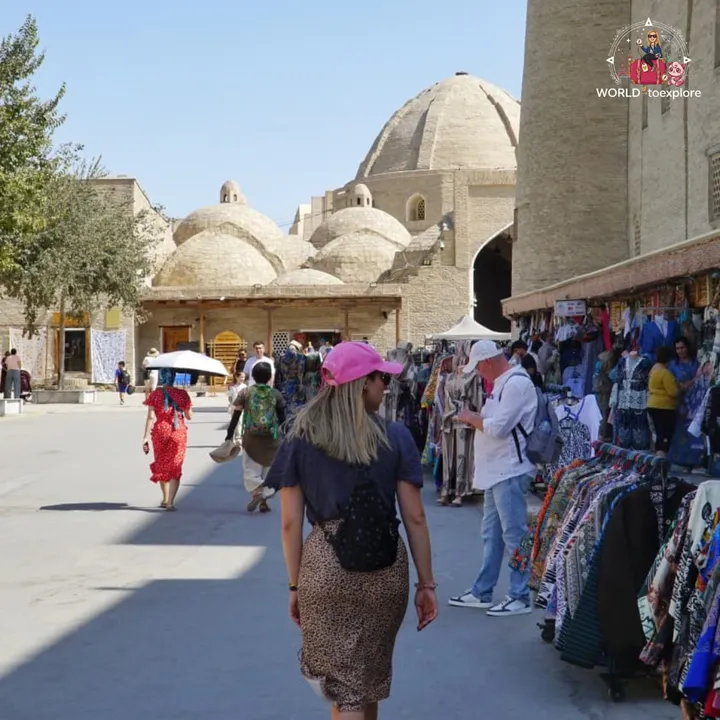
Uzbekistan's location also helps explain how important this region has been throughout history. Even though it has no access to the sea today, for centuries it sat along major trade routes connecting East and West. The constant passage of people and goods turned some of today's cities into important meeting points along the Silk Road. Samarkand, Bukhara and Khiva are some of the best examples of this legacy, and even today it's easy to notice the influence of that past in the architecture and atmosphere of their streets.
History
Uzbekistan's history goes back much further than the country we know today. Long before it became an independent nation, this territory was occupied by different peoples and passed through the hands of several empires over the centuries. It was mainly with the Silk Road that this region started to gain growing importance, welcoming merchants, travellers and people from different parts of Asia and further afield. The Silk Road wasn't really a single road, but a huge network of trade routes linking the ancient city of Chang’an, present-day Xi’an, in China, to various regions of the Middle East and Europe, stretching over thousands of kilometres. This connection between different regions allowed for the exchange of goods, but also of knowledge, religions, languages and customs, leaving marks that are still part of the country's identity today.
Each people and empire left its own mark on this region. Arabs arrived in Central Asia from the 8th century onwards, bringing Islam with them, which went on to become the main religion and part of the region's identity. Later, the Mongols, led by Genghis Khan, conquered much of Central Asia. After his death, the vast empire he had built was gradually divided among his descendants, and over the centuries, different autonomous territories emerged, known as khanates, each ruled by its own khan. It was in this context that Amir Temur, also known as Tamerlane, emerged as one of the most important figures in the region's history. In the 14th century, Temur built a vast empire and chose Samarkand as its capital, turning the city into an important centre of power and culture, whose influence can still be felt today.
After Amir Temur's era, the region remained divided between different territories. For centuries, Central Asia stayed relatively independent from the great European powers, until, in the 19th century, the Russian Empire began advancing further and further south. This advance was linked to Russia's territorial expansion, but also to its interest in controlling trade routes and gaining greater influence in the region. At the same time, the British Empire watched with concern as Russia advanced towards India, which was part of its empire, and tried to curb Russia's growing influence in the region. This rivalry between the two empires became known as the “Great Game” and ended up making Central Asia an even more contested territory. Russia's advance happened gradually, through military campaigns and the occupation of different territories, until most of the region we now know as Uzbekistan came under Russian rule or strong Russian influence.
With the Russian Revolution of 1917, the region entered a new phase and, a few years later, became part of the Soviet Union. In 1924, the Uzbek Soviet Socialist Republic was created, establishing a territorial division under the name Uzbekistan within the Soviet Union. From then on, the region underwent major changes. The Soviet government invested in industrialisation and the construction of new infrastructure, but also profoundly transformed agriculture, placing particular importance on cotton production. Uzbekistan became one of the Soviet Union's main cotton producers, which had consequences for the economy and how the land was used. At the same time, Soviet influence became part of everyday life, from education and city planning to architecture and the use of the Russian language.
Uzbekistan's independence was declared on 1 September 1991, at a time of major changes across Europe and within the Soviet Union itself. The fall of the Berlin Wall, in 1989, was one of the clear signs that the Cold War was coming to an end, and in the following years, several Soviet republics also began declaring their independence. The Soviet Union was officially dissolved in December 1991, giving rise to several new countries. Uzbekistan was one of them, and after almost seven decades as part of the Soviet Union, it began a new chapter in its history. In other words, despite all this past, Uzbekistan as a country is only 35 years old.
Culture
Uzbek culture has been shaped by the many different peoples and civilisations that passed through this region. Religion plays a very important role in the country's culture, and Islam is the predominant religion in Uzbekistan. Even so, the country is a secular state, meaning religion is separate from the state and there is freedom of religion. This influence is especially visible in the historic cities, where mosques, madrasas and mausoleums can be found almost everywhere. Samarkand and Bukhara are good examples of this and were, for centuries, important centres of learning in the Islamic world. A more recent example of this importance is the Centre of Islamic Civilisation in Tashkent, which opened in March 2026. The space houses various objects and manuscripts related to the history of Islam in the region, including the Uthman Quran, considered one of the oldest surviving copies of the Quran.
Craftsmanship also plays an important role in Uzbek culture, and many traditional techniques are taught from a very young age, passed down from generation to generation within families. This knowledge is closely tied to manual work and is used to create pottery, woodwork, textiles, rugs and embroidery, often featuring patterns and designs that are part of each region's tradition. Traditional clothing is quite colourful, with plenty of patterns and embroidery, and is mostly worn at festivals, weddings and other special occasions. Music and dance play a big part in these moments too, with traditional instruments and dances that are part of the celebrations, placing a strong focus on hand and arm movements.
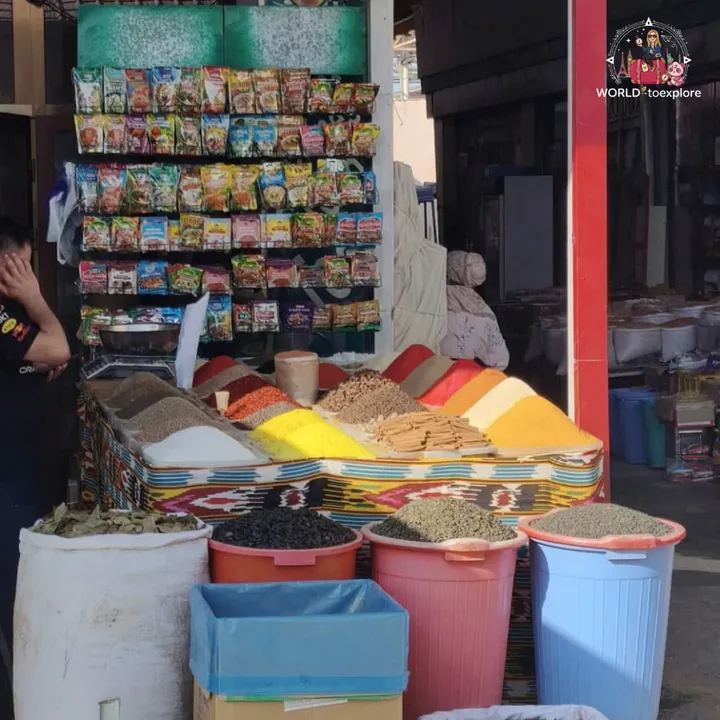
Uzbek cuisine is very much a part of everyday life and closely tied to how people socialise. The most famous dish is probably plov, made with rice, meat, carrot and onion. The food is generally quite simple, but portions are generous, and dishes are often meant to be shared. Bread also holds a special place at the table and is a normal part of practically every meal. Tea is just as much a part of these moments, served throughout the day, during meals or simply when welcoming a guest. The way it's prepared and served also follows its own traditions, making it a big part of moments of sharing and visits to family and friends.
It might sound odd, but one thing that really caught our attention during the trip was the cars. There are Chevrolets absolutely everywhere in Uzbekistan! This happens because the brand is produced locally and, thanks to more affordable prices, Chevrolet ended up becoming dominant in the Uzbek market.
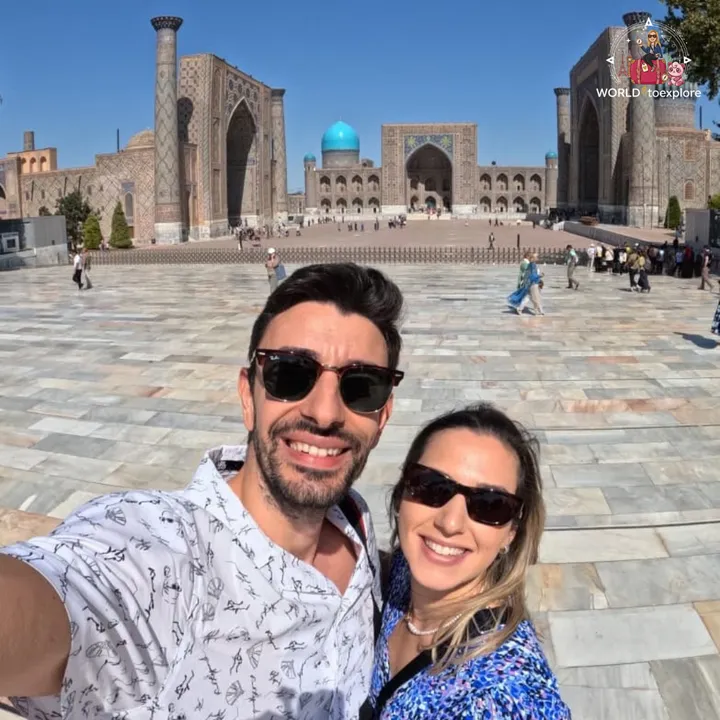
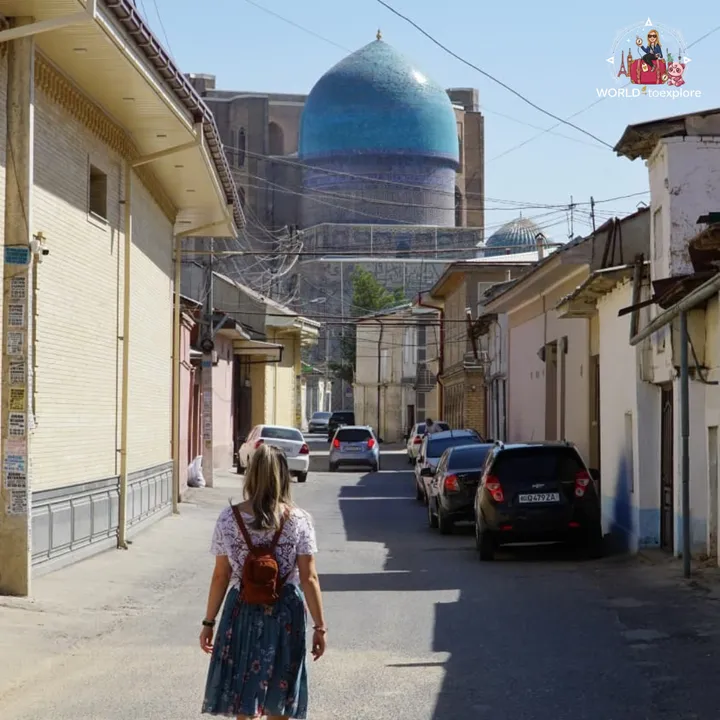
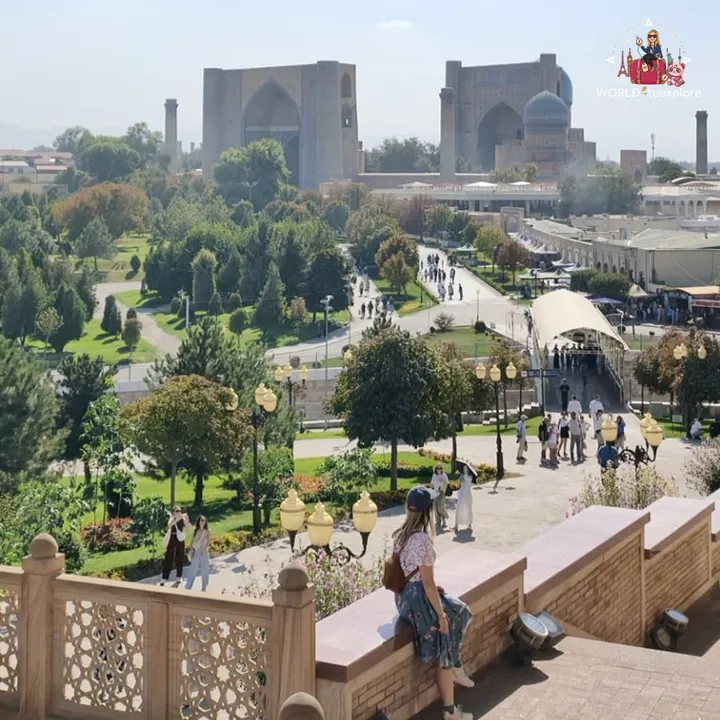
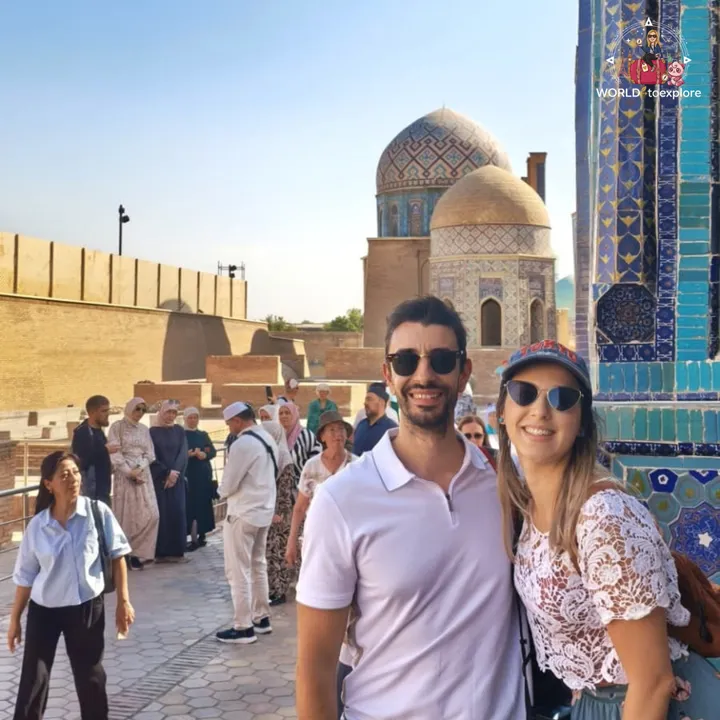
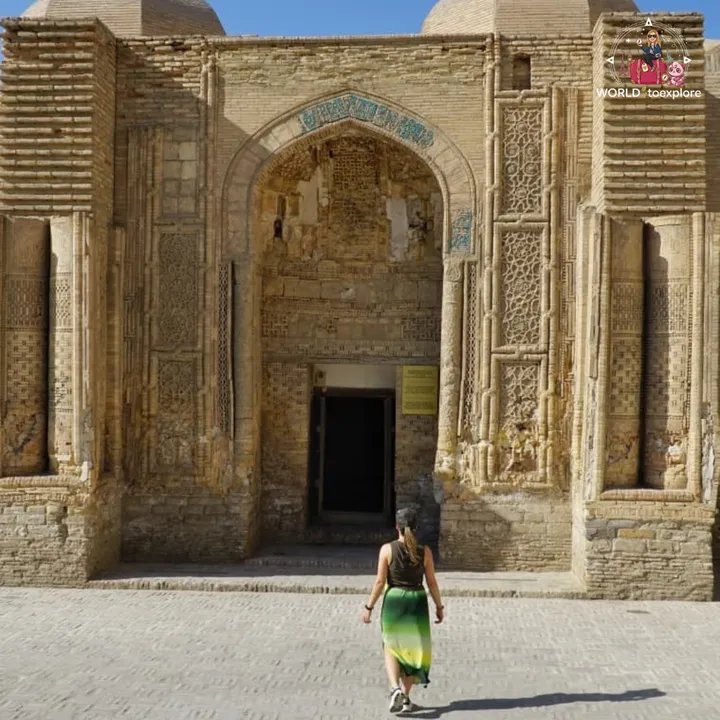
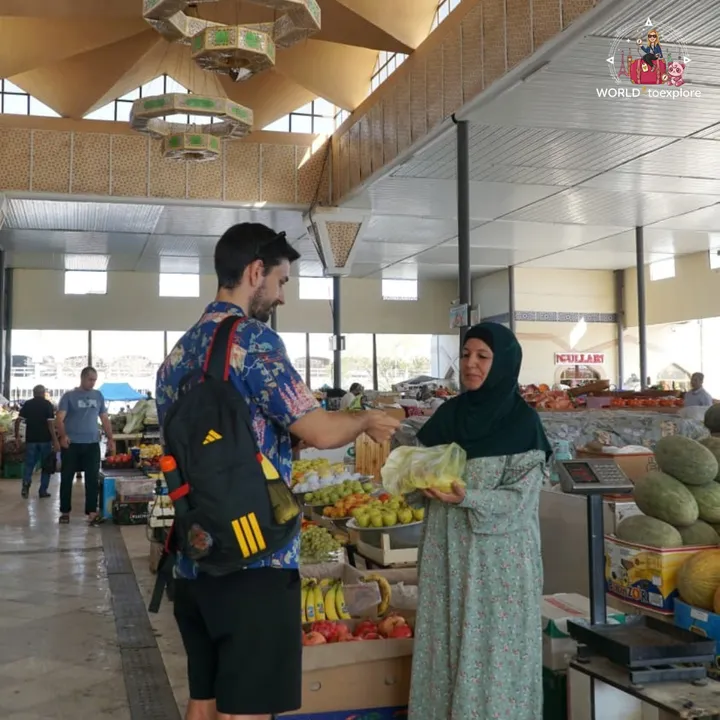
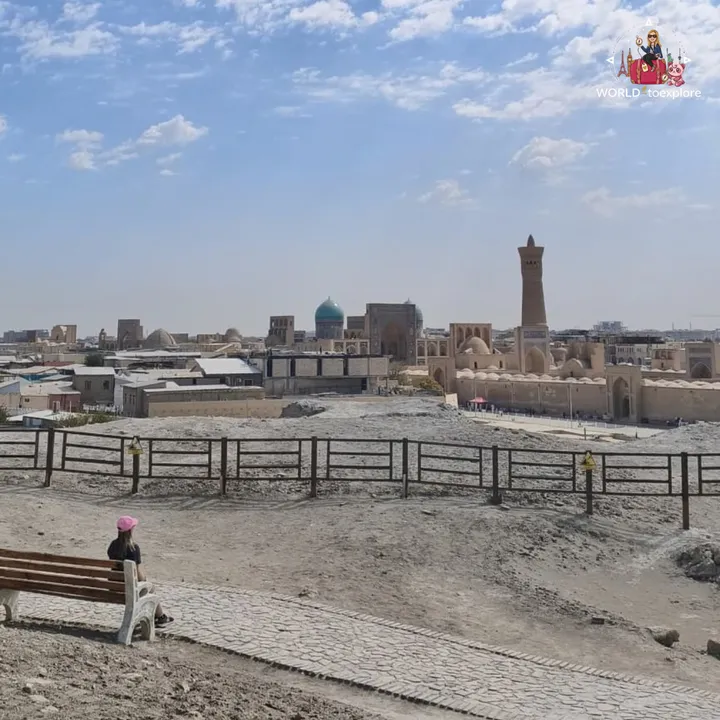
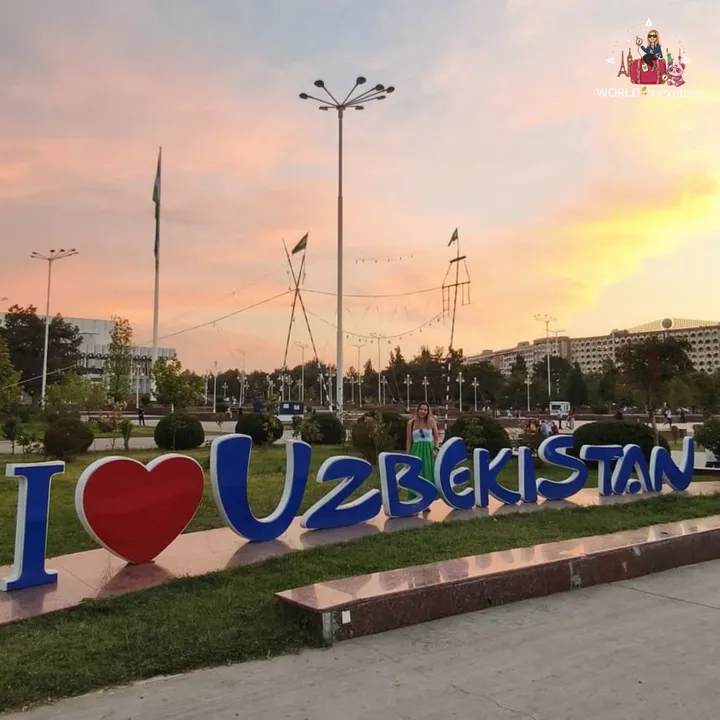
We went there without really knowing what to expect, and ended up finding a country full of history, beautiful cities, great food and, above all, a reality very different from what we had imagined before going. It was a trip that pushed us out of our comfort zone and made us realise that, often, the destinations we know least about are exactly the ones that surprise us the most. And that's how Uzbekistan, a country that until recently wasn't even on our radar, ended up becoming one of those trips we'll always hold close to our hearts. 🩷