Great Barrier Reef: The Largest Coral Reef in the World
Long before the dinosaurs, corals were already building cities on the seabed. The largest of them - the Great Barrier Reef, off the coast of Australia - is today the largest coral reef in the world.
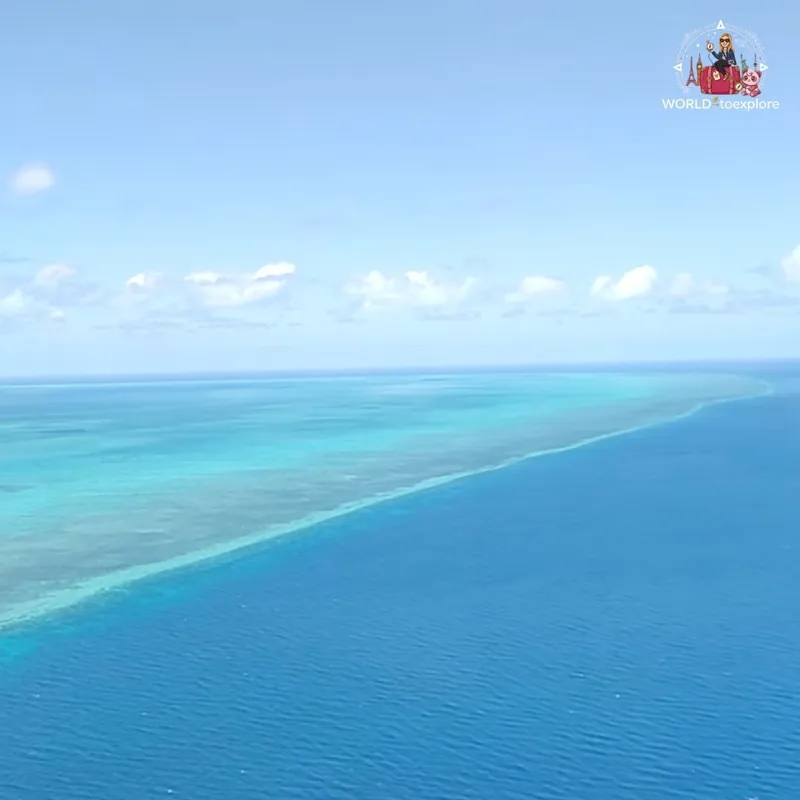
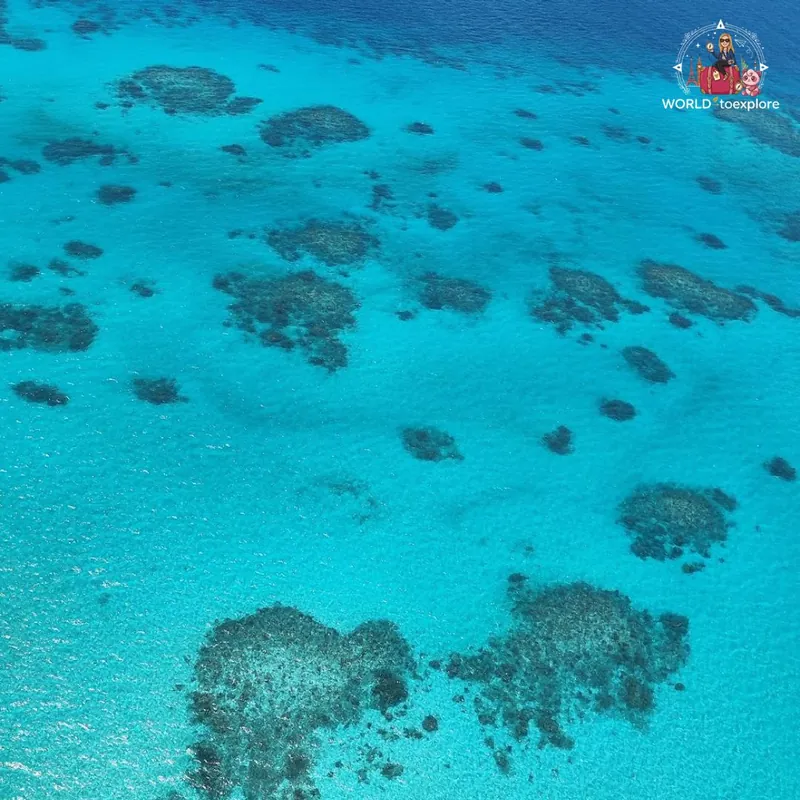
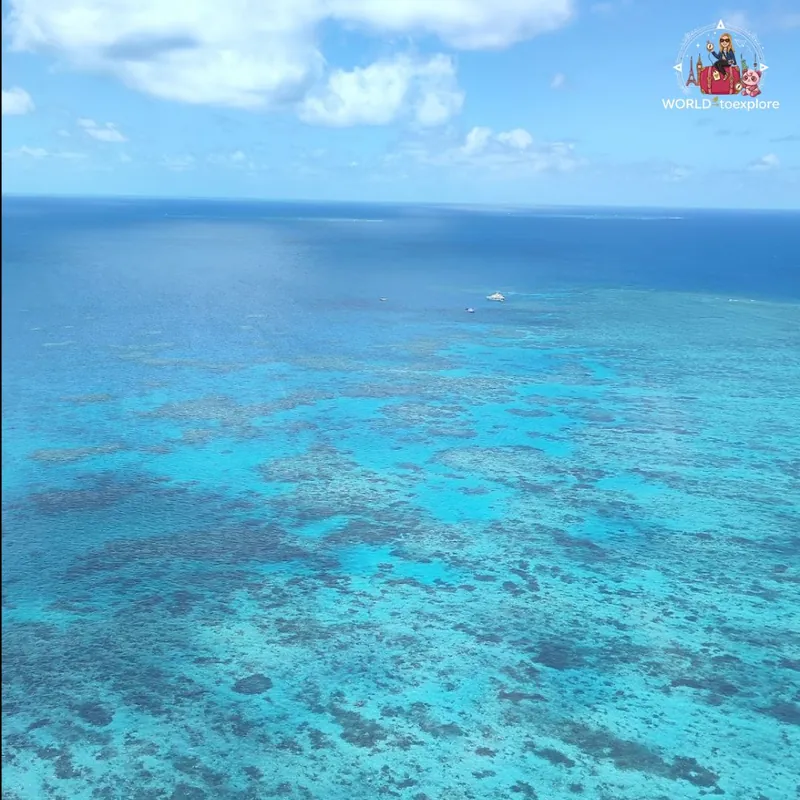
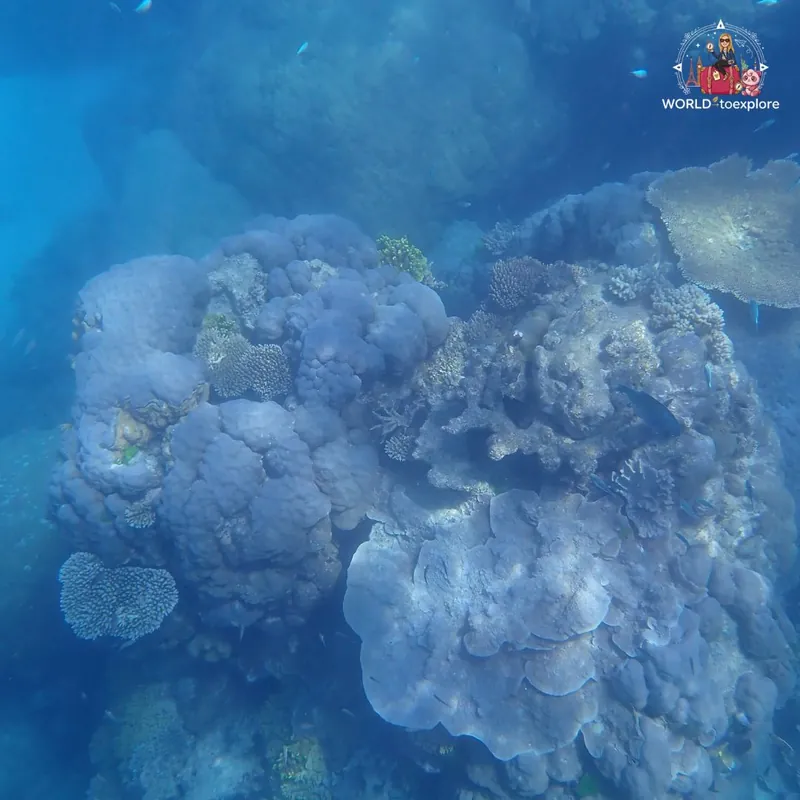
The Great Barrier Reef stretches for around 2,000 km along Australia's northeast coast, in the state of Queensland, and covers an area of roughly 350,000 km². But you only grasp the true scale of the place when you realise it isn't a single reef: it's an enormous system made up of almost 3,000 reefs and more than 2,000 islands, forming the largest living structure in the world - so vast it can even be seen from space. While some islands have reefs right off the beach, it's the outer reefs, about 50 km from the coast, that hold the most stunning scenery. That's where the water turns those shades of blue that are hard to put into words and the corals show off all their diversity. Around them live tropical fish in every colour, along with turtles, rays and countless other marine species.
It was on one of those outer reefs that I had one of the most striking experiences of my trip to Australia - and, without a doubt, one of the most memorable of my life. I flew over the Great Barrier Reef by helicopter from Cairns and landed on a pontoon in the middle of the ocean to go snorkelling. And I can tell you one thing: it's not just snorkelling. It's snorkelling on the Great Barrier Reef. You only realise the difference once you're there. In this guide I share everything you need to know to plan your visit, along with the tips and little details I only picked up once I was there.
How the world's largest living structure came to be
It's hard to believe that a structure more than 2,000 km long was built by animals just a few millimetres in size. Corals are tiny marine organisms called polyps that live in colonies and produce a skeleton of calcium carbonate. When one generation dies, that skeleton stays on the seabed and becomes the foundation for the next. Over millions of years, generation after generation, layer upon layer of coral skeletons built up, giving rise to the Great Barrier Reef we know today.
But corals don't grow just anywhere. They need warm, shallow, sunlit waters, which is why they're rarely found deeper than 30 metres. That's also why the Great Barrier Reef splits into two broad groups: the inner reefs, closer to the coast, and the outer reefs, further out. After the last ice age (which ended around 11,700 years ago), sea levels rose and flooded the continental shelf off Queensland. The inner reefs grew over former hills that had become submerged, while the outer reefs developed at the far edge of that shelf, where the seabed stops being shallow and starts dropping away steeply into the ocean.
Today, the Great Barrier Reef is made up of almost 3,000 reefs. Some encircle small islands, others sit alone out at sea, tens of kilometres from the coast. No two are exactly alike, and each has its own combination of corals, fish and other marine life. It's this sheer variety that makes the Great Barrier Reef one of the most extraordinary ecosystems in the world - and earned it UNESCO World Heritage status in 1981.
Where it is and how to get there
Because the Great Barrier Reef is so vast, there's no single point of access. Along the Queensland coast there are several towns where tours set off for different parts of the reef, each with its own character and a different experience for those who visit. The main gateways are:
- Cairns - the most popular starting point and the choice of most travellers visiting the Great Barrier Reef for the first time. It has an international airport, a huge range of boat trips, diving and snorkelling, and some seriously impressive attractions nearby too, such as the Daintree Rainforest. This is where I stayed and where I caught the helicopter out to the reef.
- Port Douglas - about an hour north of Cairns, this is a small, quiet coastal town known for its laid-back yet more upmarket feel. Its closeness to some of the best outer reefs of the Great Barrier Reef makes it an excellent base for exploring the region. It's also a great option for anyone looking to avoid the crowds and enjoy a more exclusive experience.
- Airlie Beach - further south, this is the main gateway to the Whitsunday Islands and to Whitehaven Beach. As well as giving access to different parts of the Great Barrier Reef, it's a good base for exploring the Whitsundays archipelago, famous for its beaches and crystal-clear waters.
- Townsville and Bundaberg - two more towns that also offer access to the Great Barrier Reef, though they're less sought after by international tourists and have a smaller range of tours.
In this guide I'll focus mainly on Cairns, where I stayed during my visit to the Great Barrier Reef. It was from here that I set off for the reef, flying by helicopter on the way out and returning by boat. The recommendations I share are based on this first-hand experience.
The best time to visit
Queensland essentially has two seasons, and choosing the right time to visit can be the difference between enjoying perfect days out on the Great Barrier Reef and watching your plans get washed out by the rain.
The dry season, from May to October, is the favourite for most visitors - and with good reason. The days are clear, temperatures are pleasant (ranging from 20-29 °C), there's very little rain and the water is clearer, which means excellent visibility for diving and snorkelling. The only catch? Everyone knows this, so it's also the busiest time and, as a rule, the most expensive.
The wet season, from November to April, is another story: higher temperatures, high humidity and heavy rain, often with thunderstorms, especially in the late afternoon. On the upside, there are fewer tourists and prices tend to be lower. There's one important thing to bear in mind, though, as this time of year coincides with stinger season - the period when some species of jellyfish, such as the box jellyfish, are more common in the coastal waters of northern Queensland. On the outer reefs, far from the coast, the risk is low, but swimming at the beaches isn't advised. On Great Barrier Reef tours, whenever there's a risk of jellyfish, the operators provide a stinger suit, a protective bodysuit for swimming and snorkelling safely.
We visited the Great Barrier Reef in early November, right in the transition between the two seasons, and we were very lucky with the weather. We got a day of clear skies, a relatively calm sea and excellent underwater visibility, which made the experience even more special. As we visited an outer reef, the jellyfish question didn't even come up.
From the sky to the seabed
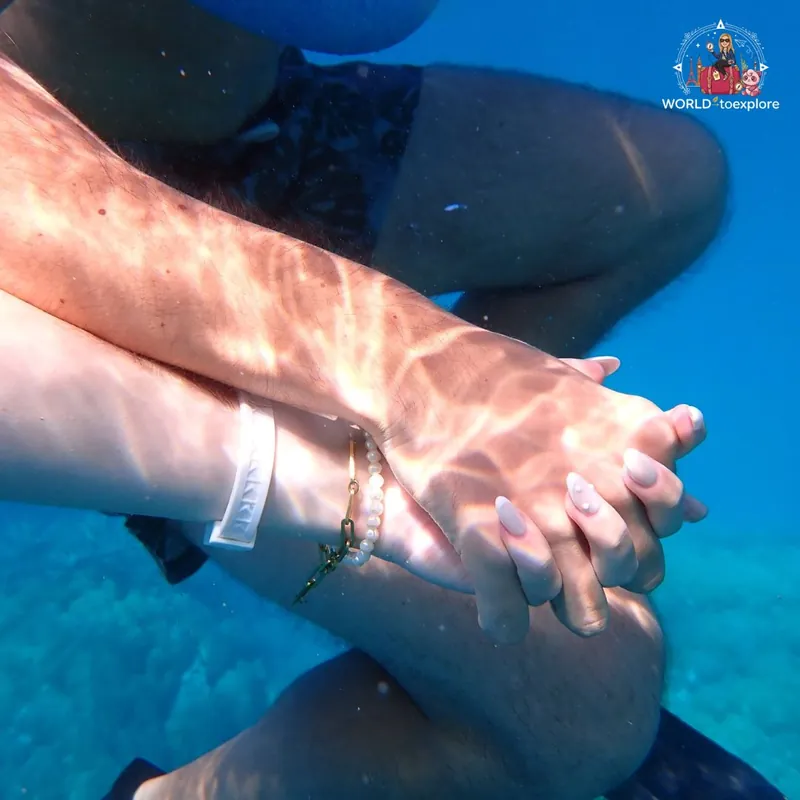
We got married in 2024 and, when it came to the honeymoon destination, there was never much doubt: we always knew that, when the day came, it would be Australia. It was one of those dreams that had been with us for years.
Tradition says the newlyweds exchange a gift with each other. We did things a little differently. Instead of spending money on something that would probably end up forgotten in a drawer, we decided to invest in an experience that would stay with us forever: the helicopter flight over the Great Barrier Reef. At first we even considered going there and back by boat, which was the cheaper option, but if there was ever a time to give in and spend a little more, this was it. I'll admit it was expensive but, to get straight to the point, it was one of the best decisions we've ever made.
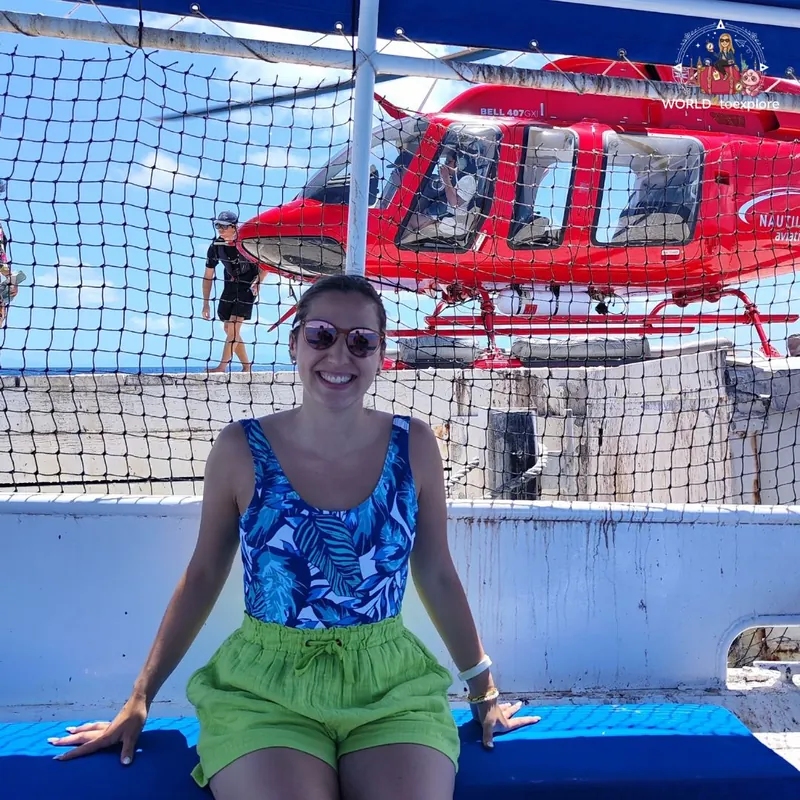
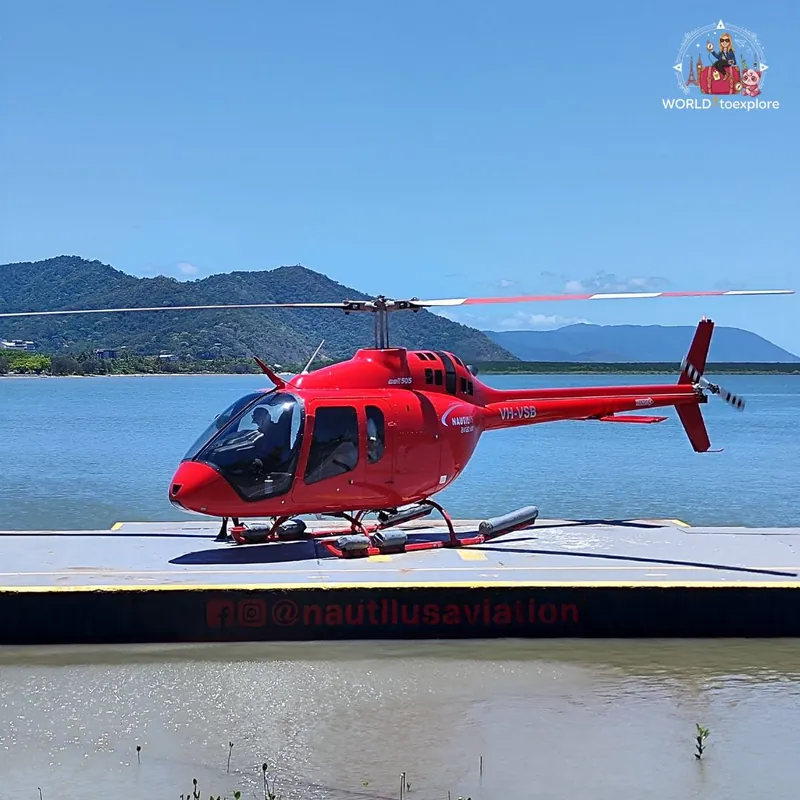
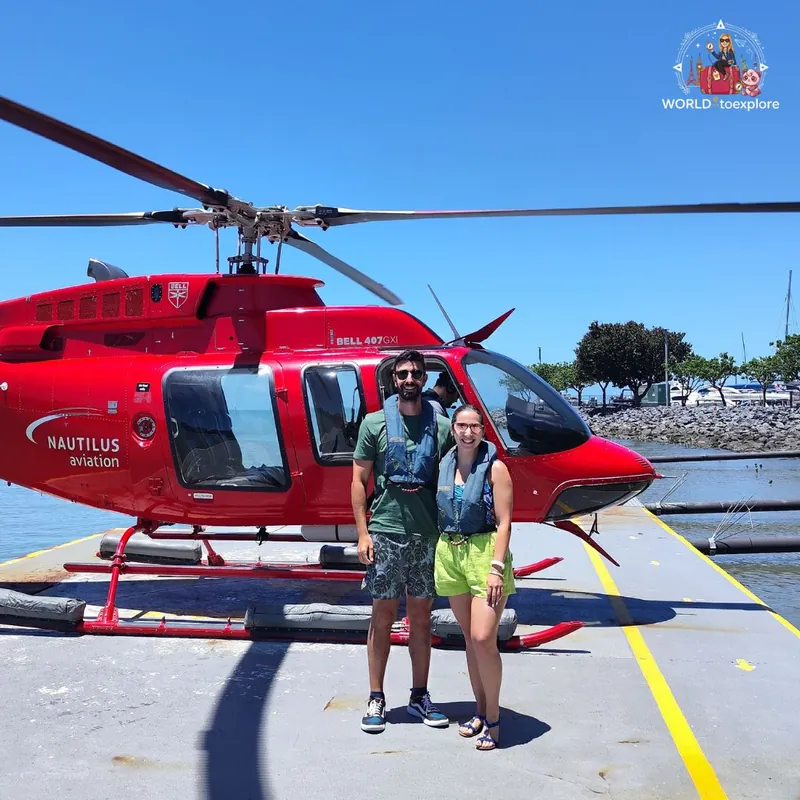
We booked everything with Nautilus Aviation, a package called Down Under Dive Fly/Cruise. The plan was simple: take a helicopter out to the reef, spend some time snorkelling in the middle of the ocean and come back by boat. The flight was scheduled for 12:40, leaving from Cairns Heliport and heading for Hastings Reef.
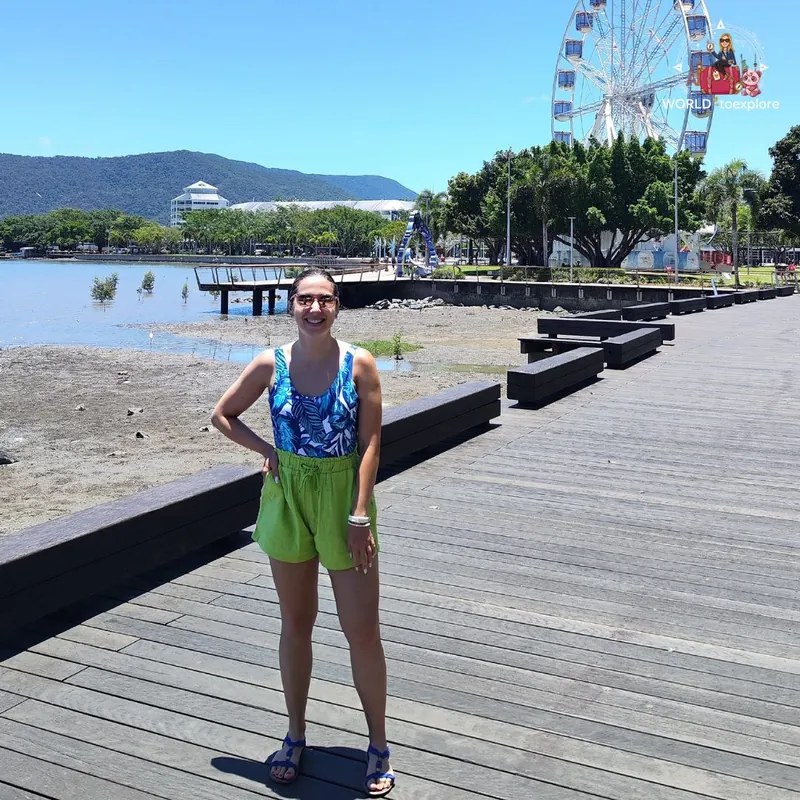
We spent a relaxed morning by the hotel pool and then walked over to the heliport, where the tour office was. We checked in about half an hour before departure. They gave us some forms to fill in and sign (those risk waivers no one reads properly but everyone signs anyway 😅), showed us a video with the safety rules and what to do as soon as we landed on the reef, and handed us our life jackets. Then it was just a matter of waiting for the helicopter to arrive.
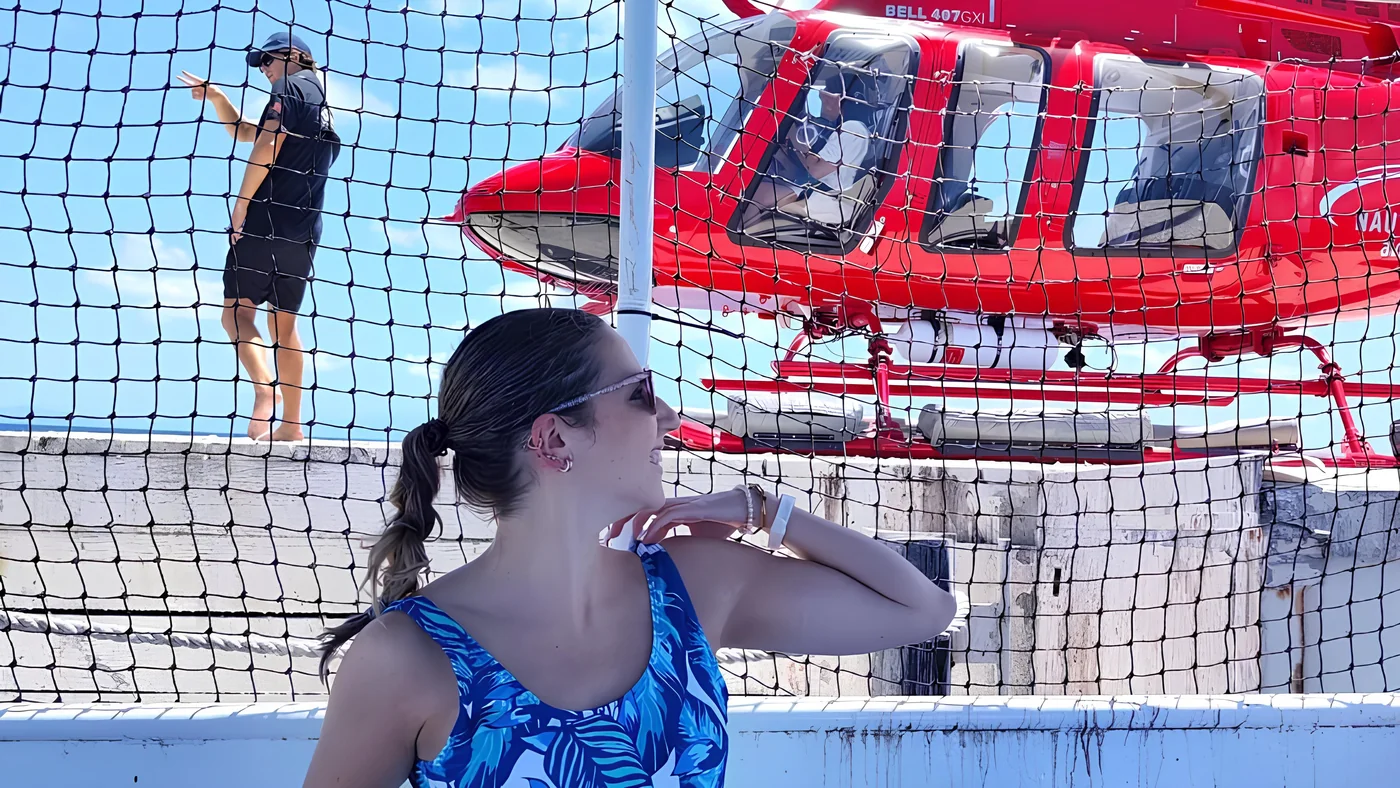
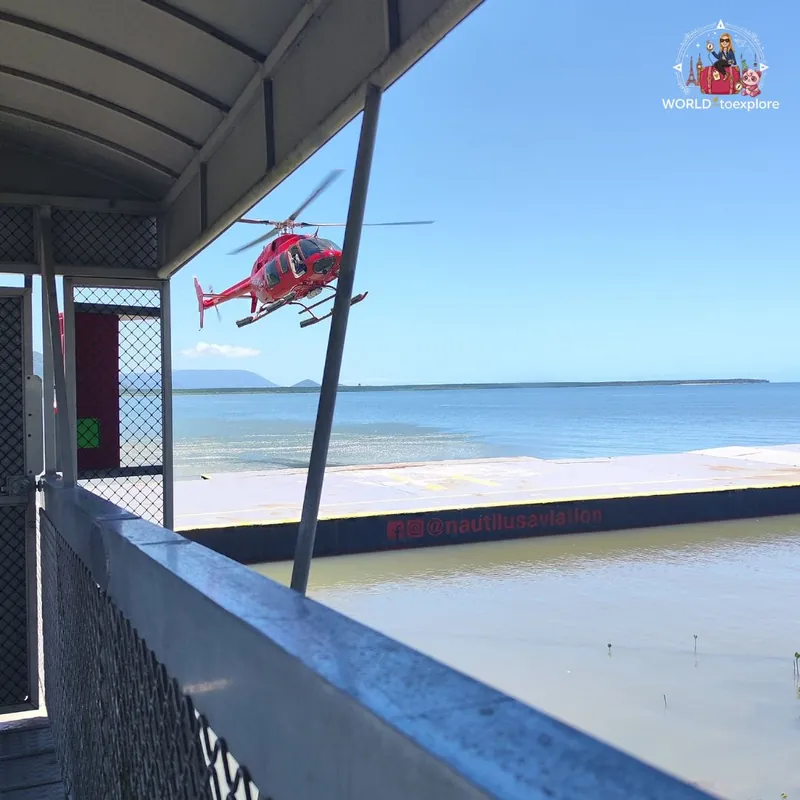
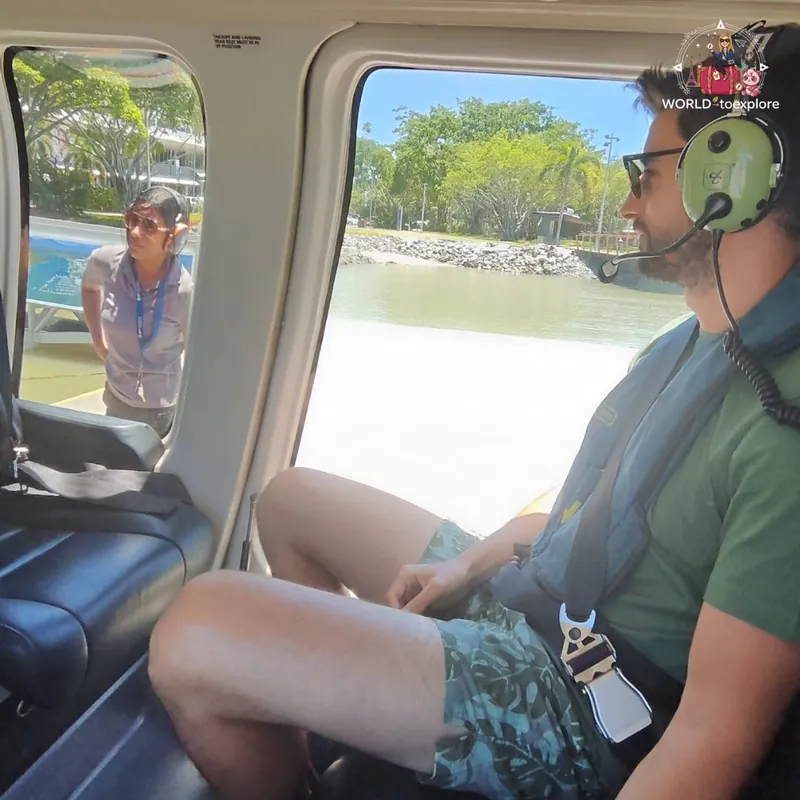
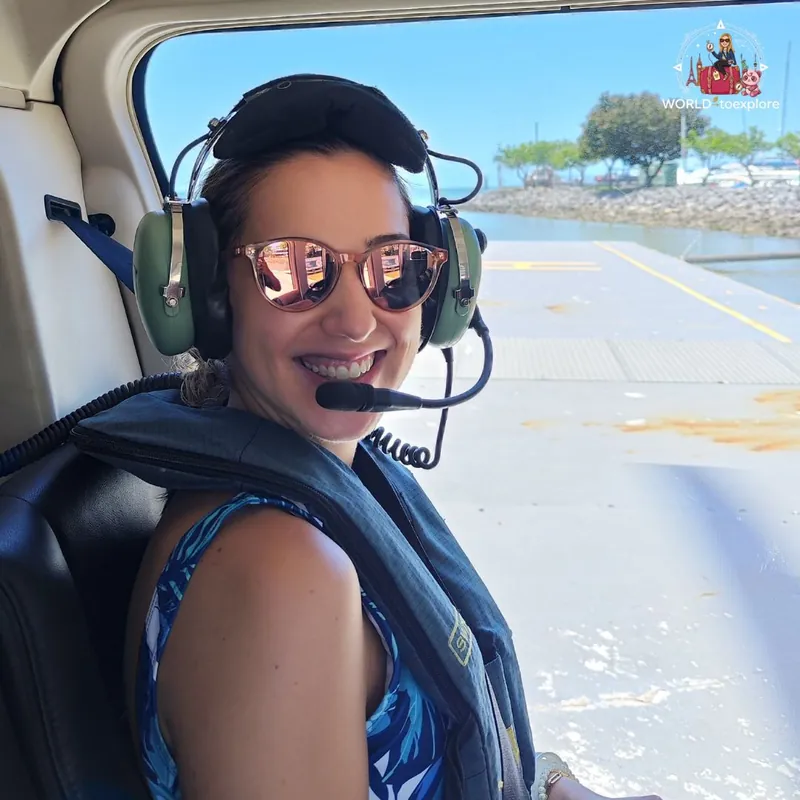
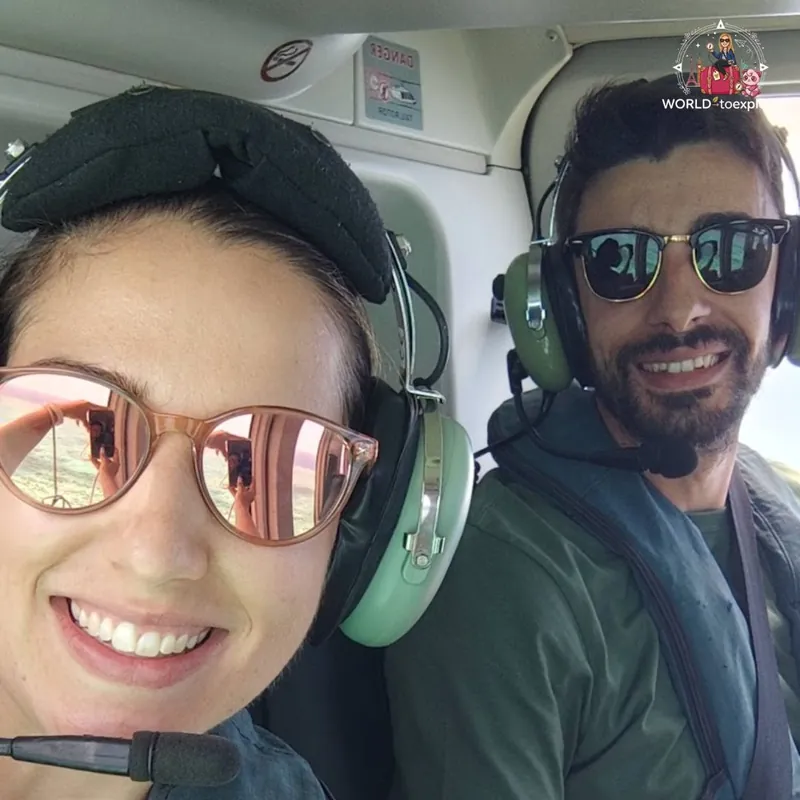
We spotted the helicopter approaching far in the distance. When it landed, the staff member offered to take a photo of us and then settled us inside. It was just the two of us and the pilot. They put huge headphones on us so we could hear the pilot and muffle some of the noise from the engine and the rotor. But, truth be told, the communication didn't go all that well. There was so much interference that, at one point, the man would be talking and we'd just nod along without catching half of it. And then the moment we'd been waiting for arrived. We took off.
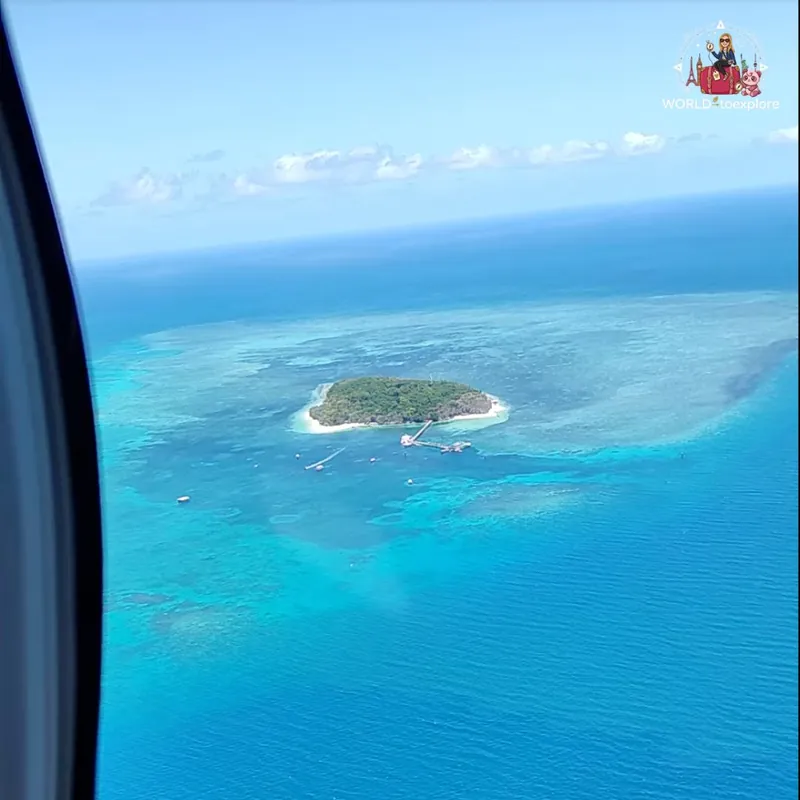
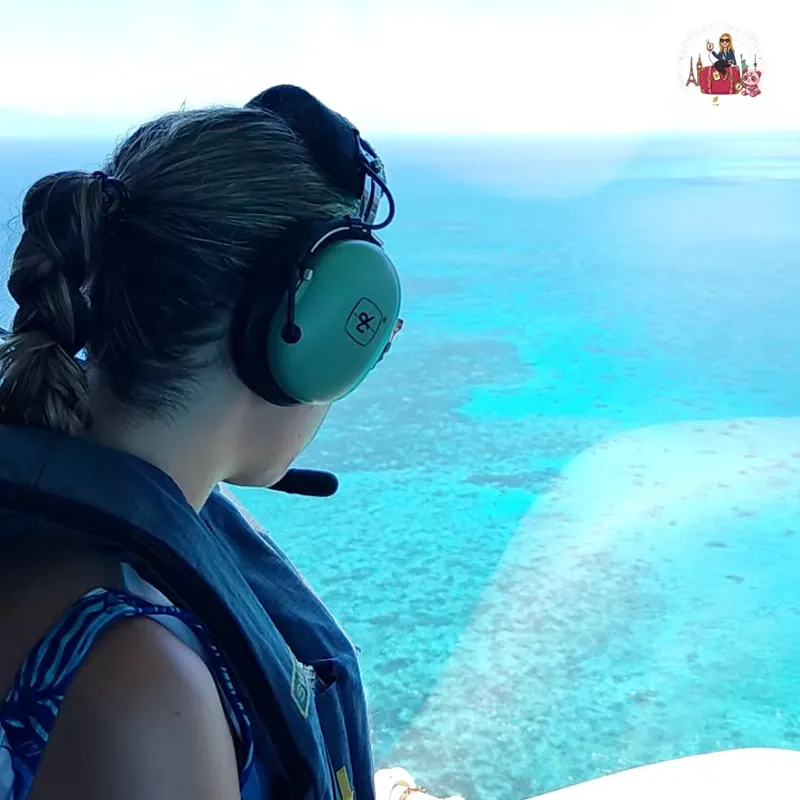
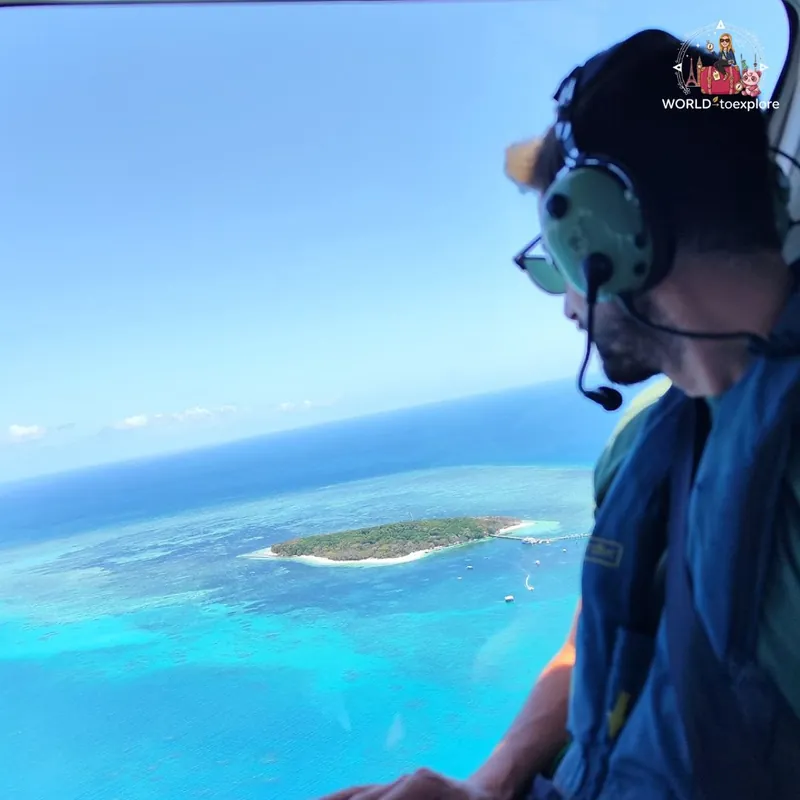
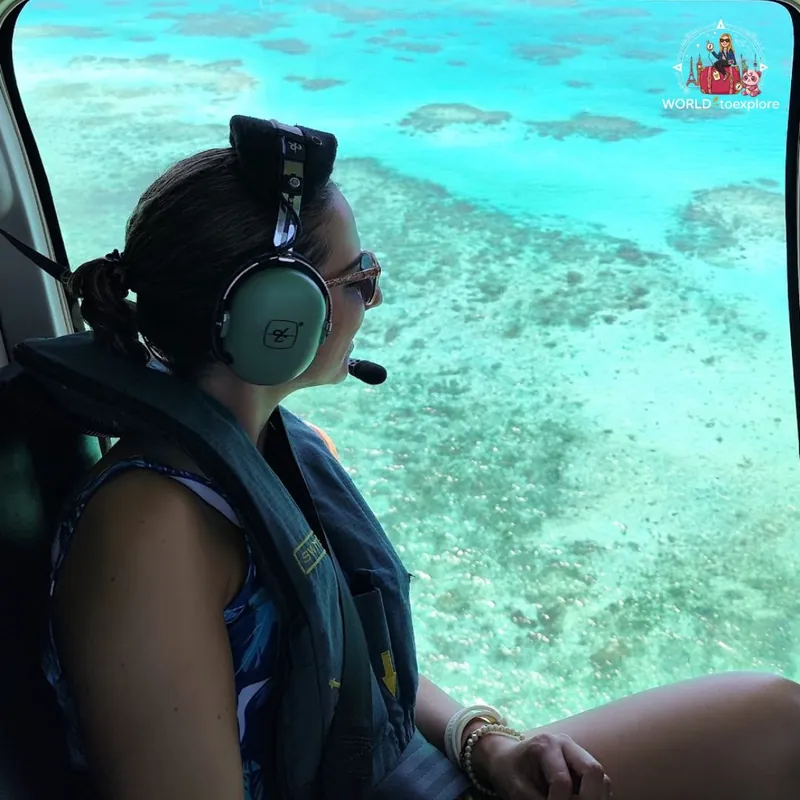
I don't quite know how to explain it without sounding like I'm exaggerating, but the flight was surreal! It was about 25 to 30 minutes between Cairns and the reef, and it really was extraordinary from start to finish. The pilot would say something here and there and, every so often, would tilt the helicopter to one side and then the other, so that both my husband and I could take everything in from both angles. The shade of blue of the water, the islands, the corals, the little boats anchored beside the reefs - all incredible! No photo can capture what we experienced. You have to see it with your own eyes.
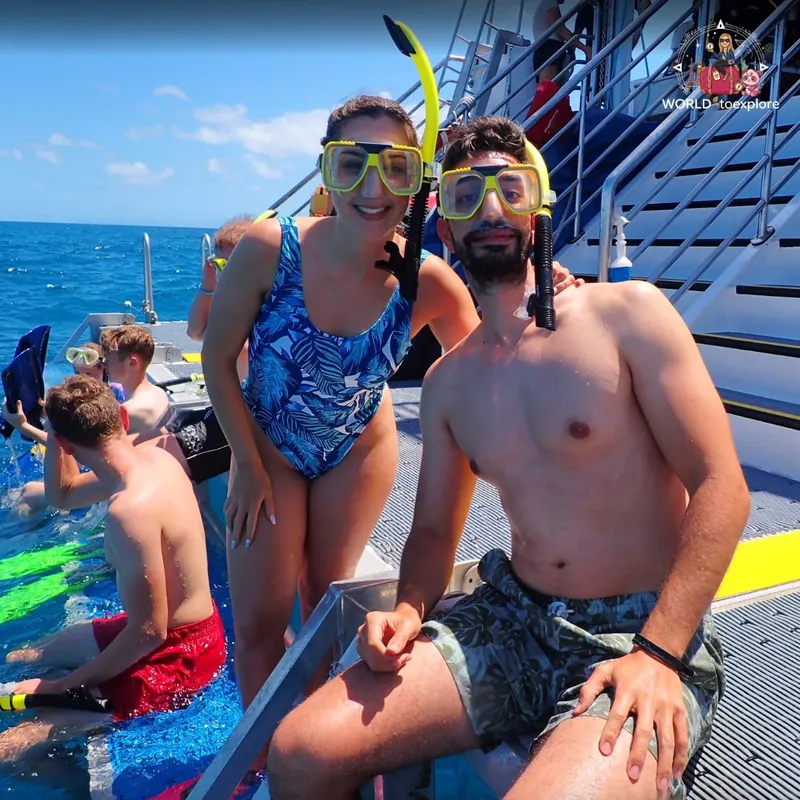

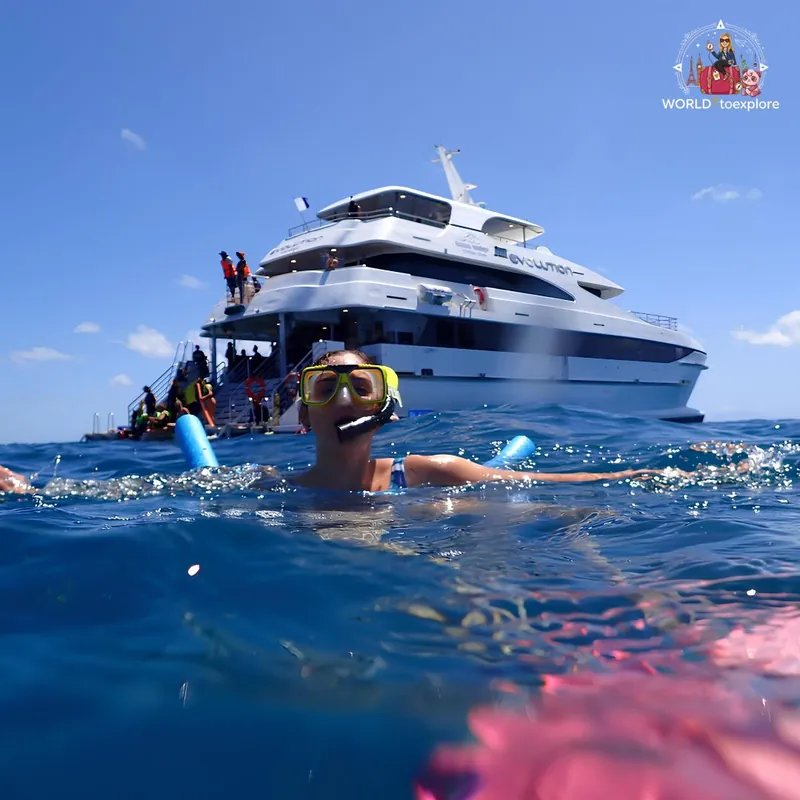
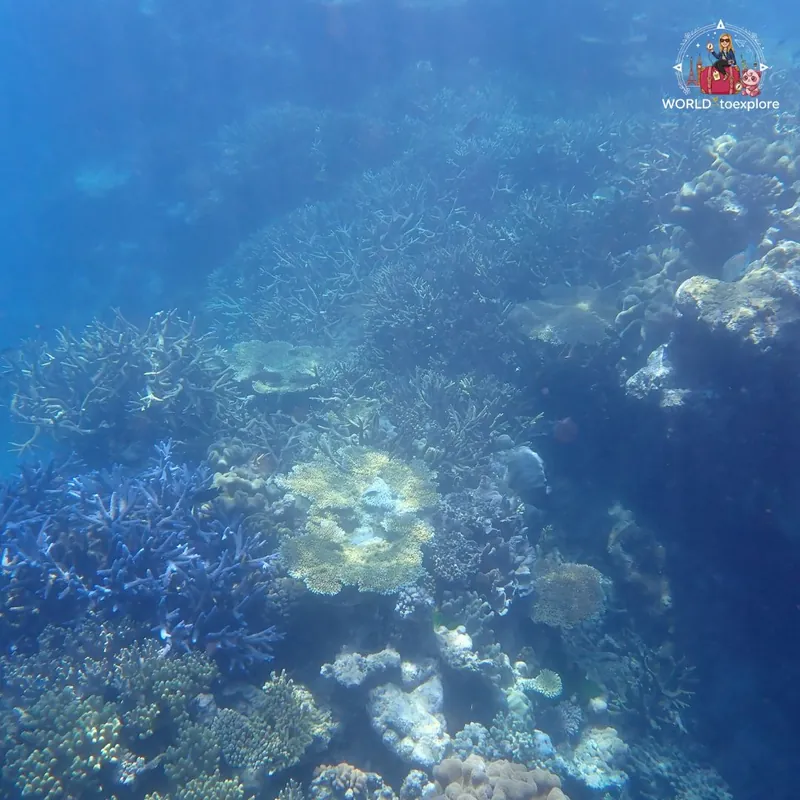
After we'd had lunch, they cleared the plates from the table and advised us to take a seasickness tablet. We weren't feeling unwell, but the staff member mentioned that the sea was a little rough that day (something I honestly hadn't even noticed) and that it was better to be safe. We chose to accept, so as not to take any unnecessary risks.
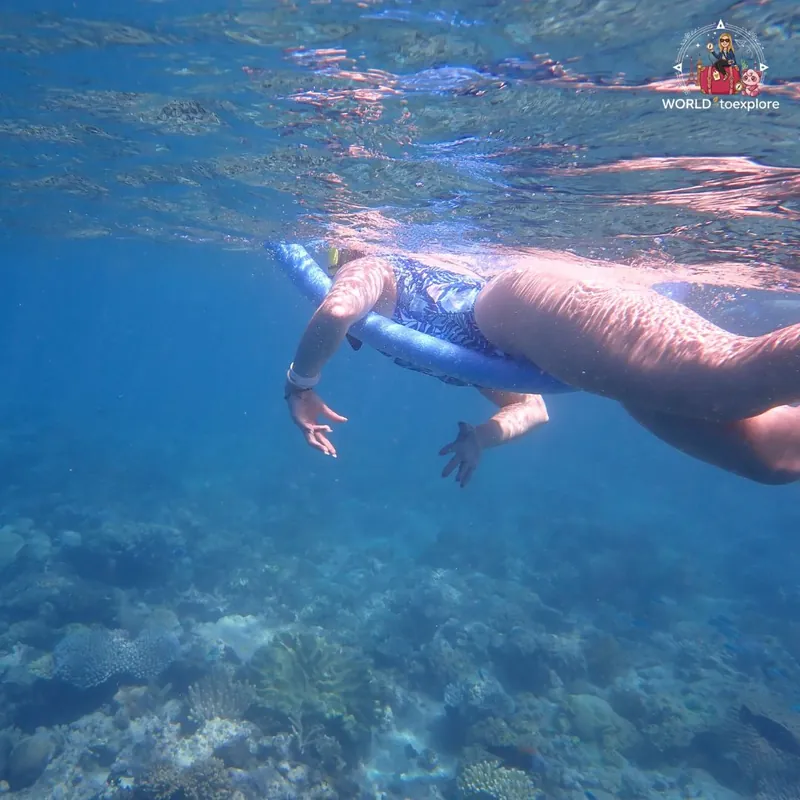
And then came another of the day's highlights: snorkelling on the Great Barrier Reef. They gave us a life jacket, fins and a mask with a snorkel. They also offered us one of those colourful pool noodles and we said we didn't need it. Five minutes later, we realised it would be far too tiring to have to keep kicking our legs the whole time to stay afloat, so off we went to fetch that noodle. Here's a tip: take the noodle straight away.
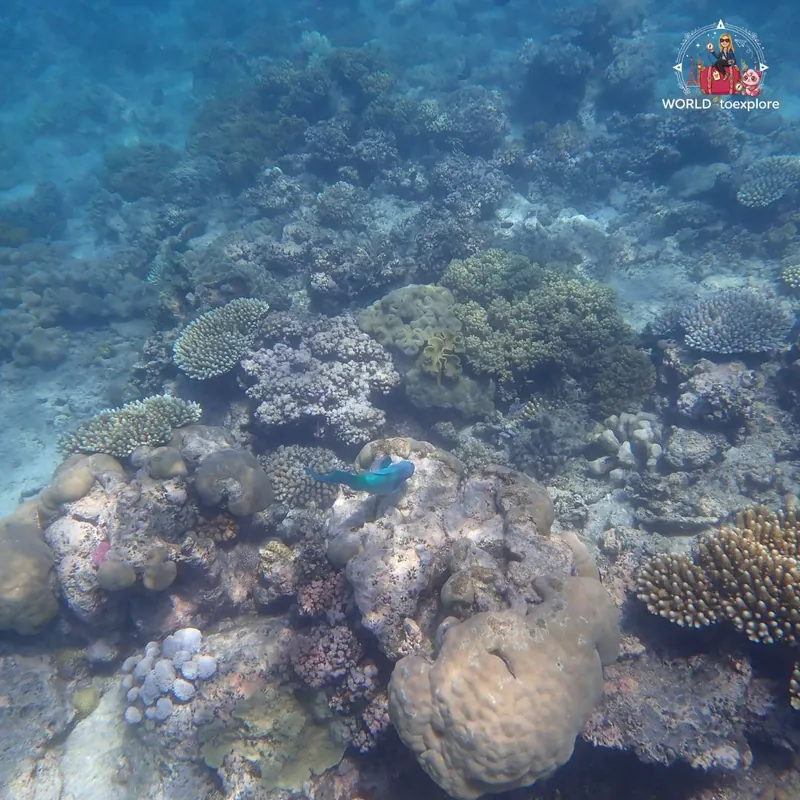
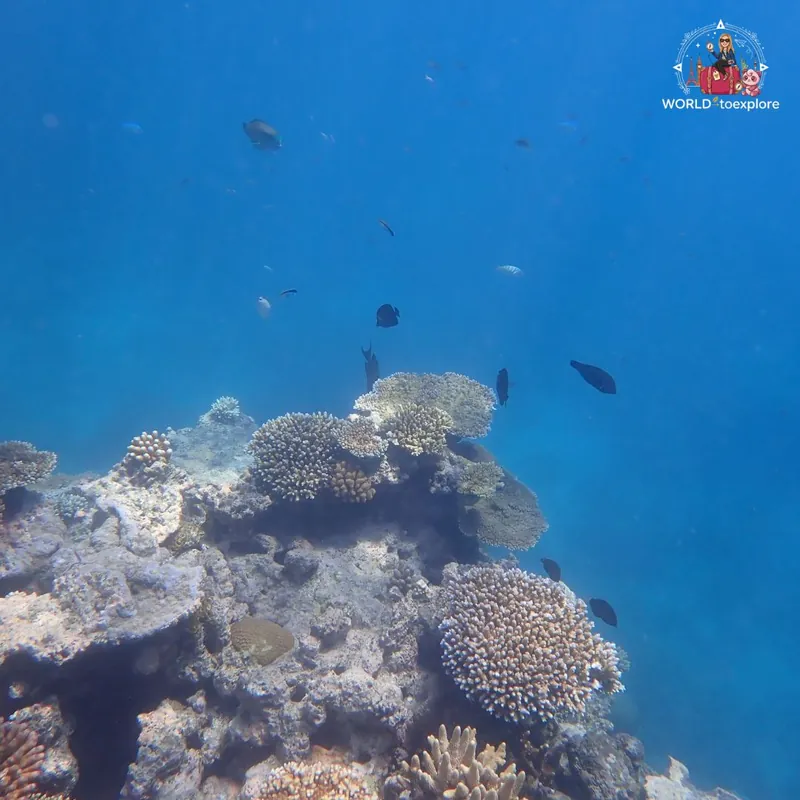
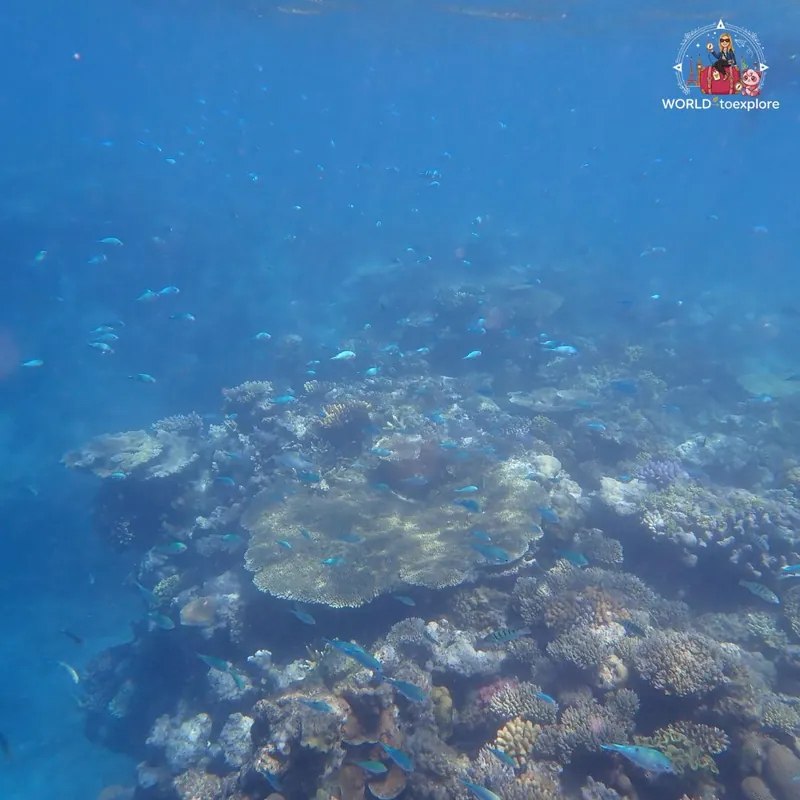
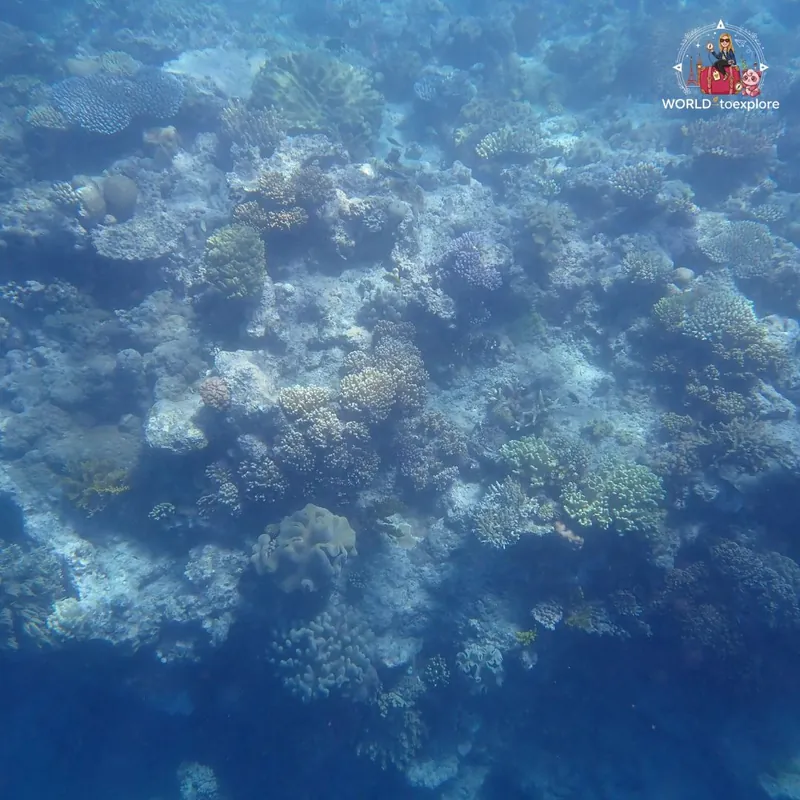
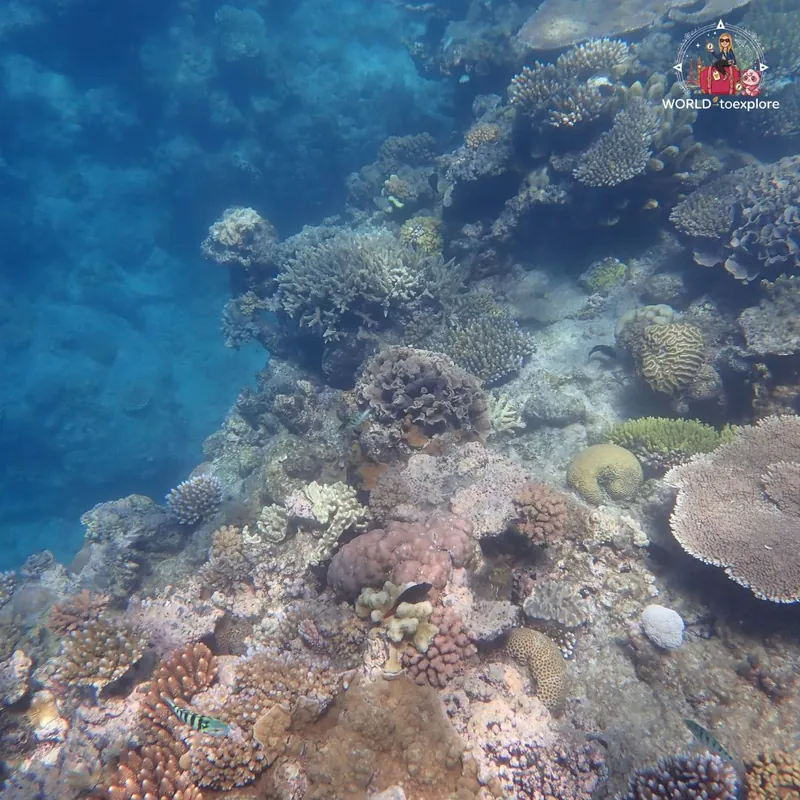
The first time we put our faces underwater was breathtaking. Fish everywhere, corals bursting with colour, a whole world that was down there while we went about on the surface with no idea. We spent almost an hour snorkelling and didn't notice the time passing. There's a lifeguard on the boat keeping an eye on everyone in the water - if anyone drifted a little too far, he'd immediately start whistling and waving them back closer.
Oh, and I forgot to mention: the waterproof camera stayed behind in Portugal, safely tucked away and completely useless fifteen thousand kilometres away. Since going back for it was out of the question, we ended up renting one on the boat so we wouldn't be left without any photos at all.
Once our snorkelling time was up, we all headed back to the boat, where they served us a little snack - I think it was some biscuits, a few crackers and cubes of cheese, with a drink of our choice. Meanwhile, the journey back to shore began. After eating, we went out to the open deck to catch a bit of sun. We reached Cairns city centre at around 16:30 and even stopped by the Cairns Esplanade for another dip in the pool and a little more sun. Snorkelling is far more tiring than it looks - even with the noodle, you have to keep moving the whole time so you don't sink. The result of all this: we both fell asleep in the sun.
- Agency: Nautilus Aviation
- Package: Down Under Dive Fly/Cruise
- Price: around 500 AUD per person (does not include the reef environmental fee / reef levy)
- Meeting point: Cairns Heliport - 2 Pier Point Road, Marina Point, Cairns
- Check-in: 30 minutes before departure
- Total duration: around 4 hours (we left at 12:40 and returned at about 16:30)
- Destination: Hastings Reef (outer reef)
- Includes:
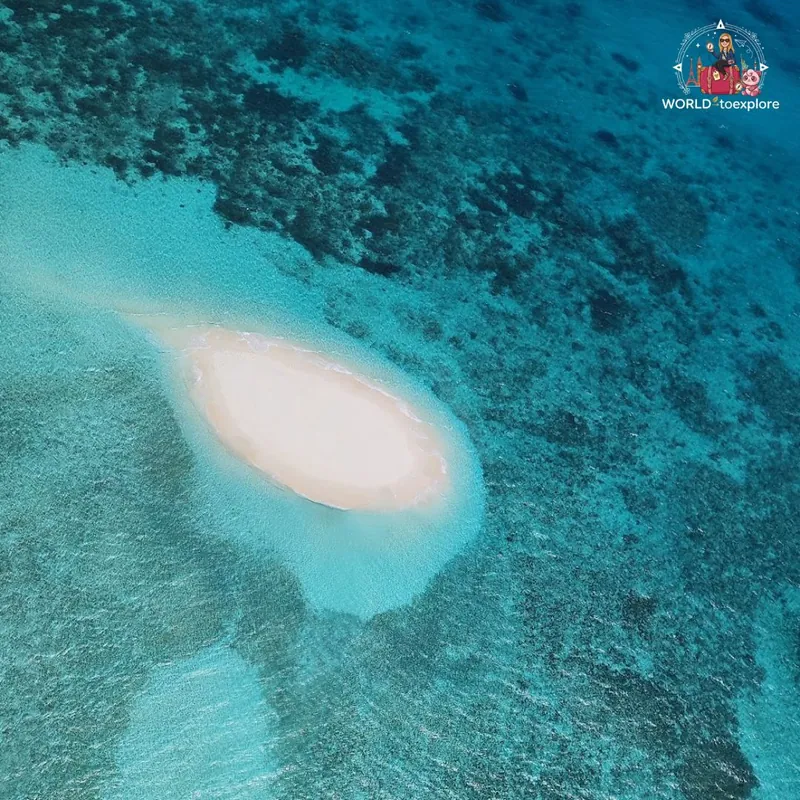
- A scenic helicopter flight of 25 / 30 minutes over the reefs and sand cays out to Hastings Reef
- About an hour and a half at the reef
- Snorkelling equipment
- Lunch (Australian BBQ)
- Return by fast boat, with a glass of wine and cheese included
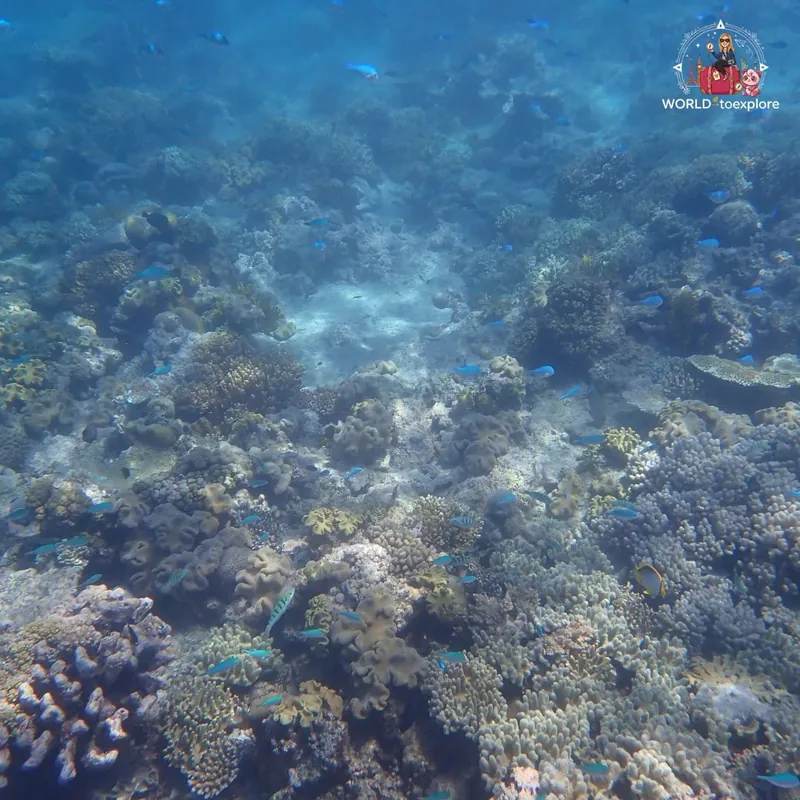
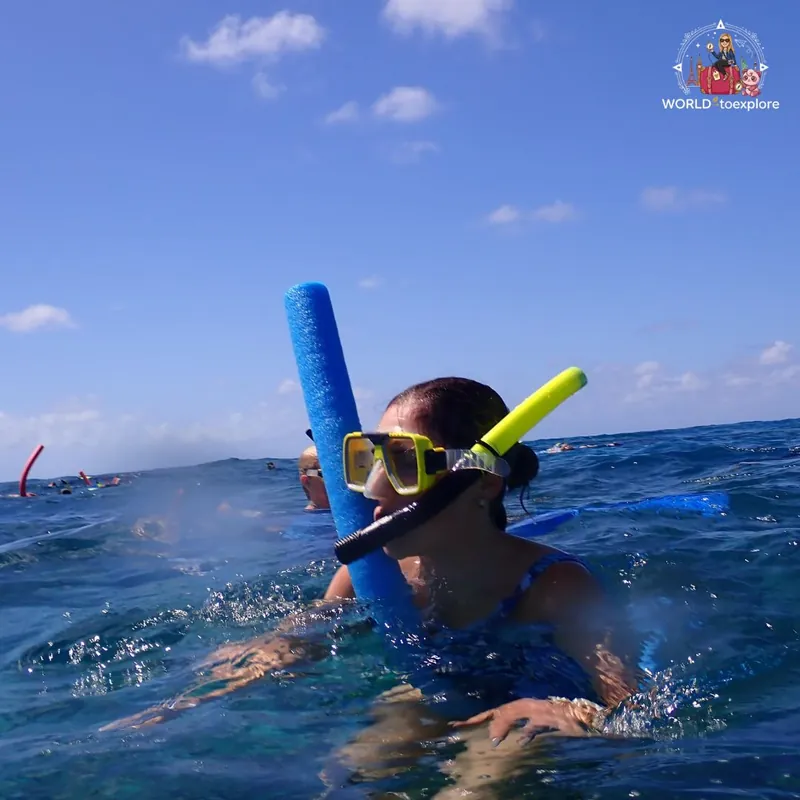
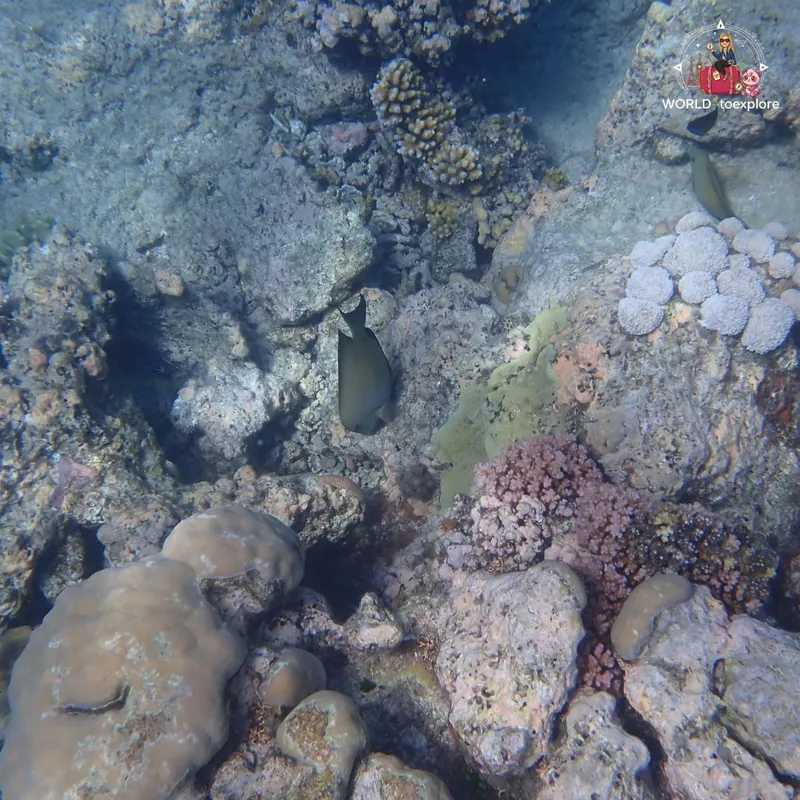
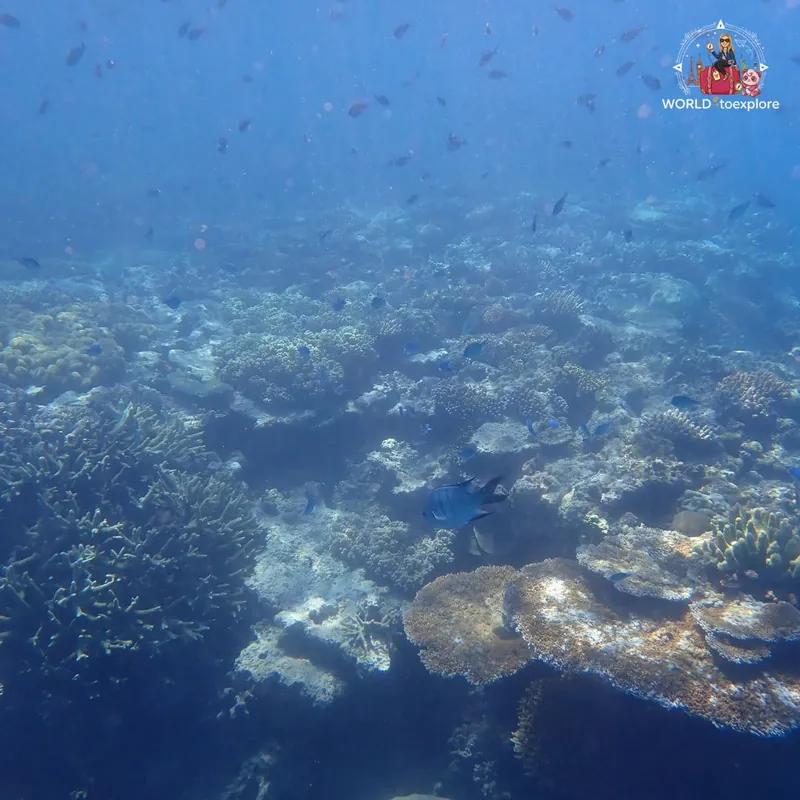
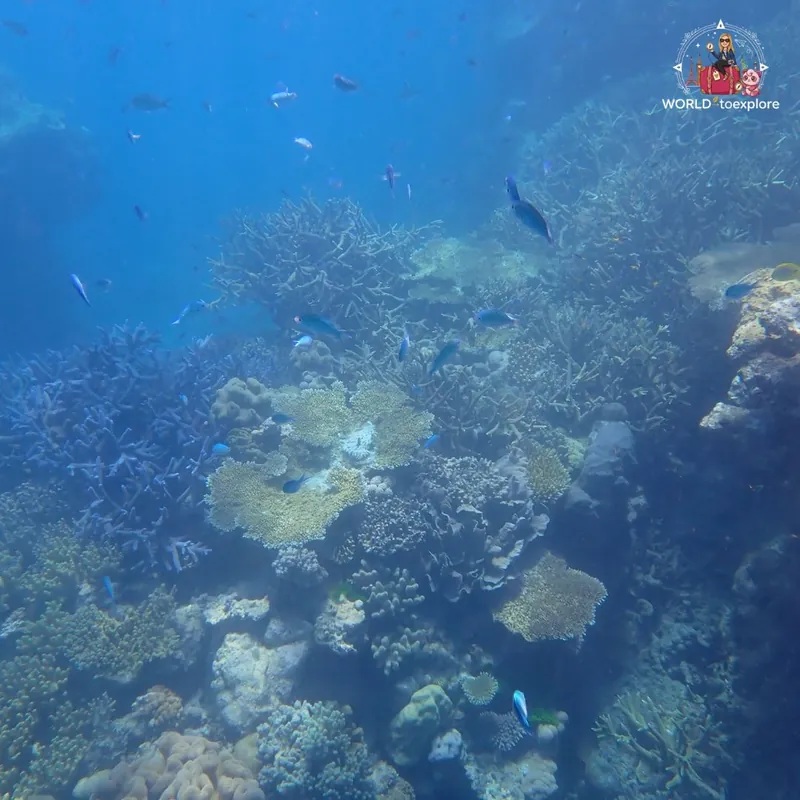
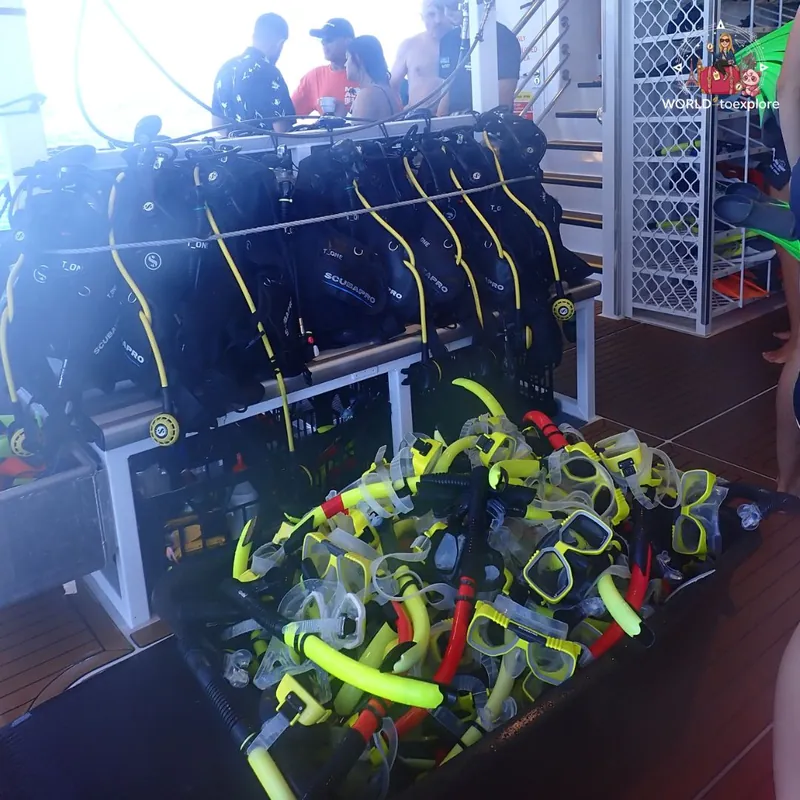
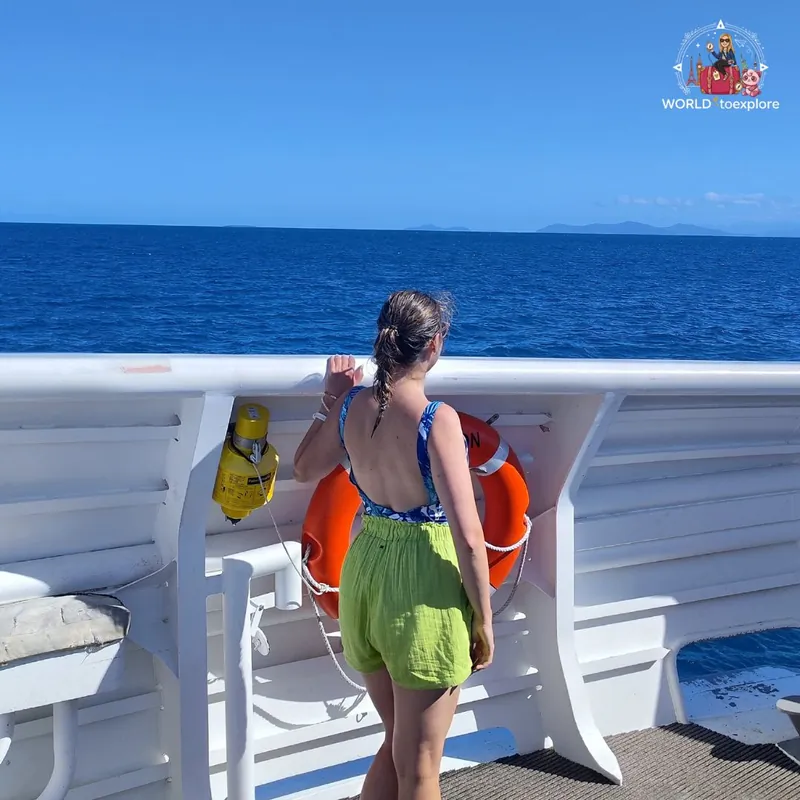
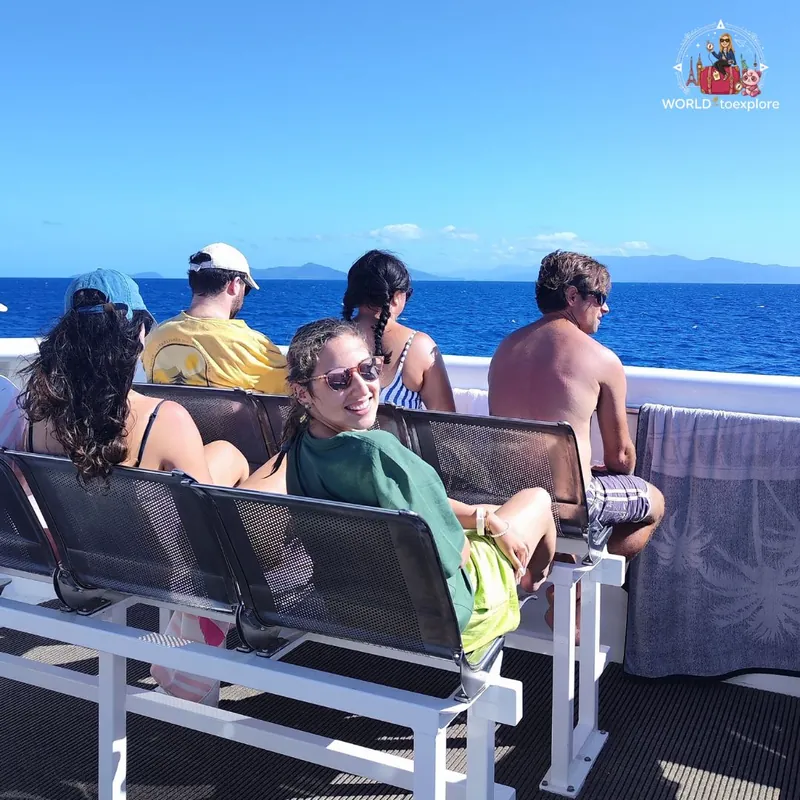
The Great Barrier Reef made it into the top 3 best experiences I've ever had in my life. It wasn't just the helicopter flight, nor just the snorkelling. It was everything together, the feeling of being in the middle of the ocean looking at a reality that has existed for millions of years and is still alive beneath our feet. But that reality is more fragile than ever. Rising water temperatures have been causing what's known as 'coral bleaching', a phenomenon that strips the corals of their colour and can lead to their death. A large part of the reef has already been affected, and visiting it also means realising how lucky we are to be able to see it like this - and the responsibility we have to protect it so it stays alive for the generations to come. There are places that are truly worth crossing the world to see, and this is, without a shadow of a doubt, one of them. 🩷
You Might Also Like
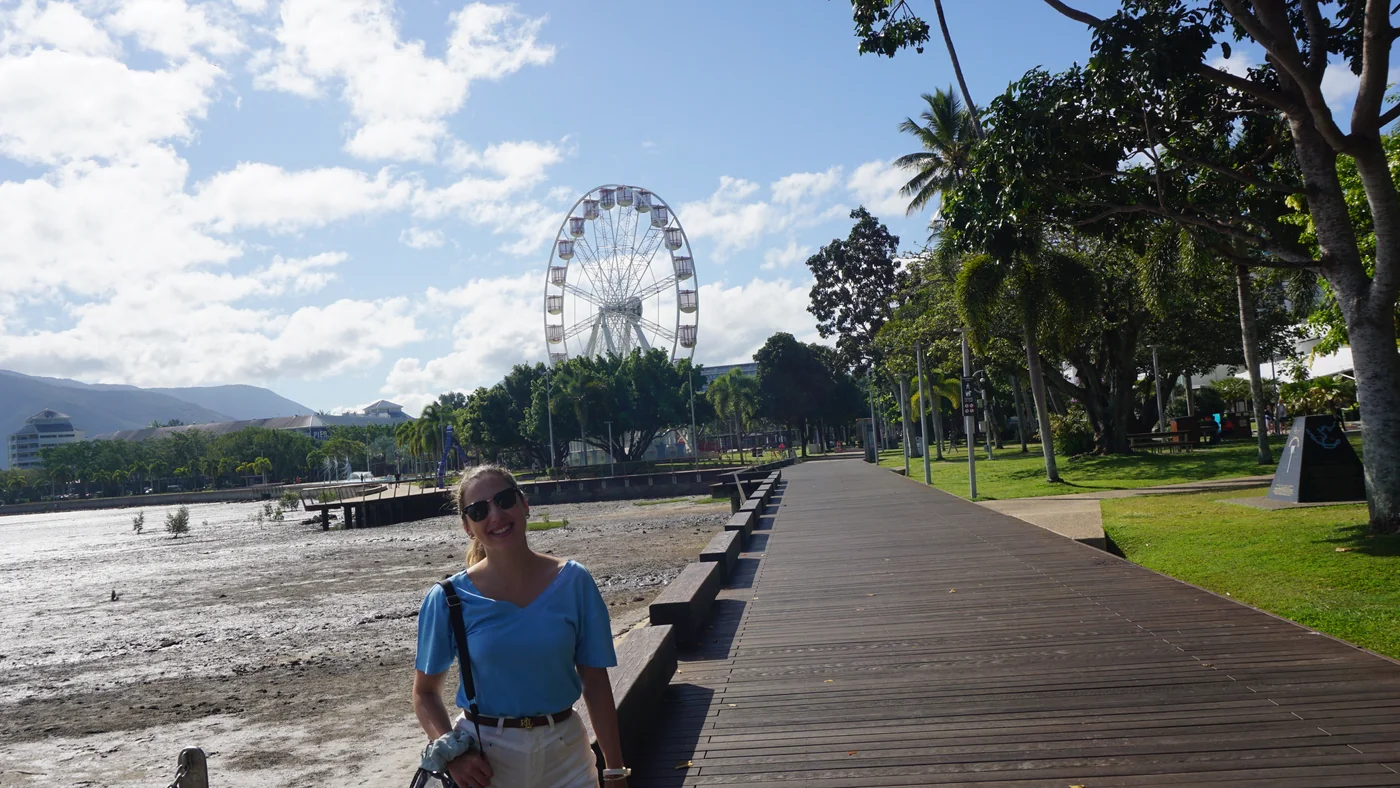
Cairns: The Gateway to the Great Barrier Reef and the Daintree
Cairns is the perfect base for exploring tropical north Queensland - from the Great Barrier Reef to the Daintree. What to see and do in the city.
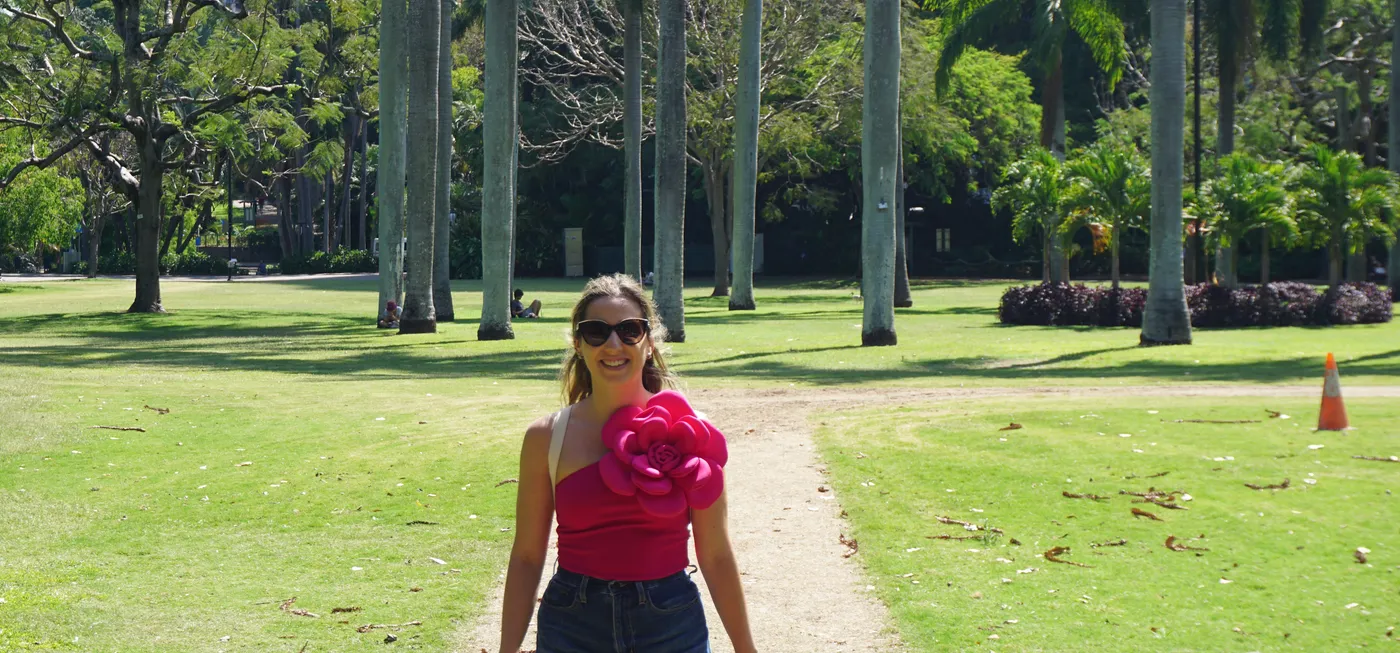
Brisbane's oldest garden
The City Botanic Gardens are Brisbane's oldest garden: colonial history, century-old Moreton Bay figs, water dragons and riverside walks, just steps from the centre.
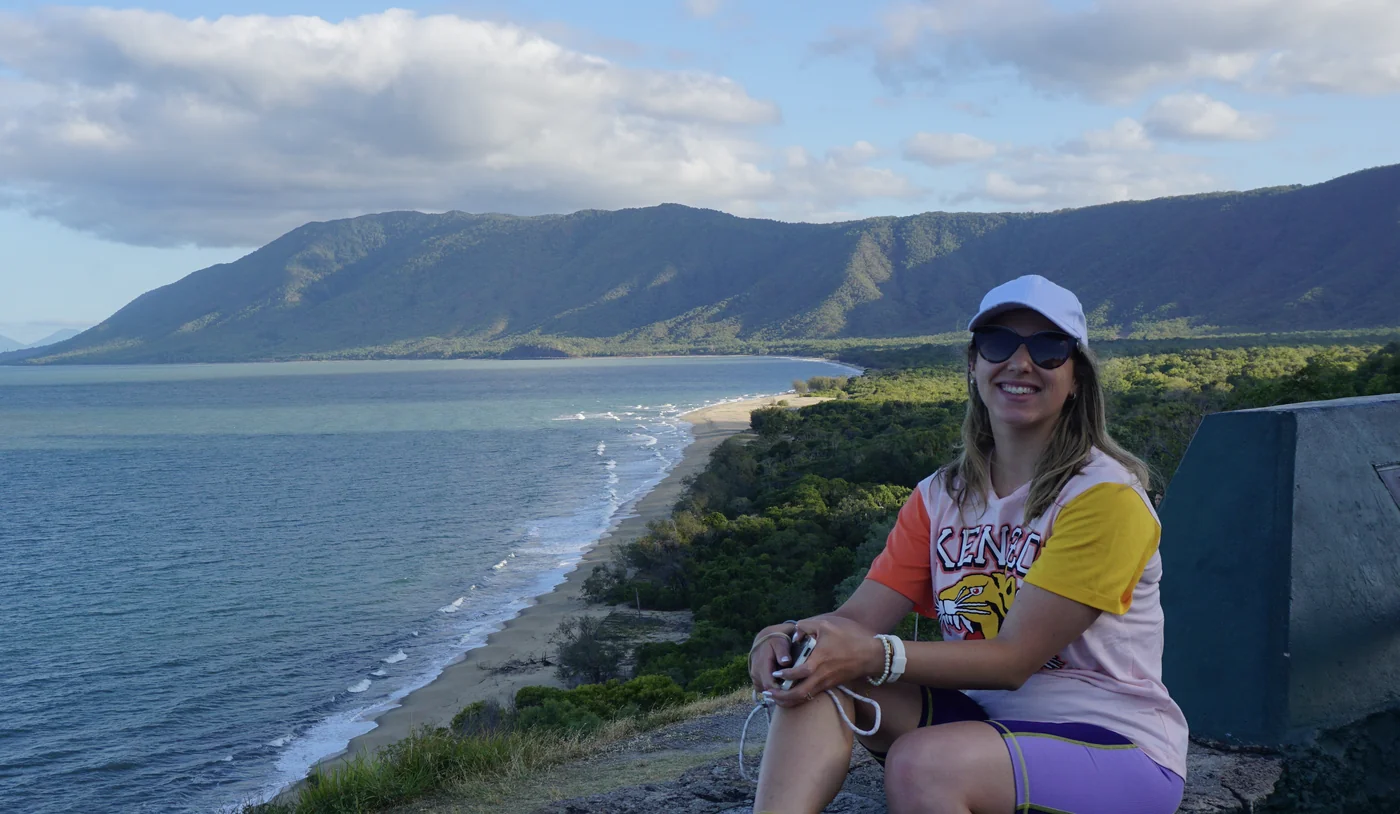
Daintree Rainforest: The Oldest Tropical Rainforest in the World
The oldest rainforest in the world isn't in Brazil, but in the far north of Australia - what it was like to visit the Daintree Rainforest.